Aloe officinalis Care

Aloe officinalis

About Aloe officinalis

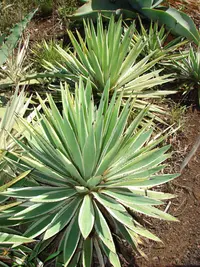
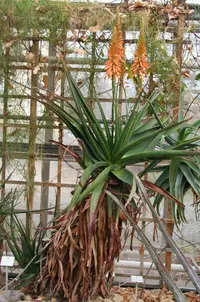
Aloe officinalis is a small to medium succulent from arid regions of the Arabian Peninsula, valued for its fleshy, gel-filled leaves. It forms tight clumps of upright, tapering leaves with fine teeth along the edges and may produce tall flower spikes in warm, bright conditions.

In nature it grows in rocky, very well-drained soils with strong sun and infrequent rainfall. This background makes it tolerant of drought and poor soil, but sensitive to overwatering and low light.

Because of its slow growth and compact form, it suits containers and bright indoor spots. Understanding how to care for Aloe officinalis begins with providing strong light, a gritty substrate, and careful watering habits.

Main Plant Requirements

Care Difficulty

Easy Care

Light Preference

Full Sun

Water Requirements

Low Water

Temperature Preference

Tropical / Frost Sensitive

Hardiness Zone

10–11

Soil Texture

Sandy, Loamy, Rocky

Soil pH

Slightly acidic (6.5–7.0), Neutral (7.0)

Soil Drainage

Well-drained

Fertilization

Minimal (feed rarely)

Get Personalized Care Plan

Scan your plant to receive care tips personalized for your specific plant

Available on iOS and Android

How to Care for the Aloe officinalis

This species needs strong light that mimics its bright, arid native habitats.

  • Provide 6–8 hours of direct sun, ideally with gentle morning sun and some protection from harsh mid-afternoon rays in very hot climates.
  • Plant Aloe officinalis in an open, unobstructed spot; it tolerates light partial shade but extended shade causes weak, stretched growth and pale leaves.
  • Watch for red or brown leaf scorch and very dry, crispy tips as signs of excessive intense sun, especially during summer heat waves.

Watering should be infrequent and focused on thorough soaking followed by complete drying.

  • Allow the top 3–5 cm of soil to dry fully before watering; in hot, dry weather this may mean watering every 10–21 days, less often in cool seasons.
  • Use fast-draining, sandy or gritty soil so water runs through within seconds and does not pool around the roots.
  • Overwatering shows as soft, yellowing or translucent leaves and a sour soil smell, while underwatering causes thin, curling leaves that stay firm but feel deflated.

Stable warmth supports strong growth and reduces stress for this desert-adapted succulent.

  • Aim for 65–85°F (18–29°C) for active growth; short hot spells up to about 95°F (35°C) are tolerated if soil is dry and airflow is good.
  • Protect from cold; growth slows below 55°F (13°C) and tissue damage often occurs below 40°F (4°C), especially in wet soil or cold wind.
  • Frost is a major risk, so move plants or provide cover when nights near freezing; acclimate gradually when shifting between indoor and outdoor conditions.

This species prefers dry indoor air and rarely needs extra humidity attention.

  • Aim for 30–50% relative humidity, similar to most heated homes, without deliberate humidification.
  • Dry air is well tolerated, but combine it with bright light and careful watering to prevent leaf tip shrivel.
  • If leaf tips brown while the soil stays wet, reduce ambient humidity sources and improve air flow around the plant.

Use a very fast-draining, mineral-rich mix to prevent root rot in Aloe officinalis.

  • Choose a sandy or gritty structure, such as 50–70% cactus mix blended with coarse perlite or pumice for strong drainage.
  • Keep pH slightly acidic to neutral, around 6.0–7.0, avoiding peat-heavy blends that stay soggy for long periods.
  • Add coarse sand or small gravel to increase aeration and create large air spaces between particles around the roots.
  • Avoid dense loam, high compost content, or any mix that remains wet longer than 2–3 days after thorough watering.

This species is well suited to container growing when drainage and stability are managed carefully.

  • Select a pot only 2–4 in wider than the root mass so the soil dries evenly instead of staying wet in unused spaces.
  • Use a heavy terracotta or ceramic pot if the rosette becomes top-heavy, reducing the risk of tipping in outdoor wind.
  • Ensure drainage holes are unobstructed and elevate the pot slightly so excess water clears the base rather than pooling underneath.

This drought-adapted succulent needs only light feeding to maintain steady growth in containers.

  • Use a balanced liquid fertilizer (around 10-10-10 or 20-20-20) diluted to 25–50% strength for Aloe officinalis in free-draining soil.
  • Feed once every 4–6 weeks during the active growing season in spring and summer.
  • Skip compost-heavy or high-organic mixes that stay wet; choose formulations for cacti and succulents instead.
  • Do not fertilize in late fall and winter, when growth slows and roots are more prone to salt buildup.

This species requires minimal structural pruning, but targeted removal of damaged tissue supports plant health.

  • Carry out light pruning in spring or early summer when growth is active and wounds seal faster.
  • Remove dead, shriveled, or diseased leaves at the base with a clean, sharp knife or pruning shears.
  • Thin out severely crowded or crossing rosettes only if needed to maintain airflow and access to light.
  • Avoid cutting healthy central growth, as this can distort the rosette and slow new leaf production.

Container-grown plants appreciate occasional repotting to refresh soil and allow room for offsets.

  • Plan to repot every 2–3 years, or when roots circle the pot, drainage slows, or growth declines.
  • Choose late spring or early summer for repotting Aloe officinalis, when temperatures are warm and growth is active.
  • Use a slightly larger pot with drainage holes and a gritty cactus mix to limit waterlogging and root rot.
  • Gently loosen the root ball, remove dead roots, let any broken roots callus for 1–2 days, then water lightly after potting.

This aloe is most commonly multiplied by removing and rooting offsets that form around the parent plant.

  • Detach well-formed pups with several leaves and their own roots in late spring or early summer.
  • Allow cut surfaces to dry and callus for 1–3 days to reduce rot risk in the new planting medium.
  • Plant offsets in a sterile, gritty cactus mix, keeping them upright and only slightly buried at the base.
  • Provide bright, indirect light, warm temperatures around 70–80°F, and very light watering until new growth indicates successful establishment.

This warmth-loving succulent is not frost hardy and needs protection in regions with cold winters.

  • Move container plants indoors before temperatures drop below 40°F, placing them in bright, indirect light.
  • Keep soil almost dry in winter, watering lightly only when the mix is fully dry to the bottom of the pot.
  • Maintain indoor temperatures around 55–70°F and avoid cold drafts or contact with freezing window glass.
  • In mild climates, outdoor plants benefit from a gritty, raised bed that drains quickly and avoids standing water in cool weather.

Care Tips

Rotate Plant Regularly

Turn the pot 90° every 2–3 weeks so all sides receive similar light exposure, which keeps rosettes symmetrical and prevents stems from leaning or twisting toward the brightest window.

Encourage Offsets Wisely

Once offsets have at least 3–4 leaves and visible roots, separate them with a clean knife and air-dry the wounds for 24 hours before potting, which reduces rot risk and produces sturdier new plants.

Support Top-Heavy Stems

If older plants become tall and unstable, repot into a wider, heavier container and lightly mound the mix around the stem base, which stabilizes the plant and reduces the chance of it tipping over.

Seasonal Light Adjustment

In late spring, acclimate plants gradually to stronger outdoor sun over 10–14 days by starting in bright shade, then increasing direct sun time, which prevents leaf scorch when growing Aloe officinalis in brighter conditions.

Prevent Sap Contamination

When cutting leaves for use, avoid harvesting from the central growth point and always let tools and cut surfaces dry fully before watering again, which limits infection risk and keeps the main rosette actively growing.

Common Pests and Diseases

Aloe mite

This pest causes abnormal, tumor-like swellings and distorted growth, often along leaf edges or at the base of leaves. Symptoms include rough, corky galls that may spread over time.

Solution

Immediately remove and discard all visibly deformed leaves or entire rosettes, cutting well into healthy tissue and disposing of waste in the trash, not compost. Isolate the plant, clean tools with alcohol after pruning, and keep new growth under observation; heavily infested plants are often best destroyed to prevent spread to other aloes.

Aloe rust

This disease produces round, sunken orange to dark brown spots on leaves that may merge and cause yellowing or premature leaf drop. Symptoms include pustule-like lesions that start small and expand under humid, stagnant conditions.

Solution

Remove and discard affected leaves, then improve air circulation and avoid overhead watering so foliage stays dry. Space plants well, water at the base in the morning, and if the problem persists, use a sulfur- or copper-based fungicide labeled for succulents, following the product directions carefully.

Leaf spot

This disease causes irregular brown or black spots on leaves, sometimes with a yellow halo and a dry, papery center. Symptoms include slowly enlarging lesions that weaken the leaf and reduce the plant’s vigor.

Solution

Trim off and discard spotted leaves or heavily affected sections, and keep water off the foliage by watering at soil level. Provide bright light, good air movement, and allow the potting mix to dry between waterings; in persistent cases, apply a broad-spectrum fungicide suitable for ornamental succulents.

Scale insects

These insects appear as small, tan to brown, dome-shaped bumps on leaves and stems that do not move when touched. This pest sucks sap, causing yellowing, reduced growth, and sticky honeydew that can lead to sooty mold.

Solution

Gently scrape off individual scales with a cotton swab or soft brush dipped in alcohol, then wipe the leaves to remove honeydew. For larger infestations, repeat alcohol treatments weekly and use a systemic insecticide labeled for succulents if local regulations and household conditions allow.

Mealybugs

These insects form white, cottony clusters in leaf axils, root zone, and along the leaf base, often hidden from quick view. This pest feeds on sap, leading to stunted growth, leaf yellowing, and sticky residue that encourages mold.

Solution

Isolate the plant, then dab visible mealybugs with a cotton swab soaked in isopropyl alcohol and repeat weekly until no new insects appear. For severe infestations, unpot the plant to check roots, wash off the soil, trim badly affected roots, repot in fresh, well-draining mix, and consider a systemic insecticide where appropriate.

Interesting Facts

Arabian Peninsula native

This species is naturally distributed in arid regions of the Arabian Peninsula, including Yemen and Oman, where it grows on rocky, limestone-rich slopes and open, sun-exposed ground.

Distinct yellow flowers

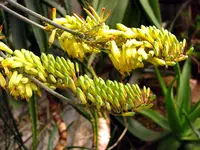
It produces upright clusters of tubular, bright yellow flowers, which differ from the more common orange tones seen in several other Aloe species and help attract specific pollinating insects and birds in its native range.

Strong leaf fragrance

Crushed leaves release a noticeably stronger, more resinous aroma than many related species, a trait used in taxonomic descriptions to help distinguish it from visually similar aloes.

FAQs about Aloe officinalis

Brown leaf tips or patches usually come from underwatering, intense direct sun scorch, salt buildup from fertilizer, or cold drafts. Check roots for rot, flush the potting mix, trim dry tips, and correct the environmental stress.

Grow Healthy Plants with Botan Care

Keep your plants happy and healthy with plant identification, disease detection, and easy care guidance.

Botan plant care app — identify plants on mobile

Explore More Plants