Offset management
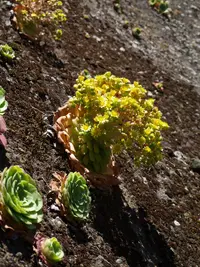
Periodically remove and replant crowded basal offsets so the main rosette does not become shaded and rootbound, and use a clean, sharp knife to separate pups only once they have formed several roots of their own.

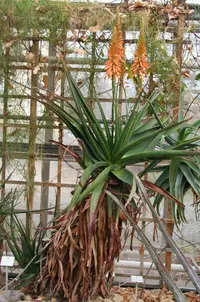
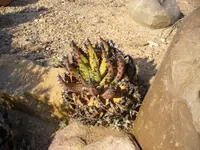
Aloe lutescens is a small to medium succulent from arid regions of Madagascar, forming clumps of upright, narrow leaves. Its foliage is usually pale green to yellowish, sometimes with soft spotting, and older plants can produce tall flower spikes with tubular blooms. This species has a slow, compact growth habit, which suits containers and small spaces. It prefers bright light, very well-drained soil, and careful watering that allows the soil to dry between waterings. Overall, it is considered a relatively low-maintenance species for growers who learn how to care for Aloe lutescens in dry indoor or greenhouse conditions.

Care Difficulty
Easy Care

Light Preference
Full Sun

Water Requirements
Low Water

Temperature Preference
Tropical / Frost Sensitive

Hardiness Zone
10–12

Soil Texture
Sandy, Loamy, Rocky

Soil pH
Slightly acidic (6.5–7.0), Neutral (7.0)

Soil Drainage
Well-drained

Fertilization
Minimal (feed rarely)
Scan your plant to receive care tips personalized for your specific plant
Available on iOS and Android
This sun-loving succulent needs bright light but benefits from some protection during the hottest hours.
This species stores water in its leaves and prefers infrequent, deep watering in fast-draining soil.
This succulent thrives in warm, dry conditions and is sensitive to prolonged cold and frost.
This species handles typical indoor humidity and focuses more on light and watering than air moisture.
This succulent needs a very fast-draining, mineral-based mix to prevent root rot.
This species is well suited to container growing when the pot supports fast drainage and a stable root zone.
This drought-adapted succulent needs only light feeding to maintain healthy growth in containers.
Pruning is mainly cosmetic and sanitary, helping the plant stay tidy and disease-free.
Container-grown plants benefit from occasional repotting to refresh soil and manage clumps.
This species is most often propagated from offsets, which keeps new plants true to type.
This succulent is frost-sensitive and needs protection in regions with cold winters.

Plant Health Check
Not sure what's wrong with your plant? Check your plant's health inside the app.
This species is notable for its yellow-toned foliage, especially under strong light, which is reflected in the epithet lutescens, meaning yellowing or becoming yellow in Latin.
Mature plants often produce numerous offshoots at the base, creating dense clumps that gradually expand into low, dome-shaped colonies in suitable conditions.
This aloe is native to parts of southern Africa, where it grows in dry, sunny habitats and shows strong adaptation to seasonal drought and intense light.
This species usually flowers only after several years, once rosettes are mature and well established. Lack of bloom is often due to insufficient light, too much nitrogen fertilizer, or winter conditions that are too warm and constant.
Keep your plants happy and healthy with plant identification, disease detection, and easy care guidance.