Rotate For Symmetry
Turn the container 90° every 2–3 weeks during active growth so the rosette develops evenly and the tall flower spike, if produced, does not lean excessively toward the light source.

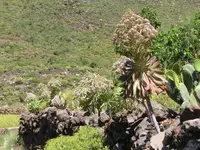
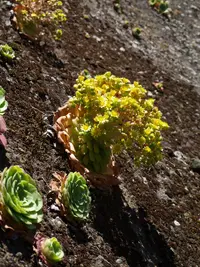
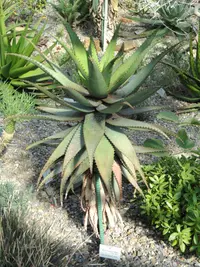
Aeonium urbicum is a succulent shrub from the Canary Islands, valued for its tall stems topped with large, flat rosettes of spoon-shaped leaves. In good light, the foliage is usually bright green and may blush with warmer tones, while mature plants produce tall pyramidal clusters of small starry flowers.
This species has a relatively fast, upright growth habit compared with many compact aeoniums. It suits bright patios, balconies, and sunny indoor spots where temperatures are mild. Its succulent leaves store water, so it prefers good drainage, infrequent watering, and lean, gritty soil. With these conditions, it is generally straightforward to care for Aeonium urbicum.

Care Difficulty
Moderate Care

Light Preference
Full Sun

Water Requirements
Low Water

Temperature Preference
Tropical / Frost Sensitive

Hardiness Zone
10–11

Soil Texture
Sandy, Loamy, Rocky

Soil pH
Slightly acidic (6.5–7.0), Neutral (7.0)

Soil Drainage
Well-drained

Fertilization
Minimal (feed rarely)
Scan your plant to receive care tips personalized for your specific plant
Available on iOS and Android
This Canary Islands succulent prefers bright, gentle sun with some protection from harsh midday exposure.
Watering should respect its semi-dormant summer period and shallow, succulent roots.
This species prefers mild conditions and does best without temperature extremes.
This species prefers relatively dry air and usually does not need special humidity management indoors.
Aeonium urbicum needs a very fast-draining, mineral-rich mix that prevents water from sitting around the roots.
This species is well suited to container growing, including patios and sunny balconies.
Feed Aeonium urbicum lightly, as this succulent is adapted to lean, well-drained soils.
Pruning Aeonium urbicum is mainly used to maintain shape, remove damage, and encourage branching.
Container-grown Aeonium urbicum benefits from occasional repotting to refresh soil and manage root crowding.
New Aeonium urbicum plants are most commonly produced from stem cuttings taken from healthy rosettes.
Aeonium urbicum is tender and needs protection in regions with freezing winters.

Plant Health Check
Not sure what's wrong with your plant? Check your plant's health inside the app.
This species occurs naturally only on the island of La Gomera in the Canary Islands, where it grows on coastal cliffs and rocky slopes influenced by ocean mist.
Aeonium urbicum actively grows in the cooler, wetter winter months and often slows or partially sheds leaves in the dry summer, an adaptation to the Mediterranean-type climate of its native range.
Mature plants can send up very tall, branching flower stalks bearing hundreds of small star-like flowers, after which the individual flowering rosette dies while younger offsets can continue the colony.

In its native cliff habitats on La Gomera, this species often forms large, almost monocultural stands, visually dominating exposed rock faces and contributing significantly to the local coastal plant community structure.
This monocarpic species flowers only once on a mature rosette, usually after several years. Lack of strong light, insufficient cool winter rest, or recent repotting can delay flowering. Healthy growth and patience are essential for growing Aeonium urbicum successfully.
Keep your plants happy and healthy with plant identification, disease detection, and easy care guidance.