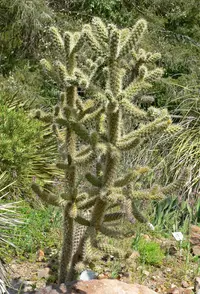
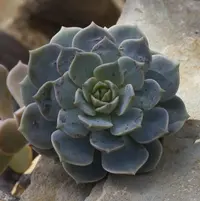
California fagonbush Care (Zygophyllum laeve)

California fagonbush

About California fagonbush

California fagonbush (Zygophyllum laeve) is a compact, woody shrub adapted to hot, dry desert environments. It naturally occurs in the southwestern United States, especially in arid parts of California and neighboring regions.

The plant typically forms low, rounded mounds with small, fleshy leaves that help it conserve water and withstand drought. Its growth habit is slow to moderate, which makes it relatively low-maintenance in suitable climates.

This species prefers full sun, rocky or sandy soil, and very good drainage. Gardeners who understand these dryland needs find it straightforward to care for California fagonbush in water-wise or native plant landscapes.

Main Plant Requirements

Care Difficulty

Easy Care

Light Preference

Full Sun

Water Requirements

Low Water

Temperature Preference

Warm Climate

Hardiness Zone

9–11

Soil Texture

Sandy, Rocky, Loamy

Soil pH

Neutral (7.0), Slightly alkaline (7.0–7.5)

Soil Drainage

Well-drained

Fertilization

Minimal (feed rarely)

Get Personalized Care Plan

Scan your plant to receive care tips personalized for your specific plant

Available on iOS and Android

How to Care for the California fagonbush

This desert shrub thrives in strong light but still needs protection from extreme exposure.

  • Provide 6–8 hours of direct sun daily; full sun suits wild, in-ground plants, while young or recently planted California fagonbush benefits from light afternoon shade in very hot regions.
  • Accepts light or dappled shade for 2–4 hours, but growth becomes looser and flowering can decline when sun drops below about 4–5 hours per day.
  • In summer, harsh afternoon sun above 95°F (35°C) on reflective sites can scorch foliage, while prolonged deep shade leads to sparse, weak shoots.

This species is adapted to dry conditions and prefers infrequent, deep watering.

  • Water only when the top 5–7 cm of soil are completely dry; in arid climates this may mean every 10–21 days, less often for established in-ground plants.
  • Use sharply drained, gritty soil so water runs through quickly; standing water or heavy clay greatly increases the risk of root rot in Zygophyllum laeve.
  • In cooler seasons extend intervals between waterings; signs of overwatering are yellowing, soft stems, while severe underwatering causes shriveled, dropping leaves that stay dry to the touch.

This drought-adapted shrub prefers warm, dry air and is sensitive to hard frost.

  • Best growth occurs around 70–90°F (21–32°C), with warm days and cooler, dry nights similar to desert or semi-desert climates.
  • Tolerates summer heat up to about 100–105°F (38–41°C) if soil is very free-draining and roots are not waterlogged during hot spells.
  • Frost is the main risk; protect the plant if temperatures are forecast to drop below 28°F (-2°C), and expect tissue damage or death with repeated freezes below 25°F (-4°C).

This dryland shrub prefers low to moderate humidity and generally tolerates household air.

  • Aim for 20–40% humidity, matching the arid habitats where California fagonbush naturally occurs.
  • Dry, crisp leaf tips or sudden leaf drop in still, humid rooms can signal excess humidity rather than dryness.
  • If air is very humid, increase air movement with a small fan and avoid grouping it closely with moisture-loving plants.

This species needs very well-drained, sandy soil to prevent root rot and mimic its desert habitat.

  • Use a mix of roughly 50–70% coarse sand or fine grit with 30–50% cactus potting mix for structure and nutrients.
  • Ensure extremely rapid drainage; water should exit the pot within seconds, leaving no puddling on the surface.
  • Maintain slightly alkaline to neutral pH around 7.0–8.0, avoiding peat-heavy mixes that trend acidic and hold excess moisture.
  • Improve aeration by adding extra pumice or perlite and avoid clay-rich or compacted soils that trap water around the roots.

This species can grow in containers if the pot and substrate stay very free-draining.

  • Select a wide, shallow pot to match its relatively shallow root system and reduce water retention in deeper soil layers.
  • Choose unglazed terracotta so moisture evaporates faster through the pot walls, keeping the root zone drier.
  • Raise the container on feet or pot risers so drainage holes never sit in a saucer of water, even after heavy irrigation or rain.

This desert shrub needs minimal feeding, as California fagonbush is adapted to nutrient-poor soils.

  • In containers, use a dilute balanced liquid fertilizer (around 10-10-10) at 1/4–1/2 strength during active growth in spring–summer.
  • Feed every 6–8 weeks only if growth appears weak or leaves pale, avoiding heavy nitrogen that encourages soft, weak tissue.
  • Skip fertilizer for in-ground plants on naturally lean, well-drained soils, or apply a very light layer of compost in spring.
  • Stop feeding in fall–winter to allow firm, drought-resilient growth and avoid frost-sensitive soft shoots.

Zygophyllum laeve benefits from light, targeted pruning to maintain a compact, healthy form.

  • Best time is late winter to early spring before strong new growth begins.
  • Use clean, sharp hand pruners to remove dead, damaged, or crossing stems at their base or to a side shoot.
  • Thin overly crowded interior twigs slightly to improve air movement and light penetration without scalping the plant.
  • Shorten excessively long shoots by up to 1/3 to maintain shape and encourage bushier growth rather than height.

This shrub is usually grown in the ground, with repotting mainly relevant for nursery or container-grown specimens.

  • Plan transplanting for late winter to early spring, when growth is just starting and heat stress is low.
  • Look for signs such as roots circling the pot, poor drainage, or slowed growth as cues that a container plant needs a larger space.
  • Transplant into very well-drained, gritty soil and keep the new hole only slightly wider than the root ball to limit disturbance.
  • Water thoroughly after moving, then allow the soil surface to dry between waterings to reduce root stress and encourage new root growth.

This species is commonly propagated from seed and sometimes from semi-ripe stem cuttings.

  • Collect ripe seeds and sow in late winter–spring in a free-draining, sandy mix kept just slightly moist, not wet.
  • Provide bright light, warmth around 70–75°F, and good air movement for reliable germination and seedling development.
  • For cuttings, take semi-ripe, non-flowering shoots in late spring–summer and insert into gritty, barely moist medium.
  • Use rooting hormone, maintain bright indirect light, and avoid high humidity to limit rotting while roots establish.

This drought-adapted shrub is generally cold hardy in mild, dry-winter climates and needs limited winter care.

  • In regions with occasional light frost, a thin gravel or mineral mulch helps buffer root temperature and improve drainage.
  • Avoid winter overwatering, as cold, wet soil is more damaging than low temperatures for this species.
  • Container plants in colder zones can be overwintered in a bright, frost-free, very dry, cool space.

Care Tips

Encourage Compact Form

Pinch very soft shoot tips in late spring to keep plants dense and low, which reduces wind damage and helps maintain the natural cushion shape important when growing California fagonbush in exposed sites.

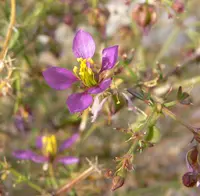
Protect From Heavy Rain

In regions with summer storms, place the plant in a slightly raised, gritty mound or rock crevice so brief downpours shed off the root zone rather than pooling around the crown.

Use Mineral Mulch

Apply a 1–2 in top layer of coarse gravel around the base instead of organic mulch to keep stems dry at soil level, reflect light to the foliage, and mimic its native desert-like habitat.

Control Winter Wet

In climates with cold, wet winters, use a simple clear rain shield or position the plant under an eave to limit prolonged soil saturation, which greatly lowers the risk of root and crown rot.

Monitor Salt Exposure

In coastal areas, site the plant where it gets good airflow but some protection from direct road salt spray, then lightly hose off foliage after strong onshore winds to prevent salt burn on leaves.

Common Pests and Diseases

Spider mites

This pest tends to appear in hot, dry conditions and feeds on the sap of small succulent leaves, causing stippling and fine webbing on stems and foliage.

Solution

Rinse plants thoroughly with a firm stream of water, then repeat every few days; in persistent cases use an insecticidal soap or horticultural oil labeled for mites, applied in the early morning and kept off stressed or sun-exposed tissue as much as possible.

Mealybugs

These insects cluster on stems and leaf joints, forming white cottony masses and weakening the plant by sucking sap.

Solution

Remove visible colonies with a cotton swab dipped in 70% isopropyl alcohol, then follow up with targeted sprays of insecticidal soap, repeating weekly until no new insects appear and isolating affected plants from others during treatment.

Scale insects

This pest appears as small, hard, brown or gray bumps on stems and sometimes leaves, leading to yellowing and reduced vigor due to sap loss.

Solution

Gently scrape or rub off individual scales with a fingernail or soft brush, then treat remaining insects with horticultural oil, ensuring thorough coverage of stems and repeating after 7–10 days if activity continues.

Leaf spot

This disease causes scattered tan or brown lesions on the fleshy leaves, often starting on older foliage and sometimes leading to premature leaf drop in humid or poorly ventilated sites.

Solution

Remove and discard affected leaves, reduce overhead watering, and improve air movement around the plant; in consistently wet climates a copper-based fungicide can be used preventively at labeled intervals if spotting continues to spread despite cultural changes.

Stem canker

This disease produces sunken, discolored patches on succulent stems that may crack or girdle the stem, especially after mechanical injury or prolonged moisture around the base.

Solution

Cut out affected stem sections back into healthy tissue with a sterile blade, allow wounds to dry in a well-ventilated, low-humidity area, and avoid wetting stems while watering, using clean, free-draining soil to support long-term Zygophyllum laeve care.

Interesting Facts

Native desert shrub

This species is a small, drought-adapted shrub native to arid regions of the southwestern United States and northern Mexico, where it grows on dry, rocky or sandy slopes and washes.

Succulent paired leaves

Its leaves are fleshy, paired leaflets that store water, an adaptation that helps the plant survive long periods without rainfall in hot, exposed habitats.

Winged seed dispersal

The plant produces distinctive flattened, winged fruits whose membranous wings help the seeds disperse by wind across open desert terrain.

FAQs about California fagonbush

Growth is generally slow to moderate. In suitable dry, sunny conditions, this shrub usually adds only a few inches per year, forming a compact mound over several seasons rather than shooting up quickly. Poor light or wet soil slows growth further.

Grow Healthy Plants with Botan Care

Keep your plants happy and healthy with plant identification, disease detection, and easy care guidance.

Botan plant care app — identify plants on mobile

Explore More Plants