Thornless Crown of Thorns Care (Euphorbia geroldii)

Thornless Crown of Thorns

About Thornless Crown of Thorns

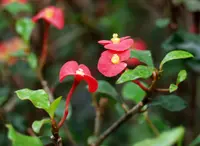
Thornless crown of thorns (Euphorbia geroldii) is a shrubby succulent known for its smooth, spineless stems and bright, waxy flowers. It usually stays compact, making it suitable for containers and small indoor spaces.

This species originates from Madagascar, where it grows in warm, relatively dry habitats. Its thick stems and leaves store water, so it tolerates short dry spells better than regular leafy houseplants.

It prefers bright light, modest watering, and a well-draining, gritty soil mix. These traits make it a relatively forgiving choice if you want to learn how to care for Thornless Crown of Thorns without constant attention.

Main Plant Requirements

Care Difficulty

Easy Care

Light Preference

Partial Sun

Water Requirements

Low Water

Temperature Preference

Tropical / Frost Sensitive

Hardiness Zone

10–11

Soil Texture

Sandy, Loamy, Organic-rich

Soil pH

Acidic (5.5–6.5), Slightly acidic (6.5–7.0)

Soil Drainage

Well-drained

Fertilization

Light (every 4–6 weeks)

Get Personalized Care Plan

Scan your plant to receive care tips personalized for your specific plant

Available on iOS and Android

How to Care for the Thornless Crown of Thorns

Euphorbia geroldii prefers bright conditions that mimic its native tropical habitat.

  • Provide 4–6 hours of bright light daily, ideally with morning sun and afternoon filtered light to protect leaves from scorching.
  • The Thornless Crown of Thorns tolerates light partial shade, but flowering declines if it receives under 3–4 hours of strong indirect or dappled light.
  • In hot summers, shield from harsh sun between 11 a.m.–3 p.m.; in winter, move it to the brightest available spot to compensate for shorter days.

Euphorbia geroldii stores water in its stems and prefers a thorough but infrequent watering routine.

  • Water only when the top 3–5 cm of soil are completely dry; soak the root zone, then let excess drain away fully.
  • Reduce watering in cooler months, allowing the soil to stay dry slightly longer, as growth slows and the plant uses less moisture.
  • Watch for overwatering signs such as yellowing, mushy stems or sour-smelling soil; slight leaf wrinkling or limp, thin stems suggest it has stayed dry too long.

This species prefers warm, stable temperatures typical of subtropical and tropical climates.

  • Aim for 65–80°F (18–27°C) for active growth, as this range supports steady metabolism and flowering.
  • Protect the plant from cold; growth stalls below 55°F (13°C) and tissue damage occurs near 40°F (4°C), especially with damp soil.
  • The plant tolerates short heatwaves up to 90–95°F (32–35°C) if shaded from intense midday sun and given good airflow to limit heat stress.

This species handles typical indoor humidity well, so humidity is rarely a limiting factor.

This succulent prefers a very fast-draining, gritty mix that dries quickly after watering.

  • Use a cactus/succulent base mix amended with coarse perlite and pumice or gritty sand for sharp drainage.
  • Aim for a light, airy texture rather than dense, organic-rich soil that stays wet for long periods.
  • Keep soil slightly acidic to neutral, around pH 6.0–7.0, which suits Euphorbia geroldii root function.
  • Avoid heavy clay, peat-heavy mixes, or any medium that compacts and reduces air spaces around the roots.

This plant is well suited to container culture, including long-term patio or indoor pot growing.

  • Select a pot only slightly wider than the rootball to keep the mix drying evenly and prevent prolonged wet pockets.
  • Choose a heavier or wider-based container to stabilize the branching, somewhat top-heavy form in wind or accidental bumps.
  • Use a pot material that breathes, such as unglazed terracotta, to speed moisture loss if you tend to water frequently.

This succulent shrub benefits from light, controlled feeding during the warm growing season.

  • Use a balanced liquid fertilizer (around 10-10-10 or 20-20-20) diluted to 25–50% strength in spring and summer for caring for Thornless Crown of Thorns.
  • Feed every 4–6 weeks while actively growing; skip applications if soil stays very dry for extended periods.
  • Do not fertilize in late fall and winter, when growth slows and roots are less active.
  • Avoid rich compost or frequent heavy feeding, which encourages weak, elongated growth and can cause root burn.

Thoughtful pruning keeps Euphorbia geroldii compact, healthy, and flowering well.

  • Time main pruning for late winter or early spring, just before strong new growth starts.
  • Remove dead, damaged, crossing, or very crowded stems using clean, sharp pruners.
  • Shorten overly long shoots to shape the plant and encourage branching and more blooms.
  • Wear gloves and eye protection, and avoid skin contact with the milky sap when cutting.

Container-grown plants respond well to careful, infrequent repotting in a sharply draining mix.

  • Check for roots circling the pot, pushing out of drainage holes, or very slow growth as signs it needs more space.
  • Plan to move it to a pot only 2–5 cm wider every 2–3 years, in late spring or early summer.
  • Use a gritty cactus/succulent soil and handle the brittle roots gently to limit disturbance.
  • Water lightly after repotting, then let the mix dry almost fully before the next watering to reduce root stress.

New Euphorbia geroldii plants are most often produced from stem cuttings taken in warm months.

  • Take semi-firm tip cuttings in late spring or summer and allow the milky sap to dry, then let cut ends callus for 1–2 days.
  • Place cuttings in a sterile, gritty cactus mix and keep slightly moist, not wet, for rooting.
  • Provide bright, indirect light and warm temperatures around 70–80°F to support root formation.
  • Seeds are rarely used; focus on cuttings for more predictable results and consistent traits.

This species is frost-sensitive and needs protection wherever temperatures drop near or below freezing.

  • Move container plants indoors before nights fall below 40°F, placing them in bright, indirect light.
  • Keep indoor temperatures around 60–75°F and reduce watering so soil dries well between waterings.
  • In mild climates, grow in the ground only in frost-free or near-frost-free areas and ensure perfect drainage.

Care Tips

Safe handling setup

Set up a stable working surface, wear gloves, and keep paper towels handy so you can quickly wipe and discard any white sap that leaks when stems are damaged or pruned, as the latex can irritate skin and eyes.

Strategic stem training

Use small bamboo stakes or a discreet hoop and soft ties to guide long, flexible stems outward and slightly upward, which increases light exposure along the branches and promotes more uniform flowering.

Controlled branching cuts

When a stem becomes too long or sparse, cut it back by 2–5 cm just above a node, then allow the cut to dry and callus, which usually triggers new side shoots and keeps the plant compact and floriferous.

Targeted pest monitoring

Inspect the undersides of leaves, young stem tips, and leaf axils every few weeks with a hand lens, and if early mealybugs or scale are found, spot-treat only the affected areas with cotton swabs dipped in isopropyl alcohol rather than spraying the whole plant.

Seasonal rest adjustment

In lower light winter months, reduce handling, repotting, and heavy pruning and let the plant rest, then resume more active shaping and any structural adjustments in late winter to early spring when caring for Thornless Crown of Thorns.

Common Pests and Diseases

Mealybugs

This pest feeds on young stems and leaf bases, often hiding in crevices and around flower stalks. Symptoms include cottony white clusters, sticky honeydew, and gradual decline in vigor.

Solution

Isolate the plant, then dab visible insects with cotton swabs dipped in 70% isopropyl alcohol and repeat weekly until gone. Improve light and air movement, rinse the plant with a gentle shower, and use a systemic insecticide or horticultural soap labeled for succulents if the infestation is extensive.

Spider mites

These insects thrive on Euphorbia geroldii in hot, dry indoor air and on outdoor plants during hot spells. Symptoms include very fine webbing between stems, speckled or dull leaves, and overall loss of vigor.

Solution

Increase humidity around the plant and rinse stems thoroughly with a strong but controlled stream of water, focusing on webbed areas. For persistent mites, apply insecticidal soap or neem oil to all plant surfaces every 5–7 days for several cycles, keeping the plant out of direct sun during treatment to prevent burn.

Scale insects

This pest appears as small, brown or tan bumps on stems and along leaf bases, where it sucks sap. Symptoms include yellowing, stunted growth, and sticky residue on or beneath the plant.

Solution

Gently scrape or rub off individual scales with a soft cloth or toothbrush, then wipe stems with diluted alcohol. For heavier infestations, use a horticultural oil or systemic insecticide suitable for Euphorbia species, repeating according to label directions until no new scales appear.

Stem canker

This disease causes localized dark, sunken, or corky lesions on the green stems, often starting where mechanical damage or cold injury occurred. Symptoms include shriveling above the affected area and dieback of branches if the canker girdles the stem.

Solution

Cut out affected stem sections back to healthy, firm tissue with a sterile blade and discard all infected material in the trash. Keep the plant in bright, dry, well-ventilated conditions, avoid overhead watering, and disinfect tools between cuts to limit further spread, following Euphorbia geroldii care practices that avoid wounding soft, new growth.

Latex sap burn

This problem results from the caustic white latex sap that leaks when stems are cut or damaged. Symptoms include brown, sunken patches on the plant’s own tissues where sap dries on surfaces, and skin or eye irritation for humans on contact.

Solution

Rinse any fresh cuts on the plant with a gentle stream of water and blot away excess sap to prevent self-burn, allowing wounds to dry in a shaded, airy spot. When pruning, wear gloves and eye protection, avoid splashing sap, and keep the plant away from children and pets to reduce exposure risks.

Interesting Facts

Naturally thornless stems

Unlike many other crown of thorns relatives, this species has almost completely smooth, thornless stems, likely due to its evolution in the understory of humid Madagascar forests where heavy mechanical defense is less critical.

Madagascar island endemic

This plant is native only to a limited area of northeastern Madagascar, where it grows in warm, humid lowland habitats that differ strongly from the arid environments of many other Euphorbia species.

Long-lived red bracts

Its showy red structures are long-lasting bracts, not petals, surrounding tiny true flowers, a trait that allows the plant to maintain conspicuous displays for pollinators with relatively low energy investment.

Botan icon

Did you know?

In its native range in northeastern Madagascar, this species is considered threatened in the wild due to habitat loss, so most plants in cultivation today originate from horticultural propagation rather than wild collection.

FAQs about Thornless Crown of Thorns

Lack of blooms often comes from insufficient light, cool temperatures, or low nutrients. Older, shaded stems flower less. Provide bright conditions, a light monthly feed in the growing season, and avoid frequent repotting to support flowering.

Grow Healthy Plants with Botan Care

Keep your plants happy and healthy with plant identification, disease detection, and easy care guidance.

Botan plant care app — identify plants on mobile

Explore More Plants