Encourage Dense Mats
Pinch back the tips of long shoots every 3–4 weeks to promote branching and create a fuller, carpet-like mat rather than a few long, straggling stems.

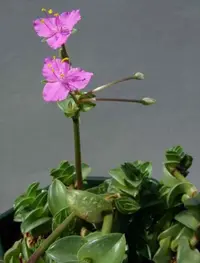
Callisia navicularis, commonly called chain plant, is a compact trailing succulent often grown in small pots or hanging containers. It forms dense mats of closely spaced, boat-shaped leaves along thin, creeping stems.
This species is native to dry, rocky areas of Mexico, where it experiences strong light and brief periods of moisture followed by drying. Its succulent leaves store water, which makes it relatively forgiving of short lapses in watering.
Due to its drought tolerance and small size, many growers find it easy to care for Chain plant in bright indoor spots, provided it has fast-draining soil and is not overwatered.

Care Difficulty
Moderate Care

Light Preference
Bright Indirect Light

Water Requirements
Moderate Water

Temperature Preference
Tropical / Frost Sensitive

Hardiness Zone
10–11

Soil Texture
Loamy, Sandy, Organic-rich

Soil pH
Acidic (5.5–6.5), Slightly acidic (6.5–7.0)

Soil Drainage
Moist but well-drained

Fertilization
Light (every 4–6 weeks)
Scan your plant to receive care tips personalized for your specific plant
Available on iOS and Android
This succulent prefers bright, indirect light with some gentle direct sun for best color and compact growth.
This plant prefers light, even moisture with short dry periods rather than constantly wet soil.
This species prefers warm conditions and does not tolerate frost or prolonged cold.
This species prefers moderately humid air but adapts to many home environments.
This plant prefers a light, fast-draining mix that still holds some moisture.
This trailing species is well suited to growing in containers and hanging pots.
Callisia navicularis responds well to modest feeding during the active growing season.
Pruning helps Callisia navicularis stay compact, bushy, and free of damaged growth.
This small trailing plant adapts well to containers and needs only occasional repotting.
Callisia navicularis is commonly multiplied by stem cuttings and simple division.
This species is frost sensitive and needs mild conditions or indoor shelter over winter.

Plant Health Check
Not sure what's wrong with your plant? Check your plant's health inside the app.
This species has thick, boat-like leaves with a grooved upper surface that can channel small amounts of water toward the stem, a useful adaptation in its naturally dry habitats.
The foliage stays mostly green in shade but develops purple to bronzy tones on the leaf undersides and edges under higher light, a pigment response linked to protective anthocyanins.
In its native range, this plant forms low, creeping mats over rocks and shallow soil, helping stabilize loose substrates and creating small microhabitats for invertebrates.
Brown leaf tips or patches usually come from underwatering, very dry air, or fertilizer burn. Check soil moisture, flush excess salts occasionally, and keep it away from hot drafts or direct blasts from heaters or air conditioners.
Keep your plants happy and healthy with plant identification, disease detection, and easy care guidance.