Aeonium davidbramwellii Care

Aeonium davidbramwellii

About Aeonium davidbramwellii

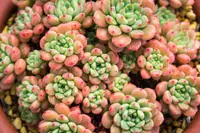
Aeonium davidbramwellii is a compact, shrubby succulent from the Canary Islands, valued for its tight rosettes of fleshy, spoon-shaped leaves. Mature plants often branch, forming low mounds that show off their symmetrical rosettes and, in season, tall stems of small yellow flowers.

This species prefers bright, indirect light and a dry, well-drained growing medium similar to other arid-climate succulents. Its drought tolerance and slow to moderate growth rate make it manageable for most home growers.

Understanding how to care for Aeonium davidbramwellii mainly involves avoiding overwatering and providing enough light, which keeps the rosettes dense and the plant structurally strong.

Main Plant Requirements

Care Difficulty

Moderate Care

Light Preference

Full Sun

Water Requirements

Low Water

Temperature Preference

Tropical / Frost Sensitive

Hardiness Zone

10–11

Soil Texture

Sandy, Loamy, Rocky

Soil pH

Slightly acidic (6.5–7.0), Neutral (7.0)

Soil Drainage

Well-drained

Fertilization

Minimal (feed rarely)

Get Personalized Care Plan

Scan your plant to receive care tips personalized for your specific plant

Available on iOS and Android

How to Care for the Aeonium davidbramwellii

This sun-loving succulent needs strong light but benefits from protection during harsh afternoon exposure.

  • Provide 4–6 hours of direct morning sun plus bright light the rest of the day; in very hot climates, give light or dappled afternoon shade.
  • Outdoors, place Aeonium davidbramwellii where it gets east or southeast exposure; indoors, use a south-facing window with sheer curtain if leaves scorch.
  • Pale, stretched rosettes signal too little light, while brown, crispy patches on upper leaves indicate sunburn from excessive midday sun.

This species prefers infrequent, thorough watering that allows the soil to dry between soakings.

  • Water only when the top 3–5 cm of soil are completely dry, then soak fully and let excess drain away; avoid leaving water in saucers or trays.
  • During active growth in cooler seasons, you may water more often, but in hot summer dormancy reduce watering sharply to prevent root rot.
  • Soft, yellowing, translucent leaves suggest overwatering, while wrinkled, deflated lower leaves that do not plump after watering indicate underwatering in Aeonium davidbramwellii.

This succulent thrives in mild, frost-free conditions with good air movement.

  • Aim for 60–75°F (16–24°C) for best growth; brief dips to 40°F (4°C) are tolerated if soil is dry, but avoid prolonged cold and damp.
  • Protect from frost below 32°F (0°C), as tissue damage occurs quickly; in borderline zones, grow in pots that can be moved under cover in winter.
  • Heat up to 90°F (32°C) is tolerated if light is slightly filtered and airflow is strong; reduce watering during very hot spells to limit rot risk.

This succulent tolerates typical indoor humidity and does not need special humidity management.

This species needs a very free-draining, mineral-based substrate to prevent root and stem rot.

  • Use a gritty mix such as 50–70% inorganic material (pumice, perlite, coarse sand, small gravel) with 30–50% low-peat cactus compost.
  • Aim for a loose, open texture that dries within a few days and never stays wet or compacted around the roots.
  • Keep pH slightly acidic to neutral, around 6.0–7.0, which suits most commercial cactus and succulent mixes.
  • Avoid heavy garden soil, high-peat mixes, or containers without drainage, as these trap moisture and suffocate roots.

This species is well suited to container growing when the pot supports its shallow, spreading root system.

  • Choose a wide, shallow pot to support rosette spread and prevent the plant from becoming top-heavy and tipping over.
  • Use a heavy terracotta or ceramic pot when grown outdoors in windy sites to add weight and stabilize tall stems.
  • Raise the container on pot feet or bricks so drainage holes stay clear and excess water escapes quickly after watering or rain.

This succulent benefits from light feeding during its active growth but is sensitive to excess nutrients.

  • Use a balanced liquid fertilizer (around 10-10-10) diluted to 25–50% strength for Aeonium davidbramwellii.
  • Feed every 4–6 weeks in the main growing season, typically spring to early summer.
  • Avoid fertilizer during summer dormancy and midwinter when growth slows markedly.
  • Choose low-salt products or add a thin layer of mature compost to the soil surface instead of frequent chemical feeding.

Light structural pruning keeps this rosette-forming succulent compact and tidy.

  • Best time for pruning is late winter to early spring, just before active growth resumes.
  • Remove dead, damaged, or shriveled rosettes and stems with clean, sharp scissors or pruners.
  • Thin out crowded stems to improve airflow and maintain a balanced, upright form in Aeonium davidbramwellii.
  • Cut just above a node to encourage branching and denser growth without stressing the plant.

This plant prefers infrequent repotting, with attention to drainage and minimal root disturbance.

  • Repot every 2–3 years when roots circle the pot, growth slows, or soil stays wet too long.
  • Choose late winter to early spring so Aeonium davidbramwellii can re-establish as growth begins.
  • Use a shallow pot with large drainage holes and a gritty cactus or succulent mix.
  • Gently loosen the root ball, remove old soil, replant at the same depth, then water lightly after 2–3 days of recovery.

A. davidbramwellii is most commonly propagated from stem cuttings taken in the active season.

  • Take 5–10 cm stem cuttings with a healthy rosette in spring or early summer.
  • Allow cut ends to callus in dry shade for 2–5 days to reduce rot risk.
  • Set cuttings into barely moist, gritty mix and keep in bright, indirect light with good airflow.
  • Seeds can be sown on the surface of a well-draining mix in warm conditions for slower, genetic variation.

This succulent is frost sensitive and needs protection in regions with freezing winters.

  • Aeonium davidbramwellii is best kept above 32°F; brief light frosts may scar foliage.
  • Grow in containers in cold climates so plants can be moved indoors to a bright, cool room for winter.
  • Outdoors in mild zones, apply a light gravel mulch to keep the root zone drier and slightly insulated.
  • Avoid overhead watering in cold weather to reduce rot in the rosettes and stems.

Care Tips

Rotate for symmetry

Turn the pot 90° every 1–2 weeks during active growth so all rosettes receive similar light and the plant develops an even, compact form instead of leaning to one side.

Refresh topdressing

Add or replace a 1–2 cm top layer of coarse grit or small gravel around the base of the rosettes to keep lower leaves off wet soil, reduce rot risk, and give better air circulation at the crown.

Manage offset clusters

Thin out tightly packed offsets by removing a few at the edges in spring so remaining rosettes have better airflow and light, which reduces fungal issues and distortion.

Seasonal container shift

Use a slightly heavier or wider pot and place it in a sheltered position before seasonal storms or strong winds, which helps prevent tall, branching stems from toppling or snapping.

Dry-leaf hygiene

Periodically remove completely dry, papery leaves from the lower parts of rosettes using clean fingers or scissors to reduce hiding places for mealybugs and to keep the structure of the plant visible when caring for Aeonium davidbramwellii.

Common Pests and Diseases

Mealybugs

This pest feeds on leaf and stem sap, often hiding in the tight rosette centers and at leaf bases, leaving white cottony clusters. Symptoms include stunted growth, distorted new leaves, and sticky honeydew that can attract sooty mold.

Solution

Remove visible insects with a cotton swab dipped in 70% isopropyl alcohol and rinse the rosettes thoroughly with a firm stream of water, making sure to reach the crown and between leaves. For heavier infestations, repeat alcohol spot treatments weekly and use a systemic insecticide labeled for succulents if the plant is grown outdoors, always isolating the plant from others until the population is controlled.

Aphids

These insects often colonize young rosettes and flower stalks, sucking sap and causing curled, sticky, or misshapen leaves. Honeydew deposits can lead to black sooty mold on the foliage.

Solution

Dislodge aphids by spraying the plant with a strong stream of water, targeting the undersides of leaves and flower stems. If populations persist, apply insecticidal soap or a ready-to-use neem oil product in the early morning or evening, repeating every 5–7 days until new growth appears clean.

Soft scale

This pest appears as small, dome-shaped bumps along stems and older leaves, where it feeds on sap and weakens the plant. Symptoms include yellowing, reduced vigor, and sticky honeydew around the plant.

Solution

Gently scrape or rub off individual scales with a fingernail or soft toothbrush and wipe stems with a cloth lightly moistened with 70% isopropyl alcohol. For larger colonies on outdoor plants, use a horticultural oil spray during mild weather, ensuring complete coverage of stems and leaf bases while avoiding intense sun right after application.

Powdery mildew

This disease produces white, dusty patches on the fleshy leaves and sometimes along stems, especially when nights are cool and air is humid but stagnant. Symptoms include dull, blotchy foliage and slowed growth.

Solution

Improve airflow around the rosettes by spacing plants, thinning crowded offsets, and avoiding overhead watering late in the day. Remove heavily affected leaves and treat remaining foliage with a sulfur-based fungicide or a potassium bicarbonate product labeled for ornamentals, applying during cooler parts of the day and keeping the plant out of direct hot sun until dry.

Botrytis blight

This disease causes soft, watery leaf spots that quickly turn brown and may develop a gray fuzzy mold, usually starting on lower leaves trapped in dense rosettes. Symptoms include rapid collapse of affected tissues, especially after prolonged cool, damp conditions.

Solution

Promptly remove and discard all affected leaves and any dead material caught within the rosettes, then allow the plant to dry with good air circulation and no overhead watering. In persistent wet or cool conditions, a preventive fungicide labeled for Botrytis on ornamentals can be applied, and watering should be reduced so the soil dries well between waterings, which supports healthy growing Aeonium davidbramwellii.

Interesting Facts

Endemic to La Palma

This species is naturally restricted to the Canary Island of La Palma, where it grows on dry cliffs and rocky slopes in the island’s north and northwest, often forming small, localized colonies.

Rosettes with woody trunks

Unlike many low, ground-hugging aeoniums, this plant develops a shrubby, branching structure with thick, woody stems that hold large, green rosettes at their tips.

Tall, conical flower spikes

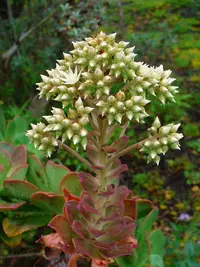
Mature plants produce tall, conical inflorescences packed with numerous small, star-shaped yellow flowers, which can significantly change the silhouette of the plant during the flowering period.

FAQs about Aeonium davidbramwellii

Leggy, stretched growth usually results from insufficient light, especially in winter or indoors. The rosettes elongate and spacing between leaves increases. Rotate the pot regularly and move the plant to a brighter spot to maintain compact shape.

Grow Healthy Plants with Botan Care

Keep your plants happy and healthy with plant identification, disease detection, and easy care guidance.

Botan plant care app — identify plants on mobile

Explore More Plants