Odor-aware placement
Position the plant where its large flowers can be enjoyed but the carrion-like scent will not be bothersome, such as near a window that can open or in a rarely used room during the main blooming season.

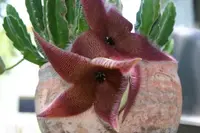
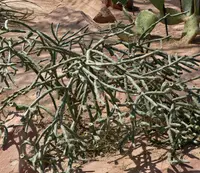
Starfish cactus (Stapelia grandiflora) is a succulent from arid regions of southern Africa, valued for its striking, star-shaped flowers and angular, leafless stems. It grows as a low, clumping plant, making it suitable for containers and small indoor collections.
The large blooms can have a hairy texture and a strong odor that attracts flies, which act as pollinators. Its succulent stems store water, so it tolerates short dry periods but is sensitive to overwatering and poor drainage.
With bright indirect light, a fast-draining soil mix, and careful watering, many indoor growers find it manageable once they learn how to care for Starfish Cactus.

Care Difficulty
Moderate Care

Light Preference
Bright Indirect Light

Water Requirements
Low Water

Temperature Preference
Tropical / Frost Sensitive

Hardiness Zone
10–11

Soil Texture
Sandy, Loamy, Rocky

Soil pH
Slightly acidic (6.5–7.0), Neutral (7.0)

Soil Drainage
Well-drained

Fertilization
Minimal (feed rarely)
Scan your plant to receive care tips personalized for your specific plant
Available on iOS and Android
Stapelia grandiflora prefers bright, indirect light that mimics open, lightly shaded desert edges.
This succulent stores water in its stems and needs a careful dry-down between waterings.
This species prefers warm, stable conditions with no exposure to frost.
This species prefers relatively dry air and does not need elevated humidity.
This succulent requires a very fast-draining, mineral-based soil mix to prevent root and stem rot.
This species is very suitable for container growing due to its shallow, spreading root system.
This succulent benefits from light, targeted feeding during its active growing season.
Pruning Stapelia grandiflora is mainly done to maintain plant health and tidy growth.
Stapelia grandiflora prefers slightly snug containers and only occasional repotting.
Propagation of Stapelia grandiflora is commonly done from stem cuttings for consistent results.
This succulent is frost sensitive and needs careful winter management in most climates.

Plant Health Check
Not sure what's wrong with your plant? Check your plant's health inside the app.
The flowers closely mimic the appearance and texture of rotting meat, including dull maroon coloration and wrinkled, fleshy surfaces, to deceive carrion flies that normally visit animal carcasses.
The foul odor of the blooms becomes stronger on warm, still days, as higher temperatures increase the release and volatility of the scent compounds that attract pollinating flies.
Unlike many desert succulents with thick taproots, this species develops a shallow, finely branched root system adapted to quickly absorb brief pulses of rain in its natural, rocky habitats.

Stapelia grandiflora sometimes supports developing fly larvae on or near its flowers, because flies often lay eggs on the blooms after being fooled by the carrion-like cues, illustrating how its pollination strategy can directly overlap with the early life cycle of its pollinators.
Lack of flowering is often due to insufficient light, a pot that is too large, or overly rich, moist soil. Slight root crowding, a sunny exposure, and a dry rest period help trigger buds when caring for Starfish Cactus.
Keep your plants happy and healthy with plant identification, disease detection, and easy care guidance.