Summer growth shift
Move containers to a slightly cooler, bright spot in late spring to trigger compact rosette growth, as this species does most of its active growth in mild summer rather than in high heat.

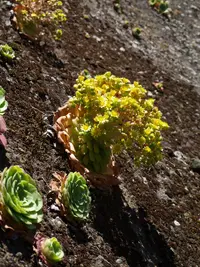
Disc house-leek, Aeonium glandulosum, is a compact rosette-forming succulent from the cliffs and rocky slopes of Madeira in the Atlantic Ocean. It naturally grows in shallow, stony pockets with excellent drainage.
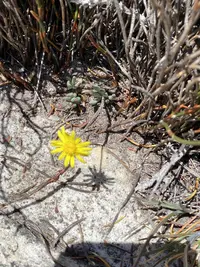
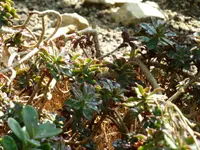
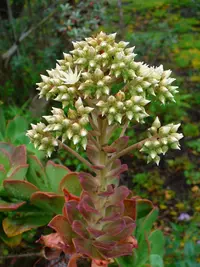
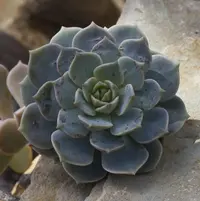
The plant forms flat, often nearly circular rosettes of fleshy leaves that can show red or bronze tones in strong light, creating a low, disk-like cushion. In time, it may produce short branching stems and a tall flower stalk with yellow star-shaped blooms.
This species prefers bright light, mild temperatures, and free-draining, gritty soil, which makes it suitable for containers and rock gardens in mild climates. Once its needs are understood, it is relatively straightforward to care for Disc House-leek.

Care Difficulty
Moderate Care

Light Preference
Partial Sun

Water Requirements
Low Water

Temperature Preference
Tropical / Frost Sensitive

Hardiness Zone
10–11

Soil Texture
Sandy, Loamy, Rocky

Soil pH
Acidic (5.5–6.5), Slightly acidic (6.5–7.0)

Soil Drainage
Well-drained

Fertilization
Minimal (feed rarely)
Scan your plant to receive care tips personalized for your specific plant
Available on iOS and Android
Aeonium glandulosum prefers bright outdoor conditions that balance sun exposure with protection from harsh midday rays.
Aeonium glandulosum needs careful, infrequent watering that allows the soil to dry slightly between soakings.
This species prefers mild, frost-free conditions with only moderate heat.
This succulent handles a wide humidity range and rarely needs special humidity control.
Aeonium glandulosum needs a sharply draining, gritty mix that dries quickly after watering.
This species is well suited to container growing when the pot supports fast drainage and shallow roots.
Aeonium glandulosum benefits from light, controlled feeding during active growth but is sensitive to excess nutrients.
Aeonium glandulosum responds well to light, targeted pruning that keeps rosettes tidy and healthy.
Aeonium glandulosum is slow-growing and dislikes frequent disturbance, so repot or transplant only when clearly needed.
Aeonium glandulosum is commonly propagated from stem cuttings and offsets, with seeds used less often.
Aeonium glandulosum is not frost hardy and needs thoughtful winter management in cold climates.

Plant Health Check
Not sure what's wrong with your plant? Check your plant's health inside the app.
This species is naturally restricted to Madeira, where it grows on coastal cliffs and rocky slopes exposed to ocean winds and salt spray.
The plant forms flat, disk-like rosettes that grow mainly in the cooler, moist winter months and often pause or partially wither during the hot, dry summer.
Individual plants are relatively short-lived, but they maintain populations over time by producing many offsets and seeds that colonize small rock crevices.

Aeonium glandulosum is considered one of the most morphologically distinctive aeoniums, with extremely flat, plate-like rosettes that can press tightly against rock surfaces, an adaptation that helps reduce moisture loss and wind damage in its exposed cliff habitats.
This species needs several years to reach flowering size and often blooms only once before rosettes decline. Insufficient light, very frequent disturbance, or heavy feeding that keeps it in lush vegetative growth can also delay flower formation.
Keep your plants happy and healthy with plant identification, disease detection, and easy care guidance.