


Encourage Compact Growth
Rotate the pot 90° every 2–3 weeks during the bright season so the stem receives even light and stays cylindrical instead of leaning or elongating toward one direction.

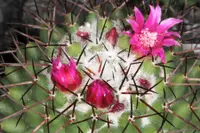
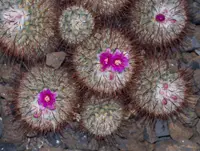
Mammillaria polythele is a small, column-forming cactus known for its dense clusters of tubercles and fine, bristly spines. Mature plants often develop multiple stems, creating a compact clump over time.
This species is native to arid regions of central Mexico, where it grows in rocky, well-drained soils with intense sun and low rainfall. Its drought tolerance and slow growth habit make it a suitable choice for beginners learning how to care for Mammillaria polythele.
It generally prefers bright light, minimal watering, and gritty, fast-draining soil, which helps prevent root problems in cultivation.

Care Difficulty
Easy Care

Light Preference
Full Sun

Water Requirements
Low Water

Temperature Preference
Tropical / Frost Sensitive

Hardiness Zone
9–11

Soil Texture
Sandy, Loamy, Rocky

Soil pH
Slightly acidic (6.5–7.0), Neutral (7.0)

Soil Drainage
Well-drained

Fertilization
Minimal (feed rarely)
Scan your plant to receive care tips personalized for your specific plant
Available on iOS and Android
This cactus prefers bright light and handles strong sun if introduced gradually.
Watering should imitate brief desert rains followed by long dry periods.
Stable warmth with a cool, dry rest period supports compact, healthy growth.
This cactus prefers dry air and usually does not need special humidity control indoors.
Mammillaria polythele needs a very fast-draining, mineral-rich substrate to prevent root rot.
This species is well suited to container growing when drainage and stability are managed carefully.
This cactus needs only light feeding to support compact, healthy growth in containers.
Pruning needs for this cactus are minimal and focus on cleanliness rather than shaping.
This slow-growing cactus is usually repotted infrequently to refresh soil and prevent crowding.
This species is commonly propagated from offsets and can also be raised from seed for larger batches.
Winter care focuses on keeping this cactus cold but dry to maintain a safe dormancy period.

Plant Health Check
Not sure what's wrong with your plant? Check your plant's health inside the app.
Unlike many Mammillaria species with only tubercles, this cactus shows a transitional form where its tubercles are aligned into clear vertical ribs, a trait more typical of columnar cacti in other genera. This structure is considered an example of morphological evolution within the family Cactaceae and is used to help distinguish it from closely related species.
A well-known cultivated form, often labeled Mammillaria polythele f. inermis or as a monstrose clone, produces irregular, knobbly growth with greatly reduced or absent spines. This abnormal growth pattern arises from a stable genetic mutation and is propagated vegetatively to maintain its unusual shape.
The species produces a ring, or crown, of tubular to funnel-shaped magenta flowers near the stem apex, rather than scattered blooms. This flower banding is a diagnostic feature used by growers and botanists to recognize the species in collections and in habitat.

This species was first described scientifically in the 19th century from plants collected in central Mexico, and its name polythele refers to its many nipple-like tubercles, which are a key character used in cactus taxonomy to separate it from similar columnar cacti.
This cactus usually blooms in late spring to summer, producing a ring of small funnel-shaped flowers near the stem top. Blossoms are typically pink to magenta and may be followed by small red fruit.
Keep your plants happy and healthy with plant identification, disease detection, and easy care guidance.

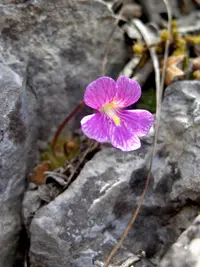
Pinguicula debbertiana
Pinguicula debbertiana
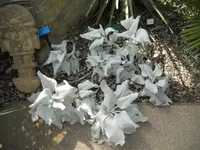
Sea Cabbage
Senecio candidans
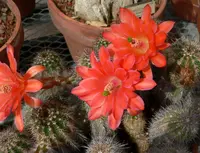
Mojave mound cactus
Echinocereus polyacanthus
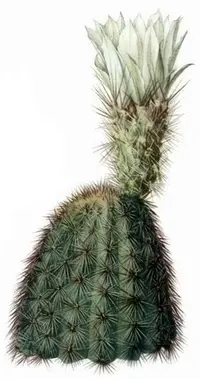
San Esteban hedgehog
Echinocereus grandis
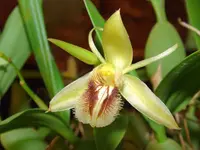
Brown Rock Orchid
Coelogyne fimbriata
 POPULAR
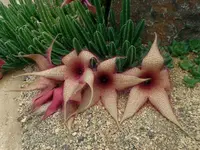
Carrion plant
Stapelia gigantea
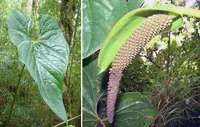
Anthurium formosum
Anthurium formosum
Silken Pincushion Cactus
Mammillaria bombycina