Brain Cactus Care (Stenocactus multicostatus)

Brain Cactus

About Brain Cactus

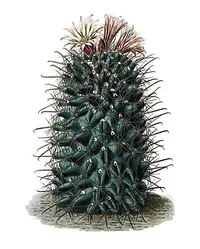
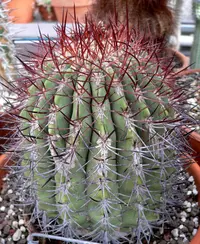
Brain cactus, Stenocactus multicostatus, is a small, slow-growing desert cactus known for its many narrow ribs that twist into a brain-like pattern. Mature plants form compact, rounded clumps with stiff, radiating spines that protect the body and give it a sculptural look.

This species comes from arid regions of Mexico, where it grows in rocky, very well-drained soils under strong sun. Its drought tolerance and compact size make it suitable for containers and windowsills, as long as watering stays light and infrequent.

Understanding how to care for Brain Cactus mainly involves providing bright light, gritty soil, and careful watering, which keeps the roots healthy and reduces the risk of rot.

Main Plant Requirements

Care Difficulty

Moderate Care

Light Preference

Full Sun

Water Requirements

Low Water

Temperature Preference

Tropical / Frost Sensitive

Hardiness Zone

10–11

Soil Texture

Sandy, Loamy, Rocky

Soil pH

Slightly acidic (6.5–7.0), Neutral (7.0)

Soil Drainage

Well-drained

Fertilization

Minimal (feed rarely)

Get Personalized Care Plan

Scan your plant to receive care tips personalized for your specific plant

Available on iOS and Android

How to Care for the Brain Cactus

Stenocactus multicostatus prefers bright, indirect light with some direct sun to maintain compact, healthy growth.

  • Provide 4–6 hours of direct morning sun with bright, indirect light for the rest of the day; Brain Cactus can tolerate light afternoon sun in cooler climates.
  • Allow light partial shade during the hottest afternoon hours to prevent yellowing or scorched ribs, especially in summer.
  • Increase light gradually in spring after winter dormancy; in low light it elongates and loses strong rib definition, so move it closer to a bright window or sunnier spot.

Watering for this cactus must be infrequent and guided by soil dryness rather than a strict calendar.

  • Water only when the top 3–5 cm of soil are completely dry; in warm growing seasons this may mean roughly every 10–21 days depending on heat and airflow.
  • Use a very fast-draining, gritty mix and water thoroughly until excess drains away, then empty any saucer so roots are not left standing in moisture.
  • Reduce watering sharply in fall and keep almost dry in winter; soft, yellowing tissue suggests overwatering, while deep wrinkling and shriveling indicate it has stayed dry too long.

Stable warm conditions support strong growth and reduce stress for this cactus species.

  • Aim for 70–85°F (21–29°C) during active growth, with slightly cooler nights; it tolerates short hotter spells if shaded and well ventilated.
  • Protect from cold below 40°F (4°C); brief dips to 35–40°F (2–4°C) are survivable when completely dry, but repeated exposure weakens the plant.
  • Avoid frost, as tissue damage occurs at around 32°F (0°C); in summer heat above 95°F (35°C), give light shade and avoid watering during the hottest part of the day.

This cactus prefers dry indoor air and rarely needs extra humidity attention.

  • Aim for 25–40% humidity, similar to a dry, heated room, which matches its desert origin.
  • The plant tolerates very dry air; problems usually come from excess moisture around the roots rather than low humidity.
  • If skin wrinkles and the plant feels soft while soil is dry, increase watering slightly instead of raising air humidity, as Brain Cactus dislikes damp air.

Use a very fast-draining, mineral-rich cactus substrate to prevent root rot.

  • Choose a gritty mix, such as 50–70% inorganic particles (pumice, coarse sand, crushed granite) with 30–50% cactus potting mix for structure and modest organic content.
  • Ensure water runs through the pot within seconds; heavy, moisture-holding media or peat-rich mixes suffocate roots of Stenocactus multicostatus.
  • Keep pH slightly acidic to neutral (pH 6.0–7.2), which supports nutrient uptake without encouraging salt buildup.
  • Improve aeration by adding extra pumice or perlite and avoid dense garden soil, clay, or fine sand that compacts and reduces oxygen at the root zone.

This species grows very well in containers when drainage and root-zone drying are carefully controlled.

  • Use a shallow, wide pot that matches the modest root system, which helps the soil dry faster and stabilizes the ribbed body.
  • Select unglazed terracotta if possible, as its porous walls allow faster evaporation and reduce the risk of chronic dampness.
  • Place a thin, flat layer of coarse gravel on the soil surface to reduce algae and crusting while still allowing rapid evaporation from the mix.

Stenocactus multicostatus has low nutrient needs but benefits from light, controlled feeding in the active growing season.

  • Use a balanced liquid cactus fertilizer (for example, 10-10-10) diluted to 25–50% strength to prevent root burn.
  • Feed every 4–6 weeks in spring and summer when growing Brain Cactus in bright, warm conditions.
  • Stop fertilizing in fall and winter to support a cool, dry rest period and avoid weak, elongated growth.
  • Apply fertilizer only to moist soil, never onto dry substrate, and flush with plain water a few times each season to limit salt buildup.

Stenocactus multicostatus needs almost no pruning, as it naturally maintains a compact, symmetrical shape.

  • Limit work to removing dead, shriveled, or diseased tissue at any time of year using clean, sharp scissors or a sterile knife.
  • Cut away any rotted sections well into healthy tissue, then keep the plant dry for several days to reduce infection risk.
  • Avoid trimming healthy ribs or the central body, since this cactus does not resprout attractively from large wounds.

This cactus grows slowly and prefers staying slightly root-bound, so repotting is infrequent but occasionally necessary.

  • Check for roots circling the pot, emerging from drainage holes, or very slow growth as signs it needs a larger container.
  • Plan to repot every 3–4 years in late spring, using a shallow pot with drainage and a gritty cactus mix.
  • Water lightly 2–3 days before repotting, then gently loosen the root ball and remove old, compacted soil.
  • After repotting, keep the plant dry for 5–7 days, then resume light watering to let damaged roots callus and recover.

Stenocactus multicostatus is usually propagated from seed, as offsets are rare and vegetative methods are limited.

  • Sow fresh seeds in late spring or early summer on the surface of a sterile, very well-drained cactus mix.
  • Maintain 70–80°F, bright indirect light, and consistently slightly moist (not wet) substrate until germination.
  • Cover the tray with a clear lid or plastic to hold humidity, then gradually ventilate once seedlings appear.
  • Transplant seedlings into individual pots only when they are firm, clearly ribbed, and easy to handle.

This species needs a cool, dry winter rest and is not suited to prolonged freezing outdoor conditions in most climates.

  • Keep winter temperatures around 45–55°F indoors, always above 32°F, to prevent cold damage to the stem.
  • Move container plants to a bright, frost-free spot such as a cool windowsill or unheated but insulated room.
  • Stop watering from late fall through winter, giving only a very light sip once if the body starts to shrivel noticeably.

Care Tips

Protect ribbed body

Use a top dressing of coarse grit or small stones to keep the heavily ribbed stem dry at the base and prevent rot where dense spines trap moisture against the epidermis.

Rotate for symmetry

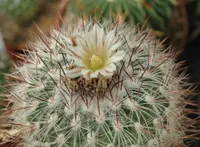
Turn the pot 90° every 2–3 weeks during active growth so the ribs develop evenly and the plant maintains a compact, symmetrical globe instead of leaning toward the light source.

Dry winter rest

From late fall to early spring, keep the plant completely dry and in a cooler bright spot to encourage stronger rib development and more reliable flowering the following season.

Spine-safe handling

When repotting or inspecting roots, wrap the plant gently with folded newspaper or a foam strip to avoid breaking spines and bruising the stem, which are slow to heal on this species.

Long-stay potting

Choose a slightly wider, shallow clay pot and plan to leave the plant undisturbed for 3–4 years, since minimal repotting reduces root damage and supports stable, compact growth when growing Brain Cactus.

Common Pests and Diseases

Mealybugs

This pest often hides in ribs and woolly areoles, sucking sap and leaving white cottony clusters on the cactus body and between dense spines.

Solution

Isolate the plant, then dab visible insects and clusters with cotton swabs dipped in 70% isopropyl alcohol and repeat weekly until no new pests appear; for larger infestations, use a systemic insecticide labeled for cacti and reduce excess nitrogen fertilization that encourages soft, weak growth.

Red spider mites

These insects prefer hot, dry conditions and can cause pale spotting, bronzing, and a dull, dusty look on the ribs of the cactus.

Solution

Increase humidity around the plant without wetting the stem for long periods, rinse the cactus gently with a strong but controlled stream of water, and treat with a miticide or insecticidal soap labeled for mites, repeating applications according to label directions until new damage stops.

Scale insects

This pest appears as small, hard, brown or tan bumps along ribs and at the base of spines, causing yellowing and weakened tissue as they feed on sap.

Solution

Manually scrape or pry off individual scales with a blunt tool or cotton swab, then follow with repeated applications of horticultural oil or a systemic insecticide suitable for succulents, focusing on crevices where young crawlers hide.

Fungal stem spots

This disease produces localized brown, sunken, or corky patches on the stem, often starting where water sits trapped between ribs or around spine bases.

Solution

Remove severely affected tissues with a sterile blade if practical, keep the plant in a warm, bright, well‑ventilated spot, water only at the soil level in the morning, and apply a sulfur- or copper-based fungicide if spots continue to enlarge.

Basal stem rot

This disease causes soft, discolored tissue at the base of the plant, often with a brown or black band where the stem meets the soil, usually after prolonged overwatering or cold, wet conditions.

Solution

Immediately unpot the cactus, cut away all soft tissue with a sterile knife, dust healthy surfaces with sulfur powder, and re-root the remaining firm, uninfected section in completely dry, very gritty cactus mix, then resume light watering only after new roots form.

Interesting Facts

Extremely many ribs

This species can develop 100 or more very narrow ribs, far more than most cacti, which gives the stem a pleated, brain-like appearance and increases surface area for photosynthesis while allowing the plant to expand and contract with water availability.

Cold-tolerant desert cactus

In habitat in northeastern Mexico, this cactus endures relatively cool, semi-arid conditions and can survive short drops close to freezing when kept dry, an adaptation that distinguishes it from many more heat-demanding desert cacti.

Large flowers on small body

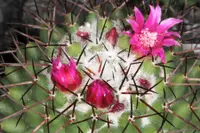
The plant produces pale cream to pinkish flowers with darker midstripes that can nearly match or exceed the diameter of the small, often golf ball–sized stem, a striking example of resource investment in reproduction relative to body size.

Botan icon

Did you know?

Wild populations of this species have a very restricted distribution in parts of northeastern Mexico and can be locally uncommon, so conservation-minded growers prefer seed-grown plants from nurseries rather than wild-collected specimens.

FAQs about Brain Cactus

Flowering is often reduced by insufficient light, cool temperatures during the growing season, or lack of a dry, cool winter rest. Slightly tighter potting, lean fertilization, and strong light usually improve bud formation over time.

Grow Healthy Plants with Botan Care

Keep your plants happy and healthy with plant identification, disease detection, and easy care guidance.

Botan plant care app — identify plants on mobile

Explore More Plants