Denmoza rhodacantha Care

Denmoza rhodacantha

About Denmoza rhodacantha

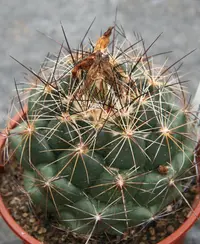
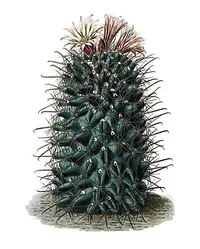
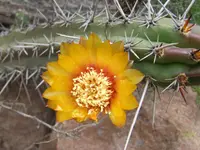
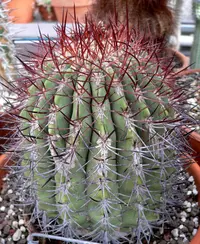
Denmoza rhodacantha is a slow-growing, columnar cactus native to high-altitude regions of Argentina. Young plants stay globular for many years before elongating into narrow columns. It has dense, stiff spines that range from reddish to brown, giving the plant a striking, armored look against its green body. Large tubular flowers may appear on mature plants, usually in warmer seasons. This species prefers bright light, low humidity, and very well-drained, mineral-rich soil. Its slow growth and sensitivity to excess moisture make it more suitable for patient growers. Understanding how to care for Denmoza rhodacantha helps prevent rot and maintain its compact, healthy form.

Main Plant Requirements

Care Difficulty

Moderate Care

Light Preference

Full Sun

Water Requirements

Low Water

Temperature Preference

Tropical / Frost Sensitive

Hardiness Zone

10–11

Soil Texture

Sandy, Loamy, Rocky

Soil pH

Slightly acidic (6.5–7.0), Neutral (7.0)

Soil Drainage

Well-drained

Fertilization

Minimal (feed rarely)

Get Personalized Care Plan

Scan your plant to receive care tips personalized for your specific plant

Available on iOS and Android

How to Care for the Denmoza rhodacantha

This cactus needs strong light that recalls its high-altitude habitat.

  • Provide 6–8 hours of direct sun daily, ideally with morning sun and some light afternoon shade, especially in hotter regions.
  • Young or recently moved Denmoza rhodacantha benefits from filtered light or 30–40% shade cloth to prevent sudden scorch.
  • In winter, keep the sunniest possible spot; pale, elongated new growth indicates insufficient light, while bleached yellow patches suggest excess sun exposure.

Watering should mimic infrequent desert rainfall with thorough drying in between.

  • During active growth in spring–summer, water only when the top 3–5 cm of soil are completely dry, then soak and let excess drain away fully.
  • In autumn, reduce frequency as temperatures drop; in winter, keep almost dry, giving only a light drink if ribs shrivel noticeably.
  • Use very fast-draining, gritty soil; soft, yellowing tissue or black marks signal overwatering, while deep rib shrinkage and wrinkling indicate underwatering.

Stable warmth with cool, dry winters supports healthy growth and flowering.

  • Ideal growing temperatures are 70–85°F (21–29°C) by day with cooler nights around 55–65°F (13–18°C).
  • This cactus tolerates brief drops to about 25–28°F (-4 to -2°C) if completely dry, but repeated frost increases rot risk and should be avoided.
  • In hot spells above 95°F (35°C), provide light afternoon shade and good airflow; keep roots slightly cooler with mineral mulch and avoid watering during peak heat.

This cactus prefers fairly dry air and usually does not need special humidity control indoors.

  • Target 30–50% relative humidity, similar to most heated indoor rooms.
  • Plant tolerates very dry air if soil is not kept moist for long periods.
  • Soft, swollen tissue or pale, corky spots can indicate excess humidity combined with poor air movement.
  • Increase air circulation with a small fan rather than adding humidity, especially in cooler seasons.

Provide a very fast-draining, mineral-rich mix to prevent root rot in Denmoza rhodacantha.

  • Use a cactus mix based on sandy or gritty soil, then add extra inorganic material for faster drainage.
  • Combine roughly 50–70% pumice, perlite, or coarse grit with 30–50% cactus potting mix or lean loam.
  • Aim for slightly acidic to neutral pH, around 6.0–7.0, avoiding strongly alkaline media with lots of limestone.
  • Avoid dense peat-heavy mixes and any soil that stays wet longer than 2–3 days after watering.

This species is well suited to container growing when stability and drainage are managed carefully.

  • Choose a pot only slightly wider than the plant body to keep the root zone drying at a similar rate as the surface.
  • Use a relatively deep, heavy pot so the tall, spined stem is not easily tipped by wind or accidental bumps.
  • Select unglazed clay if possible to increase evaporation from the sides and reduce the risk of prolonged wetness.

Caring for Denmoza rhodacantha benefits from light, controlled feeding during the warm growing season only.

  • Use a low-dose balanced cactus fertilizer (for example 5-5-5) or diluted balanced liquid NPK at 1/4–1/2 strength.
  • Feed every 4–6 weeks in late spring through summer when growth is active and days are long.
  • Do not fertilize in fall and winter; cool, low-light conditions should keep the plant resting.
  • Ensure soil is already moist before applying fertilizer, and flush with plain water a few times per season to avoid salt buildup.

Denmoza rhodacantha needs almost no pruning beyond basic sanitation.

  • Carry out any pruning in late spring or early summer when growth is active and wounds seal faster.
  • Use clean, sharp scissors or pruning snips only to remove dead, diseased, or damaged tissue.
  • Cut away any rotting areas above healthy tissue to limit spread of infection and maintain plant health.
  • Avoid cosmetic shaping; excessive cutting can scar the stem and reduce vigor or flowering potential.

This cactus prefers stable conditions, so repot Denmoza rhodacantha infrequently and with minimal root disturbance.

  • Check for roots circling the pot, emerging from drainage holes, or noticeably slowed growth as signs it needs a larger container.
  • Plan repotting for late spring, about every 3–5 years, when temperatures are consistently warm and light is strong.
  • Use a pot only 2–3 cm wider, with a deep, fast-draining cactus mix to limit excess moisture around the roots.
  • Gently loosen the root ball, remove old compacted soil, let any damaged roots callus 1–2 days, then replant and keep slightly dry for 7–10 days.

Denmoza rhodacantha is most often propagated from seed, which is slow but reliable under controlled conditions.

  • Sow fresh seeds in late spring into a sterile, gritty cactus mix lightly moistened and well drained.
  • Maintain warm temperatures around 70–80°F with bright, indirect light to support steady germination.
  • Cover seeds very lightly or press into the surface, then enclose the tray to keep humidity high but allow some air exchange.
  • Once seedlings appear, gradually increase ventilation, keep the mix just barely moist, and transplant only after forming a firm root system.

This cactus needs a cool, dry winter rest and is only moderately tolerant of short light frosts.

  • Keep plants around 40–50°F in winter with very bright light to maintain a compact, healthy body.
  • Water sparingly, just enough to prevent severe shriveling, and avoid wet soil in cold conditions.
  • In areas below 25°F or with prolonged freezes, grow Denmoza rhodacantha in containers and move indoors to an unheated bright room.
  • Outdoor plants in mild climates benefit from a gravel mulch around the base to insulate the root zone and improve drainage.

Care Tips

Rotate For Symmetry

Turn the pot 90° every 3–4 weeks so the body develops evenly and does not lean toward the strongest light source as it gains height.

Use Mineral Mulch

Top-dress the soil with a 1–2 cm layer of coarse gravel or pumice to keep the stem base dry, reduce rot risk, and stabilize the plant as it elongates.

Deep Pot Selection

Choose a pot that is noticeably deeper than it is wide, with large drainage holes, to accommodate the long taproot and reduce the chance of the plant becoming top-heavy as it matures.

Cold Dormancy Management

In regions with cool winters, keep the plant dry and bright in a sheltered, frost-free spot outdoors or in an unheated room to promote a firm, compact body and reliable annual growth cycles when caring for Denmoza rhodacantha.

Careful Spine Handling

Use folded newspaper bands, silicone-coated tongs, or thick foam pads to grip the plant when repotting or inspecting, which protects both your hands and the spines from damage.

Common Pests and Diseases

Spider mites

This pest often appears on stressed, sun-exposed plants grown in very dry air, causing fine stippling and a dull, dusty look on the ribs of the cactus. Webbing may be visible in areoles and between spines.

Solution

Rinse the plant thoroughly with a strong but controlled stream of lukewarm water, then allow it to dry in bright, airy conditions. If mites persist, apply a ready-to-use insecticidal soap or neem oil to all surfaces every 7–10 days until new growth appears clean, and slightly increase ambient humidity without keeping the soil wet.

Mealybugs

These insects hide in areoles and at the base of spines, appearing as small white cottony clusters that sap plant juices and may cause yellowing or stunted growth. Infestations are more frequent on plants kept indoors or in crowded collections.

Solution

Isolate the plant, then dab visible insects with cotton swabs dipped in 70% isopropyl alcohol, taking care not to saturate the soil. Follow with 2–3 light treatments of insecticidal soap or neem oil at 7–10 day intervals, and reduce overcrowding to improve air circulation as part of long-term Denmoza rhodacantha care instructions.

Scale insects

These insects form hard, dome-shaped brown or gray bumps on ribs and areoles, often blending with the cactus and causing gradual yellowing and loss of vigor. Heavy infestations can weaken the plant significantly over time.

Solution

Gently scrape or lift off individual scales with a wooden stick or soft brush, then wipe affected areas with a cloth lightly moistened with 70% isopropyl alcohol. Repeat monitoring and spot treatments weekly, and use a horticultural oil spray to smother remaining juveniles while ensuring the plant dries quickly afterward.

Corky scab (edema)

Symptoms include rough, corky, tan to brown patches along the lower ribs or on the side most exposed to strong sun, often following periods of irregular watering or high humidity. The affected tissue becomes permanently scarred but usually remains dry and firm.

Solution

Adjust care so the plant receives bright light with gradual acclimation to full sun and allow the substrate to dry more consistently between waterings. Remove only severely damaged, softened tissue if present, and improve ventilation to keep the epidermis dry after watering or rain.

Fungal stem spots

This disease appears as small, sunken, dark spots or lesions on the epidermis, sometimes expanding into irregular patches during cool, humid weather or after mechanical injury. Spots may remain dry and superficial or, if severe, begin to soften the tissue.

Solution

At the first signs, move the plant to a brighter, drier, well-ventilated spot and avoid wetting the stem when watering. Disinfect a sharp knife, then carefully remove any soft, spreading lesions down to healthy tissue, dust the wound with sulfur or a copper-based fungicide, and keep the plant dry until a firm callus forms.

Interesting Facts

Single-species cactus genus

Denmoza rhodacantha is the only accepted species in the genus Denmoza, making it a monotypic genus that represents a unique evolutionary lineage within the cactus family.

Mountain slope specialist

In its native range in northwestern Argentina, this cactus grows on steep, rocky slopes of the Andes at roughly 1,000–3,000 m elevation, where it tolerates intense sun, strong temperature swings, and limited soil.

Flowering only when mature

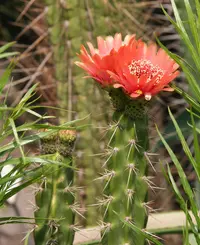
Plants typically remain flowerless for many years, producing their tubular, reddish to orange flowers only once they reach a substantial size and age, which is one reason caring for Denmoza rhodacantha is often a long-term project.

Botan icon

Did you know?

The name Denmoza is an anagram derived from the Spanish word Mendoza, referring to the Argentine province near where this species was first studied, and the genus was deliberately named this way by cactus specialist Nathaniel Britton and colleagues in the early 20th century.

FAQs about Denmoza rhodacantha

This species generally performs better outdoors in bright, arid climates that mimic its native habitat. Indoors it can survive with strong light and careful watering, but growth and flowering are usually slower and less reliable.

Grow Healthy Plants with Botan Care

Keep your plants happy and healthy with plant identification, disease detection, and easy care guidance.

Botan plant care app — identify plants on mobile

Explore More Plants