


Stabilize Heavy Stems
As stems thicken and branch, anchor the main stem with a discreet stake or rock support so strong winds or accidental bumps do not crack the base at the soil line.

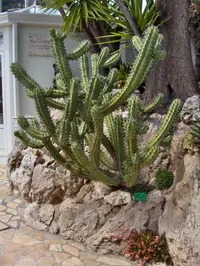
The candelabra cactus, Myrtillocactus cochal, is a branching desert cactus known for its upright, many-armed shape that can resemble a small, leafless tree. Its blue-green, ribbed stems and short spines create a strong architectural look in containers or outdoor plantings in warm climates.
This species is native to arid regions of Mexico, where it thrives in intense sun and fast-draining, rocky soils. It is generally considered easy to grow for those who avoid overwatering and provide strong light.
For anyone learning how to care for candelabra cactus, it helps to remember that it prefers bright, direct light, sparse watering, and a gritty, cactus-specific soil mix.

Care Difficulty
Easy Care

Light Preference
Full Sun

Water Requirements
Low Water

Temperature Preference
Tropical / Frost Sensitive

Hardiness Zone
10–11

Soil Texture
Sandy, Loamy, Rocky

Soil pH
Slightly acidic (6.5–7.0), Neutral (7.0)

Soil Drainage
Well-drained

Fertilization
Minimal (feed rarely)
Scan your plant to receive care tips personalized for your specific plant
Available on iOS and Android
Myrtillocactus cochal needs strong light to maintain compact, healthy growth and spine color.
Watering for Myrtillocactus cochal should imitate an arid climate with brief soakings and long dry periods.
Consistent warmth and strong light help this cactus maintain sturdy, upright growth.
This species handles typical indoor humidity well and rarely needs special adjustment.
Myrtillocactus cochal prefers a very fast-draining, mineral-rich substrate that keeps roots dry between waterings.
This cactus is well suited to container growing when the pot is chosen to support its tall, heavy structure.
Myrtillocactus cochal grows well with modest feeding during its active season in spring and summer.
Myrtillocactus cochal needs minimal pruning, mainly for safety, health, and space management.
Container-grown plants or young outdoor specimens benefit from careful, infrequent repotting or transplanting.
Myrtillocactus cochal is commonly multiplied from stem cuttings and seeds under warm, dry conditions.
This cactus is sensitive to prolonged frost and benefits from simple, planned winter protection.

Plant Health Check
Not sure what's wrong with your plant? Check your plant's health inside the app.
This species produces small, dark purple fruits that resemble blueberries and are edible, with a sweet, mildly acidic taste traditionally used in parts of Mexico as a seasonal wild food.
Unlike many columnar cacti, it naturally forms a many-branched, tree-like silhouette with arms arising well above the base, creating the characteristic candelabra outline even in relatively young plants.
It is naturally found in arid and semi-arid scrub and thorn forest in central and northern Mexico, where it grows on rocky, well-drained slopes and contributes to the structure of open desert vegetation.

In some of its native Mexican regions, mature plants can become important perching and nesting structures for birds, which use the dense, spiny branching for protection while feeding on the fruits and dispersing the seeds.
Growth is moderate. Young plants often add 5–15 cm per year, slowing as woody branching develops. Rate depends strongly on light, warmth, and nutrient availability. Good growing conditions help grow Myrtillocactus cochal into a small tree-like specimen over time.
Keep your plants happy and healthy with plant identification, disease detection, and easy care guidance.

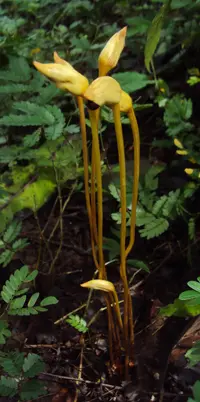
ye gu
Aeginetia indica
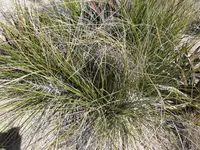
Texas sacahuista
Nolina texana
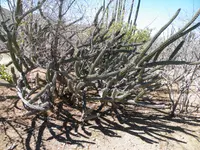
Galloping Cactus
Stenocereus gummosus
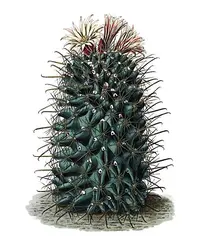
Coryphantha clavata
Coryphantha clavata
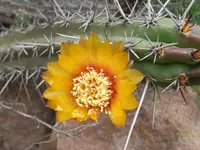
Corryocactus aureus
Corryocactus aureus
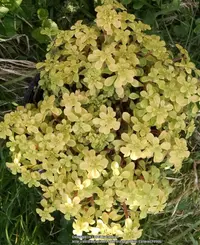
Japanese Woodland Stonecrop
Sedum makinoi 'Ogon'
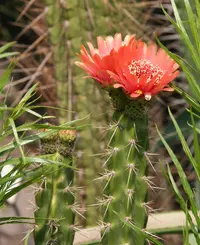
Corryocactus melanotrichus
Corryocactus melanotrichus
junior Tom Thumb cactus
Escobaria emskoetteriana