ye gu Care (Aeginetia indica)

Also known as: Indian Broomrape
ye gu

About ye gu

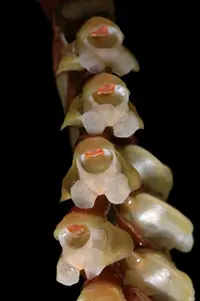
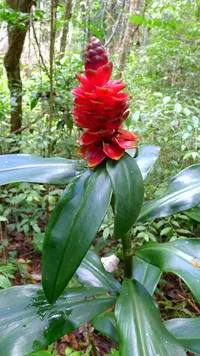
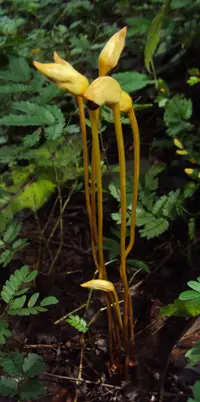
Ye gu (Aeginetia indica) is a leafless, root-parasitic herb that attaches to the roots of nearby host plants for water and nutrients. It produces short, fleshy flowering spikes that emerge from the soil, often with purple, pink, or yellowish tubular flowers.

This species occurs naturally in parts of tropical and subtropical Asia, usually in forested or grassy areas with suitable host plants. Because it depends on a living host, it is challenging to maintain in typical home or container settings, so attempts to care for ye gu often require advanced experience and experimentation.

Main Plant Requirements

Care Difficulty

Hard Care

Light Preference

Partial Shade

Water Requirements

Keep Soil Moist

Temperature Preference

Tropical / Frost Sensitive

Hardiness Zone

10–12

Soil Texture

Loamy, Silty, Organic-rich

Soil pH

Acidic (5.5–6.5), Slightly acidic (6.5–7.0)

Soil Drainage

Moist but well-drained

Fertilization

Minimal (feed rarely)

Get Personalized Care Plan

Scan your plant to receive care tips personalized for your specific plant

Available on iOS and Android

How to Care for the ye gu

This root-parasitic forest herb prefers soft, filtered light rather than direct, open sun.

  • Provide bright dappled shade or filtered light under shrubs or trees, with only 1–2 hours of gentle morning sun if any direct sun is unavoidable.
  • Aim for light similar to a shaded forest floor; consistent partial shade helps maintain the moist, cool conditions needed for growing ye gu.
  • Protect from harsh midday and afternoon sun, which can scorch tissue and dry the host root zone, especially during late spring and summer.

This holoparasitic plant relies on its host’s roots, so soil moisture around the host is critical.

  • Keep the host plant’s soil evenly moist, letting only the top 2–3 cm dry slightly between waterings in loamy, well-drained ground.
  • Increase watering frequency during warm, active growth when spikes emerge; in cooler or dormant periods, reduce watering but never allow the soil to become dusty dry.
  • Watch for wilting or shriveling spikes as a sign of underwatering, and yellowing, soft tissues or sour-smelling soil as signs of overwatering near Aeginetia indica.

This species is adapted to warm, frost-free tropical and subtropical climates.

  • Aim for 70–86°F (21–30°C) during the growing season, matching typical warm, humid conditions of lowland forests.
  • Avoid temperatures below 50°F (10°C); exposure to 41–45°F (5–7°C) can slow growth severely and may damage the host–parasite connection.
  • Protect from extremes above 95°F (35°C), which can dry the soil and stress the host; provide shade and mulch during peak summer heat in warm regions.

This root-parasitic species prefers consistently moist, humid conditions similar to a shaded forest floor.

  • Aim for 60–80% humidity, especially in warm weather or when growing ye gu under cover.
  • Tolerates brief dips to 40–50%, but extended dry air can cause drooping stems and faster flower collapse.
  • Increase humidity with grouped pots, damp leaf litter, or a nearby water tray rather than misting the flowers directly.

This holoparasitic plant relies on host roots and is not grown in conventional potting soil.

  • Use a deep, consistently moist, organic-rich loam or woodland soil that supports suitable host species rather than preparing a separate mix for Aeginetia indica.
  • Ensure slow but steady drainage; soil should never become waterlogged, yet must not dry out completely around the host roots.
  • Maintain slightly acidic to neutral conditions, roughly pH 5.5–7.0, which favor many compatible hosts and stable parasite attachment.
  • In planted beds, improve structure and aeration with leaf mold or fine compost, avoiding coarse sand or heavy clay that disrupts close root contact.

This species is difficult but possible to grow in containers when host plants and moisture are carefully managed.

  • Use a tall, stable pot that allows a deep root zone for the host species, since the parasite taps into those roots below the surface.
  • Choose a heavier clay or ceramic container to moderate moisture swings and keep the host root zone evenly damp.
  • Provide a thick top layer of leaf mold or fine mulch to buffer evaporation and protect the shallow zone where the flowering shoots emerge.

This root-parasitic species draws most nutrients from its host, so ye gu indoor care focuses more on host health than direct feeding.

Aeginetia indica requires almost no structural pruning, only basic clean-up of spent growth.

  • Cut flowering spikes back to the base once they have fully withered to keep the site tidy.
  • Remove any obviously diseased or damaged tissue immediately using clean, sharp scissors or pruners.
  • Avoid cutting into host plant roots, since the parasite depends entirely on this underground connection.

As a root parasite attached to a host, this plant is managed by moving or replanting the host rather than repotting the Aeginetia indica itself.

  • Transplant during warm, stable weather when the host plant is actively growing but not stressed.
  • Choose a new site with similar light, soil, and moisture so the host can re-establish quickly.
  • Lift and move the host plant gently, disturbing roots as little as possible to avoid breaking parasite attachments.
  • Water thoroughly after transplanting and keep soil evenly moist to limit transplant shock to the host.

Propagation of Aeginetia indica is specialized and rarely attempted in typical garden settings.

This tropical root parasite is not frost hardy and needs thoughtful handling in cool climates.

  • In regions below 40°F, grow the host in a container that can be moved indoors for winter.
  • Maintain indoor temperatures above 55°F with bright, indirect light for the host plant.
  • Keep soil slightly moist but never waterlogged, since cold, wet conditions increase rot risk for host roots and attached parasites.

Care Tips

Host root selection

Establish plants only near known suitable hosts such as sugarcane, maize, or certain grasses, and avoid rotating to unrelated crops in the same spot so the parasite can reliably attach to compatible roots.

Shallow sowing technique

Surface-sow the dust-like seeds onto moist soil directly above host roots and press gently with a flat board or hand so they make firm contact without being buried too deeply.

Moisture microzone management

Mulch lightly around, but not on top of, emerging spikes to keep the root zone evenly moist while still allowing easy access for inspecting host roots and floral development.

Controlled spread limitation

Bag maturing flower spikes before capsules open and collect spent stalks carefully so the very fine seeds do not disperse beyond the intended planting area.

Sequential host planting

In containers or controlled beds, stagger-sow host plants every 3–4 weeks so new root systems are always available, which supports more continuous flowering when growing ye gu.

Common Pests and Diseases

Rust fungi

This disease causes small yellow to brown spots on bracts and flowering stems that develop orange to brown powdery pustules, especially in humid forest understories.

Solution

Remove and destroy heavily infected spikes to reduce spore spread, avoid prolonged overhead wetting in cultivation, and space plants so air can move around the clumps; if needed, apply a sulfur or copper-based fungicide labeled for ornamental plants, following local guidelines.

Leaf spot

This disease produces irregular dark lesions on the reduced scale leaves and bracts, which may coalesce and cause premature tissue death in warm, wet conditions.

Solution

Improve drainage and air movement around host grasses, discard badly affected plant material away from the site, and use a broad-spectrum fungicide suitable for ornamental perennials if spotting progresses despite cultural corrections.

Parasitic nematodes

These pests attack the underground structures and haustoria, leading to weak, stunted spikes, poor flowering, and gradual decline, especially in repeatedly infested sites.

Solution

Avoid moving soil from infested areas, rotate or rest planting sites where possible, and solarize the topsoil during the hottest part of the year by covering moist soil with clear plastic for 4–6 weeks to reduce nematode populations before re-establishing plants.

Stem-boring larvae

These insects tunnel inside the flowering spike and stem, causing wilted or collapsed inflorescences and visible exit holes or frass near damaged sections.

Solution

Cut and destroy affected spikes as soon as wilting or tunneling is observed, reduce nearby plant debris that shelters adult moths or beetles, and if infestations recur, use a targeted biological product such as Bacillus thuringiensis on nearby host vegetation where adults lay eggs.

Interesting Facts

Obligate root parasite

This species lacks functional chlorophyll and depends entirely on host plants, especially grasses and some crops, by attaching to their roots and drawing water and nutrients through specialized organs called haustoria.

Ephemeral forest bloomer

The plant spends most of its life hidden underground and only emerges briefly as a fleshy, often purple inflorescence on the forest floor or in grasslands during the wet season.

Traditional folk uses

In several parts of South and Southeast Asia, the dried flowering spikes have been used in folk practices and rituals, and in some regions are sold in local markets as a minor non-timber forest product, although robust clinical data remain limited.

Botan icon

Did you know?

Molecular and morphological studies place this species in the family Orobanchaceae, and its extreme reduction of leaves and roots is considered a striking example of evolutionary adaptation to a fully parasitic lifestyle in flowering plants.

FAQs about ye gu

This root parasite must attach to suitable host roots in soil, so it performs better outdoors in semi‑wild or naturalistic plantings. Containers or indoor setups rarely provide stable hosts, making long‑term cultivation unreliable.

Grow Healthy Plants with Botan Care

Keep your plants happy and healthy with plant identification, disease detection, and easy care guidance.

Botan plant care app — identify plants on mobile

Explore More Plants