Texas sotol Care (Dasylirion texanum)

Texas sotol

About Texas sotol

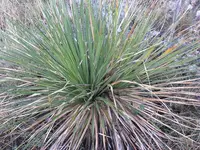
Texas sotol, Dasylirion texanum, is a desert-adapted evergreen shrub forming a dense rosette of narrow, spiny-edged leaves. It develops a striking spherical shape topped by a tall flowering stalk in maturity.

This species is native to dry, rocky regions of Texas and northern Mexico, where it thrives in intense sun and very lean, fast-draining soils. Its deep root system and tough leaves give it excellent drought and heat tolerance.

These traits make it a long-lived, low-maintenance option for arid and xeriscape gardens, though the sharp leaf margins require mindful placement. Gardeners who learn how to care for Texas sotol often value it as a structural accent plant.

Main Plant Requirements

Care Difficulty

Easy Care

Light Preference

Full Sun

Water Requirements

Low Water

Temperature Preference

Cold Hardy

Hardiness Zone

7–11

Soil Texture

Sandy, Loamy, Rocky

Soil pH

Slightly acidic (6.5–7.0), Slightly alkaline (7.0–7.5)

Soil Drainage

Well-drained

Fertilization

Minimal (feed rarely)

Get Personalized Care Plan

Scan your plant to receive care tips personalized for your specific plant

Available on iOS and Android

How to Care for the Texas sotol

This desert species thrives in strong sun and open exposure when established.

  • Provide 6–10 hours of direct sun daily; full sun is best for firm, compact leaves on Texas sotol.
  • Young or recently transplanted plants benefit from light afternoon shade or filtered sun in very hot, reflective sites.
  • In deep or prolonged shade, rosettes elongate and lose symmetry, while sudden intense sun after shade can scorch leaves, especially during late spring and early summer.

This plant is highly drought tolerant and prefers infrequent, deep watering.

  • Allow the top 5–8 cm of soil to dry completely before watering; in arid climates this may mean several weeks between soakings.
  • Use very well-drained, gritty soil so water runs through quickly; persistent soggy conditions cause root and crown rot in Dasylirion texanum.
  • In summer heat, watch for curling, crisp leaf tips as a cue to water; in cool seasons reduce watering sharply and avoid wetting the crown before cold nights.

This species is adapted to hot, dry climates but also tolerates substantial cold once established.

  • Ideal growing range is about 70–95°F (21–35°C), with excellent tolerance of dry heat up to 105°F (40°C) if soil drains freely.
  • Mature plants typically survive drops to 0–10°F (-18 to -12°C); brief colder spells may damage leaf tips but crowns often recover.
  • In regions with wet, cold winters, prioritize sharp drainage and avoid cold, saturated soil, which increases freeze damage and crown loss.

This species is highly drought-adapted and humidity is rarely a concern for Texas sotol in typical indoor or outdoor settings.

Dasylirion texanum prefers very lean, fast-draining mineral soils that mimic rocky desert slopes.

  • Use a gritty, sandy mix with 50–70% mineral content such as coarse sand, pumice, or small gravel to prevent water retention.
  • Aim for slightly alkaline to neutral pH around 7.0–8.0, avoiding acidic, peat-heavy mixes that hold moisture too long.
  • Improve aeration by mixing cactus potting soil with extra perlite or pumice so water drains through within seconds, not minutes.
  • Avoid clayey, compacted, or high-organic substrates where water pools, as these conditions quickly lead to root and crown rot.

This species can be grown in containers if the pot is adapted to its slow but eventually large, top-heavy form.

  • Select a wide, heavy container that resists tipping, as the leaf rosette becomes tall and weighty over time.
  • Choose unglazed clay or another porous material to speed evaporation and reduce the risk of chronically wet roots after rain or irrigation.
  • Elevate the pot slightly on feet or blocks so drainage holes never sit directly on a solid surface, allowing rapid escape of runoff water.

Texas sotol needs only light feeding, as it is adapted to nutrient-poor soils.

  • Use a low-dose, balanced slow-release fertilizer (around 10-10-10) or a thin layer of compost in spring.
  • Apply once at the start of the growing season; avoid repeated applications through summer.
  • Dilute liquid feeds to 25–50% strength if used, and water in lightly afterward.
  • Do not fertilize in late fall or winter, when growth is minimal.

Pruning Dasylirion texanum focuses on removing dead material while preserving its natural rosette form.

  • Carry out light cleanup in late winter or early spring before active growth resumes.
  • Remove only dead, brown, or damaged leaves, cutting close to the base without injuring the crown.
  • Avoid trimming green leaves heavily, as this can distort the symmetrical shape and weaken the plant.
  • Use clean, sharp pruning shears or a hand saw, and dispose of sharp leaf tips safely.

This species is usually grown in the ground; transplanting should be rare and carefully planned.

  • Transplant in late spring when soil is warming and the plant is actively growing.
  • Look for signs such as stunted growth, roots circling a container, or crowding near structures.
  • Dig a wide hole, keep the root ball as intact as possible, and replant at the same soil depth.
  • Water deeply once, then allow soil to dry between waterings to limit root stress and rot.

Propagation of Dasylirion texanum is slow and usually done from seed by specialists.

  • Harvest ripe seeds from mature flower stalks and sow in late spring or early summer.
  • Use a very well-drained, gritty mix and shallow seed trays for good aeration.
  • Provide warm conditions (around 70–80°F), bright light, and consistent but light moisture.
  • Expect slow, uneven germination and grow seedlings on carefully before outdoor planting.

This desert shrub is fairly cold hardy but benefits from some winter attention in colder regions.

  • Established plants tolerate light freezes and short dips below 20°F once acclimated.
  • In zones near its hardiness limit, add a 5–8 cm layer of gravelly mulch around the root zone.
  • For container plants, move pots to an unheated garage or bright, frost-free porch.
  • In very wet winters, improve drainage or cover soil to reduce excess moisture around the crown.

Care Tips

Rock mulch ring

Create a 15–30 cm ring of gravel or small rocks around the base to keep the crown dry, reduce weed competition, and mimic the rocky soils this species naturally occupies.

Establish a dry moat

Form a shallow, wide basin just beyond the leaf spread so that rare, heavy rains move away from the crown while still infiltrating the root zone, which helps prevent crown rot in long wet spells.

Protect the leaf crown

In regions with wet winters, loosely tie the leaves into an upright bundle before prolonged rain to shield the central crown from constant moisture, then untie once conditions dry.

Stabilize in windy sites

In very exposed locations, stake young plants with 2–3 short, sturdy stakes for the first 1–2 years to reduce root rock and allow the developing root system to anchor firmly.

Manage lower skirt

Once the trunk forms, either remove dead lower leaves cleanly at the base or leave them to form a protective skirt, but stay consistent with one approach to reduce hiding places for pests when caring for Texas sotol.

Common Pests and Diseases

Agave snout weevil

This pest bores into the stem at the base of the rosette, causing internal damage and sudden collapse of leaves. Symptoms include wilting, yellowing, and a foul smell from rotting tissue at the crown.

Solution

Inspect the crown and basal area regularly, especially in warm months, and remove and destroy any plant showing soft, foul-smelling crown tissue to prevent spread. Avoid wounding the base, keep the site very well drained, and in areas with a known history of this weevil consider a preventative soil drench with a systemic insecticide labeled for agave snout weevil, applied according to local regulations and label instructions.

Scale insects

These insects attach along the leaves and leaf bases, sucking sap and causing yellow spots, general decline, and sticky honeydew that can attract sooty mold. Infestations tend to build up in sheltered leaf axils on older plants.

Solution

Physically remove scales on lightly infested plants using a soft brush or cloth dipped in soapy water or isopropyl alcohol, focusing on leaf bases and tight leaf clusters. For heavier infestations, improve air movement, reduce overhead watering, and use a horticultural oil or insecticidal soap thoroughly directed into leaf axils, repeating as needed according to the product label as part of Dasylirion texanum care.

Leaf spot

This disease produces small brown or tan lesions on leaves that may enlarge and coalesce, especially in humid or poorly ventilated conditions. Symptoms include cosmetic damage and, in severe cases, premature browning of outer leaves.

Solution

Remove and discard affected leaves to reduce inoculum, and avoid wetting the foliage, especially in the evening. Improve spacing and air flow around the plant, water only at the base, and in persistent humid climates consider applying a copper-based or other labeled fungicide as a preventive measure following label directions.

Aloe mite (eriophyid mite)

This pest can cause distorted, bumpy, or tumor-like growths on leaf margins or the crown, often with rough, corky tissue. Symptoms include abnormal rosette symmetry and localized swellings that do not resemble normal spine or leaf formation.

Solution

Promptly cut out and discard all distorted tissues well below visible damage, sterilizing tools between cuts to avoid spreading mites. If distortion continues to appear, remove and destroy the entire plant and avoid replanting Dasylirion or related species in the exact spot for a period, monitoring nearby plants closely for early signs.

Crown rot

This disease affects the central growing point when water sits in the rosette or soil remains saturated, leading to soft, mushy tissue and eventual collapse of the crown. Symptoms include a sour or rotten smell, loose leaves at the center, and rapid decline despite previously good health.

Solution

At the first sign of soft crown tissue, stop watering, sharply improve drainage, and remove any obviously rotted material to dry the area, which may rescue very early cases. Long term prevention relies on planting in sharply draining, gritty soil, raising the crown above surrounding grade, avoiding frequent overhead irrigation, and in very wet climates growing Texas sotol in containers or mounded beds to keep the crown dry.

Interesting Facts

Desert sotol beverage

The stem of this species has been traditionally baked and fermented to produce an alcoholic drink known as sotol in parts of northern Mexico and the southwestern United States, distinct from tequila or mezcal, which are made from Agave species.

Extreme drought specialist

Its long, narrow leaves form a dense spherical rosette that channels rare desert rainfall toward the root crown, an adaptation that helps the plant survive in rocky, shallow soils with very low moisture.

Spiny wildlife habitat

The rigid, toothed leaves and tall flowering stalks provide shelter and perching sites for desert birds and small mammals, while the nectar-rich flowers support insects such as bees and butterflies in arid shrublands.

Botan icon

Did you know?

In its native range of the Chihuahuan Desert and nearby regions, this species can live for many decades and often forms striking, trunked specimens that serve as long-term landmarks in rangeland ecological studies of desert grassland dynamics.

FAQs about Texas sotol

This species usually needs many years to reach flowering age and must experience strong sun, heat, and seasonal temperature contrast. Crowding, recent transplanting, or heavy nutrient-rich soil can also delay bloom formation for several seasons.

Grow Healthy Plants with Botan Care

Keep your plants happy and healthy with plant identification, disease detection, and easy care guidance.

Botan plant care app — identify plants on mobile

Explore More Plants