Early structural training
Pinch out the central tip when the plant is young and selectively prune crossing branches once a year to encourage a sturdy, open framework that can support future heavy fruit clusters.

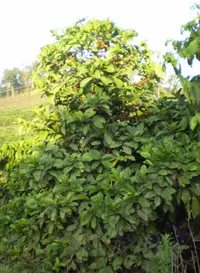
Liberian coffee, Coffea liberica, is an evergreen coffee tree grown for its large cherries, distinctive aroma, and glossy foliage. It is less common than arabica or robusta but valued in specialty coffee production.
This species forms a small tree or large shrub with thick, leathery leaves and an upright, somewhat open growth habit. In nature it occurs in lowland tropical forests of West and Central Africa and is now cultivated in other humid tropical regions.
It prefers warm, stable conditions, evenly moist but well-drained soil, and bright light with some protection from harsh sun. These needs, plus its eventual size, mean it is moderate in difficulty for those who want to learn how to care for Liberian coffee.

Care Difficulty
Moderate Care

Light Preference
Partial Shade

Water Requirements
Keep Soil Moist

Temperature Preference
Tropical / Frost Sensitive

Hardiness Zone
11–12

Soil Texture
Loamy, Sandy, Organic-rich

Soil pH
Strongly acidic (4.5–5.5), Acidic (5.5–6.5)

Soil Drainage
Moist but well-drained

Fertilization
Light (every 4–6 weeks)
Scan your plant to receive care tips personalized for your specific plant
Available on iOS and Android
This species prefers bright, gentle light similar to a high-canopy tropical understory.
Watering should maintain evenly moist but not waterlogged soil for healthy growth.
This plant thrives in warm, stable conditions with no exposure to frost.
This species prefers consistently moist air and reacts quickly to very dry conditions.
Coffea liberica performs best in a deep, loose, slightly acidic, organic-rich substrate.
This species is suitable for container growing when the pot supports its vigorous, upright root and shoot growth.
Coffea liberica responds well to moderate, consistent nutrition during its active growing season.
Pruning supports manageable size and productive growth in Coffea liberica, especially in containers or small gardens.
Container-grown Coffea liberica benefits from periodic repotting to maintain steady growth and root health.
Coffea liberica is most commonly propagated from seeds and semi-ripe cuttings under warm, humid conditions.
This tropical species is frost-tender, so Coffea liberica requires active winter protection in cool climates.

Plant Health Check
Not sure what's wrong with your plant? Check your plant's health inside the app.
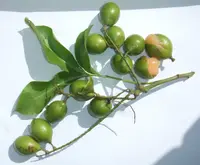
Liberica coffee cherries produce seeds with an irregular, asymmetrical shape that is larger and more elongated than arabica or robusta beans, which affects how they roast and develop flavor.
This species is cultivated on a relatively small scale compared with arabica and robusta, with notable production in the Philippines, Malaysia, and parts of West Africa, where it often serves local or specialty markets rather than mass export.
The trees tolerate hotter and lower-altitude conditions than arabica, which makes growing Liberian coffee possible in warm lowland regions where other commercial coffee species struggle.
Liberica coffee played an important historical role during late 19th-century coffee leaf rust outbreaks, when its relative resistance to the disease led some colonial plantations to replace arabica with this species in an attempt to restore production.
Brown leaf edges usually result from low humidity, underwatering, or salt buildup from fertilizer. Check soil moisture, flush the pot occasionally with plain water, increase humidity, and keep the root zone evenly moist but never waterlogged.
Keep your plants happy and healthy with plant identification, disease detection, and easy care guidance.