Establish strong framework
In the first 3–4 years, select 3–5 well-spaced main branches and remove steep, crossing, or very low shoots to build a sturdy, open canopy that can carry heavy fruit loads later.

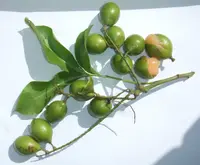
Spanish lime, Melicoccus bijugatus, is a tropical fruit tree in the soapberry family, related to lychee and longan. It is commonly grown in the Caribbean, Central America, and northern South America, and is also planted in warm parts of Florida.
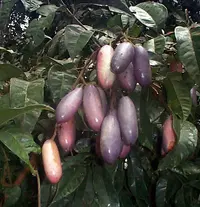
The tree has a dense, rounded crown with glossy green leaves and clusters of small green fruits that ripen to yellowish or orange. Each fruit contains a tangy, juicy pulp around a single large seed.
It prefers warm, frost-free climates, full sun, and well-drained soil. Once established, it is relatively tough but young trees need consistent moisture. Understanding these traits helps plant owners care for Spanish lime successfully.

Care Difficulty
Moderate Care

Light Preference
Full Sun

Water Requirements
Moderate Water

Temperature Preference
Tropical / Frost Sensitive

Hardiness Zone
10–11

Soil Texture
Sandy, Loamy, Organic-rich

Soil pH
Acidic (5.5–6.5), Slightly acidic (6.5–7.0)

Soil Drainage
Well-drained

Fertilization
Minimal (feed rarely)
Scan your plant to receive care tips personalized for your specific plant
Available on iOS and Android
Melicoccus bijugatus needs strong, consistent light in warm climates to flower and fruit well.
This species prefers evenly moist, well-drained soil and does poorly in standing water.
This tropical tree thrives in warm conditions and is sensitive to cold and frost.
This species prefers moderately humid air but usually adapts to typical household conditions.
Melicoccus bijugatus grows best in deep, well-structured mineral soils that drain freely yet retain some moisture.
This species can be grown in containers, especially in warm climates where outdoor planting is not always possible.
Melicoccus bijugatus benefits from moderate feeding to support steady canopy and fruit development.
Pruning Melicoccus bijugatus is useful for structure, safety, and light penetration rather than heavy size control.
Spanish lime is usually grown in the ground, so transplanting young trees correctly is more important than container repotting.
Melicoccus bijugatus is commonly propagated from seed and sometimes from air layering for better fruit quality.
This tropical species is frost sensitive and needs protection in regions with cool or occasional freezing winters.

Plant Health Check
Not sure what's wrong with your plant? Check your plant's health inside the app.
Its compound leaves typically have 2 opposite leaflets per leaf, a feature reflected in the name bijugatus, which refers to this paired arrangement.
Each fruit usually contains one relatively large, smooth seed surrounded by a thin layer of translucent pulp that adheres tightly to the seed, which is why the fruit is sucked rather than bitten.
This species is dioecious, meaning individual trees are either male or female, so fruit production requires pollen from a separate male tree to fertilize the flowers on a female tree.

This species has been widely naturalized across the Caribbean and parts of northern South America, forming local landraces with distinct fruit size, sweetness, and pulp texture that reflect long-term selection by human cultivation.
The fruit is edible and widely eaten fresh. The pulp is sweet to tangy and usually sucked from the seed. Unripe fruits can be very sour. The large seed is not eaten and should be discarded.
Keep your plants happy and healthy with plant identification, disease detection, and easy care guidance.