


Stabilize Heavy Stems
Install sturdy metal or rot-resistant wooden stakes on the windward side and loosely tie older, top-heavy stems with UV-stable garden tape to prevent uprooting and breakage in strong winds.

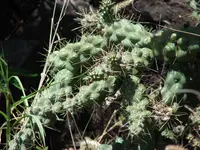
Chain-link cholla, Cylindropuntia cholla, is a branching desert cactus known for its cylindrical, jointed stems covered with dense, barbed spines. The joints detach easily, forming new plants and creating thickets in the landscape.
This species is native to arid regions of the southwestern United States and northern Mexico, where it thrives in rocky, well-drained soils. It produces small, waxy flowers followed by dry, spiny fruits.
The plant is drought-tolerant and prefers strong sunlight, low humidity, and minimal watering, which makes it relatively easy to maintain in suitable climates. Understanding how to care for Chain-link Cholla mainly involves controlling moisture and providing excellent drainage to prevent rot.

Care Difficulty
Moderate Care

Light Preference
Full Sun

Water Requirements
Low Water

Temperature Preference
Warm Climate

Hardiness Zone
8–11

Soil Texture
Sandy, Loamy, Rocky

Soil pH
Slightly acidic (6.5–7.0), Slightly alkaline (7.0–7.5)

Soil Drainage
Well-drained

Fertilization
Minimal (feed rarely)
Scan your plant to receive care tips personalized for your specific plant
Available on iOS and Android
This desert cactus thrives in intense sun but adapts to slightly lower light with slower growth.
This cactus is highly drought-tolerant and prefers infrequent, deep watering in fast-draining soil.
This species is adapted to wide temperature swings but still has limits for safe growth and survival.
This desert cactus prefers very dry air and rarely suffers from low indoor humidity.
This cactus needs a very fast-draining, mineral, sandy mix to prevent root rot.
This species can be grown in containers if the pot setup controls moisture and supports its weight.
Cylindropuntia cholla needs very modest feeding in cultivation, especially in lean, sandy soils.
Pruning Cylindropuntia cholla is mainly done for safety, shape, and plant health rather than flowering.
Transplanting this desert cactus is infrequent and should be done carefully to avoid root and stem damage.
Cylindropuntia cholla is commonly propagated from stem cuttings, with seeds used mainly for larger-scale projects.
In suitable climates Cylindropuntia cholla is quite cold hardy and usually needs minimal winter care.

Plant Health Check
Not sure what's wrong with your plant? Check your plant's health inside the app.
Its cylindrical stem segments detach very easily at the joints, so spines and entire segments break off into the skin or fur of passing animals, discouraging herbivores and helping the plant spread to new sites when those pieces root.
Besides the obvious long, barbed spines, this species also carries tiny, hairlike glochids clustered around areoles; these detach on contact and can cause prolonged skin irritation, making even light contact risky.
In its native desert range, seedlings most often establish under the shade of shrubs or grasses that reduce heat and water stress, so mature plants frequently appear in association with specific desert nurse plants rather than in completely open ground.

Introduced populations in parts of Australia became so problematic for livestock and land management that targeted biological control programs were developed using cochineal scale insects that selectively feed on these chollas, significantly reducing their spread in some regions without needing broad-spectrum herbicides.
This species spreads mainly through dropped stem segments that root easily. In open, dry sites it can form dense thickets if not managed. Regular removal of fallen joints and thoughtful placement help prevent unwanted spread.
Keep your plants happy and healthy with plant identification, disease detection, and easy care guidance.

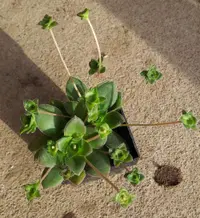
Rock Stonecrop
Crassula orbicularis
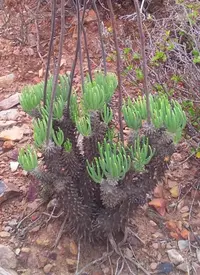
Pegleg Butterbush
Tylecodon wallichii
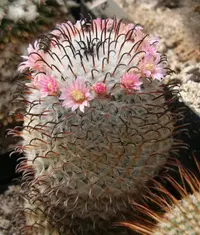
Mammillaria perezdelarosae
Mammillaria perezdelarosae
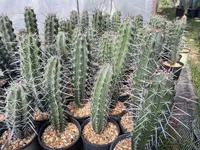
Stenocereus chacalapensis
Stenocereus chacalapensis
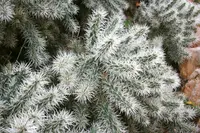
thistle cholla
Cylindropuntia tunicata
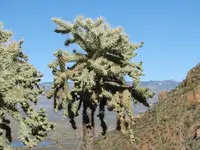
jumping cholla
Cylindropuntia fulgida
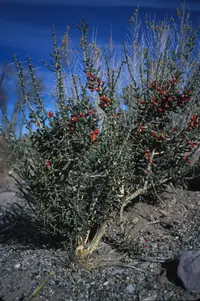
Christmas cactus
Cylindropuntia leptocaulis
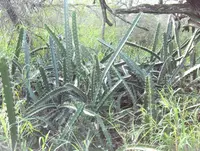
Triangle cactus
Acanthocereus tetragonus