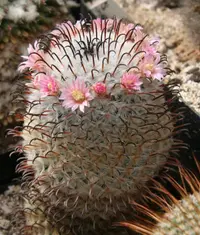
Rotate for symmetry
Turn the pot 90° every 2–3 weeks during active growth so the stem forms an even, compact mound instead of leaning toward the strongest light source.

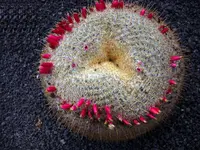
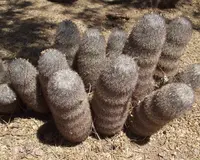
Mammillaria muehlenpfordtii is a small globular cactus known for its dense white spines and neat, symmetrical tubercles. It often forms tight clusters over time, creating a rounded cushion effect. Native to arid regions of central Mexico, it is adapted to strong light, low rainfall, and very well-drained rocky soils. Small funnel-shaped flowers, usually in rings near the crown, add seasonal interest. This species is generally considered easy to moderate to grow, as long as excess moisture and poor drainage are avoided. For anyone learning how to care for Mammillaria muehlenpfordtii, consistent bright light, a gritty mineral substrate, and careful watering are the main points to understand.

Care Difficulty
Easy Care

Light Preference
Full Sun

Water Requirements
Low Water

Temperature Preference
Warm Climate

Hardiness Zone
9–11

Soil Texture
Sandy, Rocky, Loamy

Soil pH
Slightly acidic (6.5–7.0), Neutral (7.0)

Soil Drainage
Well-drained

Fertilization
Minimal (feed rarely)
Scan your plant to receive care tips personalized for your specific plant
Available on iOS and Android
This cactus thrives in bright, mostly direct light with some protection from extreme midday sun.
Watering should mimic desert rainfall patterns with thorough soaking followed by a dry period.
This species prefers warm conditions but needs a cooler, dry rest period to stay compact and healthy.
This cactus prefers dry air and does not need added humidity.
This cactus needs a sharply draining, mineral-rich mix that dries quickly between waterings.
This species is well suited to container growing.
This cactus benefits from light feeding during active growth but stays healthy in lean soil if watering and light are correct.
Mammillaria muehlenpfordtii needs almost no structural pruning, only minor hygienic cleanup.
Repotting keeps this small cactus healthy by refreshing its gritty substrate and preventing root congestion.
New plants are commonly raised from offsets, making Mammillaria muehlenpfordtii propagation straightforward for most growers.
This cactus needs a cool, very dry winter rest and is not suited to prolonged outdoor freezing.

Plant Health Check
Not sure what's wrong with your plant? Check your plant's health inside the app.
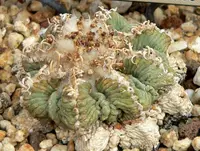
This species sometimes develops cristate, or crested, growth where the stem fans out into a sculptural ridge instead of a single cylinder. These crested forms are genetically the same plant but arise from a mutation in the growth point that alters how new tissue is produced.
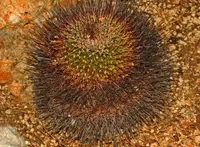
Its central spines are noticeably thicker and darker than the many fine radial spines, creating a strong contrast and a protective armor against herbivores. The spine pattern and color combination help distinguish it from several closely related Mammillaria species.
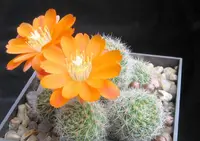
Mature plants produce small magenta to purplish flowers in a ring around the upper part of the stem, often forming an almost perfect floral halo. The flowers are followed by elongated reddish fruits that can contain numerous tiny seeds.
This species usually flowers in late spring to early summer, forming a ring of small funnel-shaped blooms around the stem. Flowers are typically pink to magenta, sometimes white, followed by small red, berry-like fruits.
Keep your plants happy and healthy with plant identification, disease detection, and easy care guidance.