


Rotate for symmetry
Turn the pot 90° every 2–3 weeks during the bright season so the stem develops evenly and does not lean toward the light source.

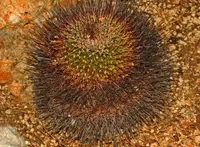
Mammillaria grusonii is a small, globular cactus known for its dense golden spines and neat, symmetrical form. It often stays compact, making it suitable for windowsills and small spaces.
This species is native to arid regions of Mexico, where it grows in rocky, well-drained soils with intense sun and low rainfall. In cultivation, it prefers bright light, minimal watering, and a gritty, fast-draining cactus mix.
Its slow growth, drought tolerance, and modest space needs make it relatively easy for beginners who learn how to care for Mammillaria grusonii. The main challenges are avoiding overwatering and providing enough light to maintain its compact shape and healthy spine color.

Care Difficulty
Easy Care

Light Preference
Full Sun

Water Requirements
Low Water

Temperature Preference
Warm Climate

Hardiness Zone
9–11

Soil Texture
Sandy, Loamy, Rocky

Soil pH
Slightly acidic (6.5–7.0), Neutral (7.0)

Soil Drainage
Well-drained

Fertilization
Minimal (feed rarely)
Scan your plant to receive care tips personalized for your specific plant
Available on iOS and Android
This cactus prefers strong light but benefits from some protection from harsh midday sun.
Watering should be infrequent and guided by soil dryness rather than a fixed schedule.
Stable warmth with cool, dry winters supports compact, healthy growth.
This cactus prefers dry air and is comfortable in typical indoor humidity.
This species needs a very fast-draining, mineral-based substrate to prevent root and stem rot.
This cactus is well suited to container growing when drainage and stability are carefully managed.
This cactus needs only light feeding to stay healthy in containers.
This species needs almost no pruning, since stems naturally keep a compact, regular shape.
Repotting is infrequent but important to maintain root health and fresh, fast-draining soil.
This cactus is most often propagated by seed, as it usually does not produce many offsets.
Cool, dry winter conditions support firm, compact growth and better flowering next season.

Plant Health Check
Not sure what's wrong with your plant? Check your plant's health inside the app.
This species forms tight clusters of white radial spines with fewer, longer central spines that are often slightly darker, creating a clear star-like pattern on each tubercle, which helps distinguish it from similar Mammillaria species.
Its cylindrical tubercles contain a white latex-like sap and are arranged in firm spirals, a structural adaptation that both stores water and helps the stem resist cracking under alternating drought and sudden watering.
When mature and grown in strong light, the plant often produces a neat ring of small, pale cream to yellowish flowers near the stem apex, a typical Mammillaria flowering pattern but with notably delicate, narrow petals in this species.
This species grows slowly, usually adding only a few millimeters in height and width each year. Growth is fastest in warm, bright seasons, then almost stops in winter. Expect many years before it reaches a noticeable clump size.
Keep your plants happy and healthy with plant identification, disease detection, and easy care guidance.

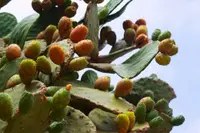
Stenocereus pruinosus
Stenocereus pruinosus

Mexican pincushion cactus
Mammillaria magnimamma
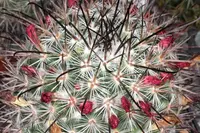
Mammillaria rekoi
Mammillaria rekoi
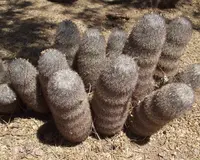
rat-tail nipple cactus
Mammillaria pottsii
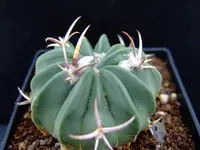
Stenocactus coptonogonus
Stenocactus coptonogonus
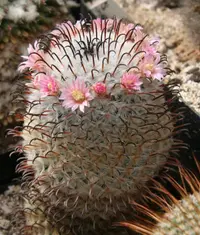
Mammillaria perezdelarosae
Mammillaria perezdelarosae
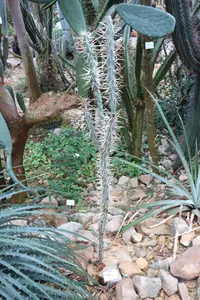
Long-spine Cholla
Cylindropuntia molesta
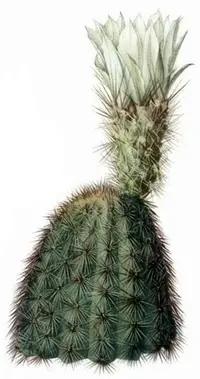
San Esteban hedgehog
Echinocereus grandis