


Encourage Compact Clumping
Rotate the pot 1–2 times per month so light reaches all sides evenly; this keeps the plant growing as a tight, symmetrical clump rather than stretching toward one direction.

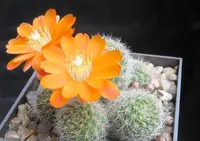
Aylostera muscula is a small clustering cactus from high-altitude regions of Bolivia. It forms low, rounded mounds of many offsets covered in fine, bristly spines. In bloom it produces relatively large, bright flowers that contrast strongly with the compact body, giving a striking display in a small pot. This species stays miniature, which makes it suitable for windowsills and small indoor collections. Its slow growth and drought tolerance mean it usually adapts well to typical indoor conditions if overwatering is avoided. For those learning how to care for Aylostera muscula, it helps to provide strong light, very well-drained soil, and careful, infrequent watering.

Care Difficulty
Easy Care

Light Preference
Full Sun

Water Requirements
Low Water

Temperature Preference
Tropical / Frost Sensitive

Hardiness Zone
10–11

Soil Texture
Sandy, Loamy, Rocky

Soil pH
Slightly acidic (6.5–7.0), Neutral (7.0)

Soil Drainage
Well-drained

Fertilization
Minimal (feed rarely)
Scan your plant to receive care tips personalized for your specific plant
Available on iOS and Android
This small cactus prefers bright, indirect light with some direct sun for compact growth and flowering.
This cactus needs infrequent, thorough watering with fast drainage to avoid root rot.
This species prefers warm, dry conditions with a distinct, cooler rest period.
This cactus prefers relatively dry air and rarely suffers from low household humidity.
This species needs a very fast-draining, gritty mix that dries quickly between waterings.
This compact cactus is well suited to container growing, including small pots or shallow dishes.
This small cactus benefits from light feeding during its active season but is sensitive to excess nutrients.
This species needs very little pruning, mainly for health and appearance, not for shaping.
This cactus grows slowly and prefers infrequent disturbance, but occasional repotting maintains root health.
This species is commonly propagated from offsets, with seed used mainly by collectors.
This cactus needs a cool, dry winter rest and is not suited to prolonged outdoor freezing.

Plant Health Check
Not sure what's wrong with your plant? Check your plant's health inside the app.
This species occurs naturally on rocky slopes of the central Andes in Bolivia, where it grows in mineral-rich, sharply drained substrates and experiences strong daily temperature swings.
The short, dense, white spines arise from woolly areoles and can give mature clumps a frosted or silvery appearance, which helps reflect intense mountain sun.
Over time the plant forms tight, low cushions of many small stems, an adaptation that reduces water loss and buffers the growing points against cold and wind exposure.
Lack of flowers usually comes from insufficient light, too-warm or dark winters, or overly rich, frequent feeding. This cactus forms flower buds after a cool, bright rest period and needs several months of stable conditions.
Keep your plants happy and healthy with plant identification, disease detection, and easy care guidance.

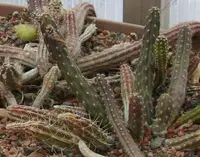
Austrocactus spiniflorus
Austrocactus spiniflorus
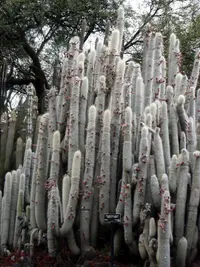
Silver torch cactus
Cleistocactus strausii
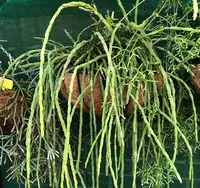
Chain Cactus
Rhipsalis paradoxa
Ric Rac cactus
Selenicereus anthonyanus
 POPULAR
Thanksgiving Cactus
Schlumbergera truncata

candleholder cactus
Browningia candelaris
Easter Cactus
Rhipsalidopsis gaertneri
Brain Cactus
Stenocactus multicostatus