


Use long-handled tools
Always handle pads and segments with long-handled tongs or pliers rather than gloves, since the tiny barbed spines (glochids) penetrate most fabrics and skin easily.

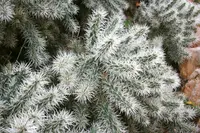
Thistle cholla (Cylindropuntia tunicata) is a spiny desert cactus known for its cylindrical, jointed stems covered in dense, papery-sheathed spines. It forms low, branching clumps that can spread over time and create almost impenetrable thickets in its native range.
This species occurs in arid regions of the southwestern United States and northern Mexico, where it thrives in rocky, well-drained soils and strong sun. Its sharp, barbed spines detach easily and cling to skin or fur, which makes handling difficult and affects how to care for thistle cholla.
It is a tough, drought-tolerant plant that prefers bright, direct light, minimal moisture, and gritty soil, so it generally suits experienced cactus growers or very careful beginners.

Care Difficulty
Moderate Care

Light Preference
Full Sun

Water Requirements
Low Water

Temperature Preference
Warm Climate

Hardiness Zone
8–11

Soil Texture
Sandy, Rocky, Loamy

Soil pH
Slightly acidic (6.5–7.0), Slightly alkaline (7.0–7.5)

Soil Drainage
Well-drained

Fertilization
Minimal (feed rarely)
Scan your plant to receive care tips personalized for your specific plant
Available on iOS and Android
This cactus thrives in strong, direct sun similar to its native desert conditions.
Watering for this desert cactus focuses on deep, infrequent soaking and fast drying soil.
This species is adapted to hot, arid climates but has some tolerance to cold when kept dry.
This cactus prefers very dry air and usually does not need extra humidity management.
This species needs very fast-draining, mineral-rich soil to prevent root and stem rot.
This species is suitable for container growing if the pot is set up to stay dry and stable.
Cylindropuntia tunicata is adapted to very lean soils and needs only minimal fertilization in cultivation.
Pruning Cylindropuntia tunicata is mainly corrective, aimed at safety and plant health rather than shaping.
Transplanting this cactus is infrequent and mainly needed when plants outgrow their space or containers.
New plants are most commonly produced from stem segments, with seeds used mainly for larger-scale growing Cylindropuntia tunicata.
This species is fairly cold hardy when established, but young or potted plants benefit from simple winter precautions.

Plant Health Check
Not sure what's wrong with your plant? Check your plant's health inside the app.
This cholla’s stems are densely covered with barbed spines hidden under papery sheaths, which readily detach and hook into passing animals, making it one of the more effectively armoured North American cacti.
Its joints break off very easily and root where they land, so the plant often spreads vegetatively across the ground rather than relying mainly on seed production.
The species is naturally found in arid regions of northern Mexico and the southwestern United States, where it grows on rocky or sandy soils with intense sun and very low rainfall.

In parts of Texas and northern Mexico, this cactus has become such a troublesome rangeland pest that land managers sometimes run special mechanical control programs to remove dense, livestock-injuring thickets formed by its easily detached, long-spined joints.
Growth is generally slow to moderate. Young plants may add only a few cm per year, then speed up slightly once established. Warm, dry climates, strong light, and very well-drained soil support faster growth, while cold or shade slow it.
Keep your plants happy and healthy with plant identification, disease detection, and easy care guidance.

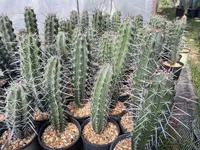
Stenocereus chacalapensis
Stenocereus chacalapensis

tree cholla
Cylindropuntia imbricata
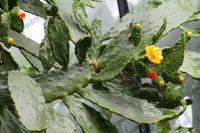
Consolea falcata
Consolea falcata
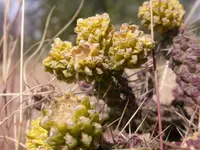
Whipple cholla
Cylindropuntia whipplei
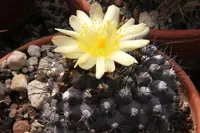
underground copiapoa
Copiapoa hypogaea
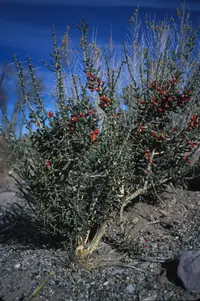
Christmas cactus
Cylindropuntia leptocaulis
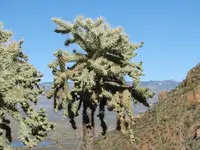
jumping cholla
Cylindropuntia fulgida
 POPULAR
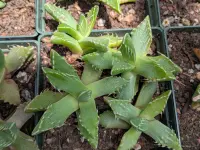
Tiger Jaws
Faucaria tigrina