Top-dressing gravel
Apply a 0.5–1 cm layer of clean mineral grit or small gravel around the crown to keep the neck dry, reduce rot risk, and prevent the sunken body from sitting in constantly damp soil.

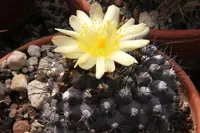
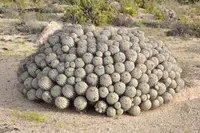
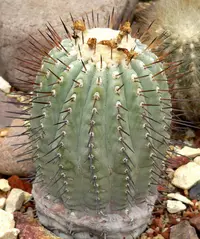
Copiapoa hypogaea, often called underground copiapoa, is a small desert cactus from northern Chile. It grows with most of its body below the soil surface, forming low, rounded heads. The skin is usually gray‑brown to olive, with woolly areoles and very short or nearly absent spines.
In habitat it experiences intense sun, poor mineral soil, and very little rainfall, which makes it slow growing but long lived. These natural conditions explain why it prefers strong light, excellent drainage, and careful watering in cultivation.
Because it is compact and slow, many growers keep it in pots or small collections. Understanding these desert origins helps guide how to care for underground copiapoa without overwatering or overprotecting it.

Care Difficulty
Hard Care

Light Preference
Full Sun

Water Requirements
Low Water

Temperature Preference
Tropical / Frost Sensitive

Hardiness Zone
10–11

Soil Texture
Sandy, Rocky, Loamy

Soil pH
Slightly acidic (6.5–7.0), Neutral (7.0)

Soil Drainage
Well-drained

Fertilization
Minimal (feed rarely)
Scan your plant to receive care tips personalized for your specific plant
Available on iOS and Android
This slow-growing Copiapoa hypogaea prefers bright, dry light similar to high-desert conditions.
This cactus stores water in its tissues and needs sparse, carefully timed watering to avoid rot.
This species prefers warm, arid conditions with a marked difference between day and night temperatures.
This desert cactus prefers very dry air and rarely suffers from low household humidity.
This species needs a very fast-draining, mineral-rich mix that dries quickly between waterings.
This cactus is highly suitable for container culture due to its compact, slow-growing habit.
Copiapoa hypogaea is a very slow-growing desert cactus that benefits from light, cautious feeding in active growth only.
Pruning needs for Copiapoa hypogaea are minimal and mainly hygienic rather than shaping.
This cactus prefers to stay undisturbed, so repot Copiapoa hypogaea only when root or soil conditions clearly demand it.
Copiapoa hypogaea is usually propagated by seeds, with offsets used when available, but both methods are slow and require patience.
Winter care for this Chilean desert cactus focuses on keeping it cold but dry to prevent root and body rot.

Plant Health Check
Not sure what's wrong with your plant? Check your plant's health inside the app.
This species naturally sits with most of its body below the soil surface, exposing only a small, flat top to reduce water loss and heat stress in its native Atacama Desert habitat.
The dense, wool-like hairs on the crown help reflect intense sunlight and insulate the growing point, protecting sensitive tissues from extreme temperature fluctuations.
C. hypogaea grows very slowly, often taking many years to reach even a few centimeters across, which is typical of long-lived cacti adapted to very harsh, resource-poor environments.

In habitat, Copiapoa hypogaea can survive on almost negligible rainfall by relying on coastal fog and dew, absorbing moisture that condenses on its body and surrounding soil rather than depending on regular rain events.
Growth is very slow. In cultivation, it usually adds only a few millimeters of diameter per year. Seedlings can take several years to form small heads and often need a decade or more to look mature.
Keep your plants happy and healthy with plant identification, disease detection, and easy care guidance.