


Use gravel collar
After planting, top-dress the root zone with a 3–5 cm deep ring of coarse gravel or crushed rock to keep stem bases dry, discourage rot, and reduce weed competition around the pads.

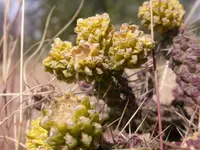
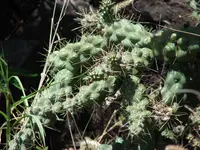
Whipple cholla, Cylindropuntia whipplei, is a small to medium desert cactus known for its jointed cylindrical stems and dense spines. It often forms low clumps or short, branching thickets. This species is native to arid regions of the southwestern United States, especially high deserts and foothills. It is highly drought tolerant and adapted to intense sun, poor rocky soils, and wide temperature swings. Because it is slow growing and very spiny, handling and transplanting require care, but its toughness makes it relatively easy to maintain once established. Those who want to know how to care for Whipple cholla should focus on strong light, sharp drainage, and minimal watering.

Care Difficulty
Easy Care

Light Preference
Full Sun

Water Requirements
Low Water

Temperature Preference
Cold Hardy

Hardiness Zone
4–9

Soil Texture
Sandy, Rocky, Loamy

Soil pH
Slightly acidic (6.5–7.0), Slightly alkaline (7.0–7.5)

Soil Drainage
Well-drained

Fertilization
Minimal (feed rarely)
Scan your plant to receive care tips personalized for your specific plant
Available on iOS and Android
This desert cactus needs strong, direct sun to grow dense, compact joints and healthy spines.
This species is highly drought tolerant and should be kept on the dry side to prevent root problems.
This cactus is adapted to wide temperature swings but still has clear limits for safe growth.
This desert cactus prefers very dry air and rarely suffers from low indoor humidity.
This cactus needs very fast-draining, mineral-rich soil to prevent root rot.
This species can be grown in containers if the pot is prepared for its deep roots and heavy, branching pads.
This desert cactus has very low nutrient needs, so light feeding is enough for healthy growth.
Pruning is mainly used to manage size and remove problem stems on Cylindropuntia whipplei.
This species is usually grown in the ground, so focus on careful transplanting rather than frequent repotting.
New plants are most often produced from stem cuttings rather than seeds for this cactus.
Mature plants are quite cold hardy but container-grown Cylindropuntia whipplei may need some winter attention.

Plant Health Check
Not sure what's wrong with your plant? Check your plant's health inside the app.
This species naturally occurs at relatively high elevations in the southwestern United States, where it tolerates cold, wind, and even occasional snow better than many other chollas.
Its stem joints detach very easily when disturbed, a trait that both discourages large herbivores and allows the plant to spread vegetatively when the fallen segments root in suitable soil.
The spines are partly covered by thin, papery sheaths that can vary in color and help reduce sun exposure on the spine surface, a small adaptation that can moderate heat and light at the stem surface.

In parts of its native range, this cactus forms dense, almost shrub-like thickets that provide nesting and protective cover for small birds and mammals, which use the spiny structure as a refuge from predators.
This species grows slowly, often adding only a few cm in height and spread each year. Growth is fastest in hot, sunny, very well-drained sites and slows noticeably in cooler climates or heavier soils.
Keep your plants happy and healthy with plant identification, disease detection, and easy care guidance.

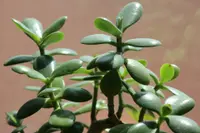 POPULAR
Jade plant
Crassula ovata
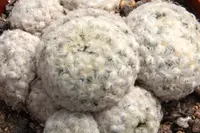
Feather Cactus
Mammillaria plumosa
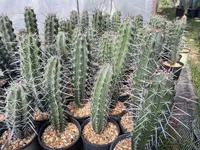
Stenocereus chacalapensis
Stenocereus chacalapensis
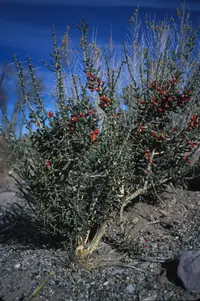
Christmas cactus
Cylindropuntia leptocaulis
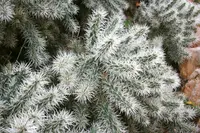
thistle cholla
Cylindropuntia tunicata
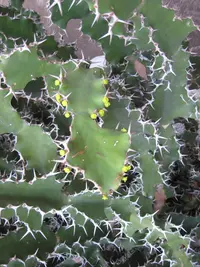
Grandthorn Noors
Euphorbia grandicornis
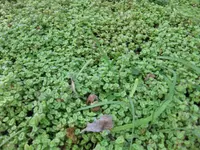
Crystal Stonecrop
Crassula pellucida
Chain-link Cholla
Cylindropuntia cholla