Use mineral mulch
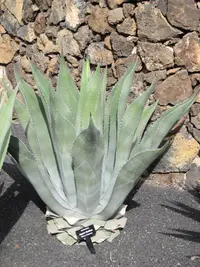
Top-dress the root zone with a 2–5 cm layer of coarse gravel or crushed rock to keep the crown dry, reduce soil splashing onto leaves, and stabilize the plant in windy or exposed sites.

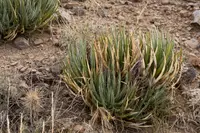
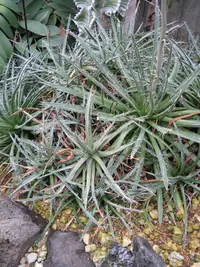
Schott's century plant (Agave schottii) is a compact, clump-forming succulent native to the deserts of Arizona, New Mexico, and northern Mexico. It grows as dense clusters of narrow, rigid, spine-tipped leaves that create a fine-textured, architectural look.
This species is adapted to hot, dry environments and is slow-growing, which makes it generally low-maintenance in suitable conditions. It prefers strong light, gritty, fast-draining soil, and infrequent watering.
Because it tolerates drought and poor soil, many gardeners find it straightforward to care for Schott's century plant, provided it receives enough sun and stays out of heavy, prolonged moisture.

Care Difficulty
Easy Care

Light Preference
Full Sun

Water Requirements
Low Water

Temperature Preference
Warm Climate

Hardiness Zone
8–11

Soil Texture
Sandy, Loamy, Rocky

Soil pH
Slightly acidic (6.5–7.0), Slightly alkaline (7.0–7.5)

Soil Drainage
Well-drained

Fertilization
Minimal (feed rarely)
Scan your plant to receive care tips personalized for your specific plant
Available on iOS and Android
This desert succulent requires strong, sustained light to stay compact and healthy.
This species is highly drought-tolerant and must dry well between waterings.
This plant is adapted to hot, dry climates but has notable cold tolerance once established.
This desert succulent tolerates very dry air and humidity is rarely a concern indoors or outdoors.
This species needs very sharply drained, mineral soil to avoid root and crown rot.
This species is well suited to container growing in dry, sunny locations.
This desert native needs only light feeding in containers or poor soil, so avoid heavy fertilization for Schott's century plant.
Pruning Agave schottii is mainly hygienic, aimed at removing old or damaged tissue rather than reshaping the plant.
Container-grown plants need infrequent repotting, while landscape Agave schottii is usually transplanted only once to a permanent site.
Propagation of Agave schottii is usually done from offsets when available, with seeds used mainly for larger-scale growing.
Mature plants are quite cold tolerant but young or potted Agave schottii benefit from simple winter precautions in colder regions.

Plant Health Check
Not sure what's wrong with your plant? Check your plant's health inside the app.
This species forms dense clusters of very narrow, stiff leaves, each only a few millimeters wide, which reduce surface area and help limit water loss in its hot Sonoran Desert habitat.
In its native range, the tall flowering stalks are primarily visited by night-flying nectar feeders such as bats and moths, which transfer pollen between widely spaced plants across rocky desert slopes.
Its fibrous, spreading roots help anchor loose, rocky desert substrates, so stands of this plant can reduce erosion on slopes and road cuts in arid regions.

Wild populations are considered relatively stable and locally common in parts of Arizona and Sonora, so this is one of the few agave species that has not yet been flagged as threatened despite ongoing habitat changes in the Sonoran Desert.
This species blooms only once at the end of its life, usually after several decades. Lack of flowering is normal. As long as the rosette looks firm and healthy, no special intervention is needed.
Keep your plants happy and healthy with plant identification, disease detection, and easy care guidance.