


Rotate for symmetry
Turn the pot 90° every 2–3 weeks so the column develops evenly and does not lean strongly toward the light source.

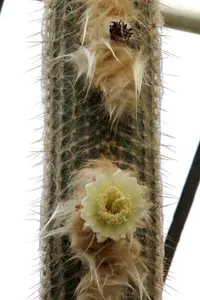
Espostoa melanostele, often called the Peruvian old man cactus, is a columnar cactus known for its dense white wool and bristly spines. It forms upright stems that slowly branch and can become quite tall with age in suitable conditions.
This species is native to high, dry valleys of the Andes in Peru, where it grows in strong sun and cool, arid air. In cultivation it is considered moderately easy if given bright light, a warm spot, and very well-draining, gritty soil.
The combination of slow growth, sensitivity to overwatering, and need for high light means growers must pay attention to how to care for Espostoa melanostele, especially indoors.

Care Difficulty
Moderate Care

Light Preference
Full Sun

Water Requirements
Low Water

Temperature Preference
Tropical / Frost Sensitive

Hardiness Zone
10–11

Soil Texture
Sandy, Loamy, Rocky

Soil pH
Slightly acidic (6.5–7.0), Neutral (7.0)

Soil Drainage
Well-drained

Fertilization
Minimal (feed rarely)
Scan your plant to receive care tips personalized for your specific plant
Available on iOS and Android
This cactus thrives in bright, strong light similar to high-elevation desert conditions.
Watering should mimic arid mountain conditions with brief soakings and long dry intervals.
This species prefers warm, dry air and is sensitive to prolonged cold and frost.
This cactus prefers dry air and does not require extra humidity.
Espostoa melanostele thrives in a very fast-draining, mineral-rich cactus substrate.
This species is well suited to container culture, especially in cooler or wetter climates.
This cactus grows slowly and needs only modest feeding to stay healthy in containers.
Pruning is minimal and mainly focused on safety and hygiene for this columnar cactus.
This cactus prefers a stable pot and infrequent disturbance, but occasional repotting supports long-term health.
Propagation is usually done from stem cuttings, as seed-grown plants develop much more slowly.
Cold management is important, as this cactus is not frost hardy in most climates.

Plant Health Check
Not sure what's wrong with your plant? Check your plant's health inside the app.
This species is native to the dry inter-Andean valleys of central and northern Peru, where it grows on rocky slopes and cliffs in seasonal, semi-arid habitats at medium to high elevations.
The dense white wool and bristles that cover the stems act as a natural sunshade and help reduce water loss by creating a boundary layer of still air around the plant surface.
The name melanostele refers to the dark-colored central stem, which is partly hidden beneath the white wool but visible in older parts of the plant and in cultivated forms selected for a strong contrast.

In its native habitat, this cactus often grows in crevices and on steep faces where soils are extremely shallow, using its fibrous root system to anchor itself securely into rock fissures that hold brief pulses of rainwater.
This species is slow-growing, usually adding only a few cm in height per year. Growth is faster in warm, bright, dry conditions and during the growing season, and much slower in cool, low-light, or winter periods.
Keep your plants happy and healthy with plant identification, disease detection, and easy care guidance.

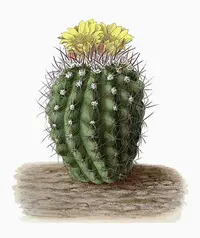
Copiapoa coquimbana
Copiapoa coquimbana
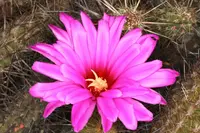
Brandegee's Hedgehog Cactus
Echinocereus brandegeei
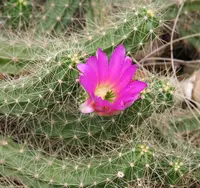
Echinocereus cinerascens
Echinocereus cinerascens
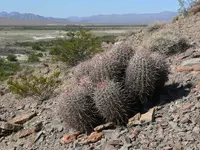
cottontop cactus
Echinocactus polycephalus
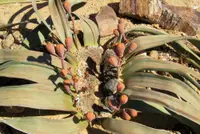
Tree Tumbo
Welwitschia mirabilis
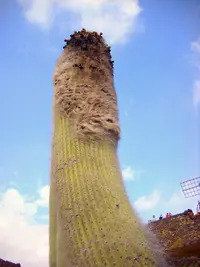
Old man cactus
Cephalocereus senilis
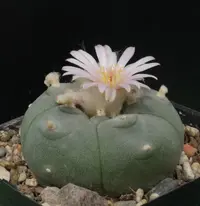
Peyote
Lophophora williamsii
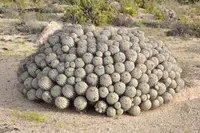
Copiapoa malletiana
Copiapoa malletiana