Ensure cold drainage
In regions with winter frost, plant on a raised mound or gravel berm so meltwater drains away quickly and the root zone does not stay wet and cold.

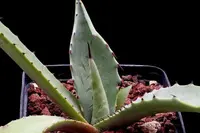
Agave durangensis is a medium to large rosette-forming succulent native to arid regions of Durango and nearby states in northern Mexico. It belongs to a group of hardy desert agaves adapted to strong sun and poor, rocky soils.
The plant forms a tight rosette of stiff, blue-green leaves with spines along the edges and a sharp terminal spine. It grows slowly and eventually produces a tall flowering stalk once in its lifetime, then offsets from the base.
This species is drought tolerant and dislikes heavy, water-retentive soils, which makes it relatively low-maintenance if drainage is excellent. Understanding how to care for Agave durangensis starts with giving it bright light, lean soil, and infrequent watering.

Care Difficulty
Easy Care

Light Preference
Full Sun

Water Requirements
Low Water

Temperature Preference
Warm Climate

Hardiness Zone
8–11

Soil Texture
Sandy, Loamy, Rocky

Soil pH
Slightly acidic (6.5–7.0), Slightly alkaline (7.0–7.5)

Soil Drainage
Well-drained

Fertilization
Minimal (feed rarely)
Scan your plant to receive care tips personalized for your specific plant
Available on iOS and Android
This sun-loving agave thrives in strong, direct light when gradually acclimated outdoors.
This desert species needs infrequent, deep watering and fast-draining soil to avoid root rot.
This agave prefers warm, dry conditions and tolerates significant heat once established.
Humidity is rarely a concern for Agave durangensis, which is adapted to very dry air.
This species needs very fast-draining, mineral soil to prevent root and crown rot.
This species is suitable for container growing when the pot is chosen to control moisture and support its rosette form.
This desert species grows well in lean soil, so Agave durangensis needs only light, infrequent feeding in containers or very poor ground.
Agave durangensis requires minimal pruning focused on safety, plant health, and neat appearance.
This slow-growing agave dislikes disturbance, so repot or transplant Agave durangensis only when clearly root-bound or poorly placed.
New plants are usually raised from offsets, making vegetative propagation of Agave durangensis straightforward for patient growers.
This species has some cold tolerance but benefits from simple winter precautions, especially in wet or very cold climates.

Plant Health Check
Not sure what's wrong with your plant? Check your plant's health inside the app.
This species is naturally restricted to limestone hills in Durango, Mexico, where it grows on rocky, alkaline slopes with very thin soils and high solar exposure.
Its blue‑green leaves form a compact, hemispherical rosette armed with strong marginal teeth and a dark terminal spine, making it more heavily armed and structurally dense than many closely related agaves.
At maturity, it sends up a single tall flowering stalk with many side branches (a paniculate inflorescence) bearing yellowish flowers that attract nectar-feeding insects and bats in its native range.

Agave durangensis is considered a relatively narrow endemic, meaning it occurs naturally in a limited geographic area centered in the state of Durango, which contributes to conservation interest in protecting its natural habitat on Mexico’s Central Plateau.
This species typically flowers only once at maturity, often after several decades. Lack of bloom is normal in younger plants. Flowering may also be delayed by cool climates, insufficient light, or prolonged stress that slows overall development.
Keep your plants happy and healthy with plant identification, disease detection, and easy care guidance.