


Safe handling setup
Place the plant where passing people and pets cannot brush against it, and keep a dedicated long-handled tool or grill tongs nearby so you can remove detached joints without touching them.

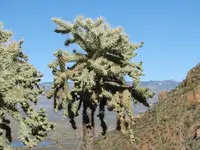
Jumping cholla, Cylindropuntia fulgida, is a shrubby to tree-like cactus known for its jointed, cylindrical stems densely covered with sharp spines and papery sheaths. The stem segments detach easily, which helps the plant spread but also makes handling difficult.
It is native to arid desert regions of the southwestern United States and northern Mexico, where it grows in rocky, well-drained soils. The plant produces waxy flowers followed by chains of fleshy fruits that often remain on the plant for years.
This cactus is sun-loving, drought-tolerant, and adapted to poor soils, which can make it relatively low-maintenance outdoors in dry climates. Those who want to learn how to care for jumping cholla should be prepared to manage its spines and need for bright, dry conditions.

Care Difficulty
Easy Care

Light Preference
Full Sun

Water Requirements
Low Water

Temperature Preference
Warm Climate

Hardiness Zone
9–11

Soil Texture
Sandy, Loamy, Rocky

Soil pH
Slightly acidic (6.5–7.0), Slightly alkaline (7.0–7.5)

Soil Drainage
Well-drained

Fertilization
Minimal (feed rarely)
Scan your plant to receive care tips personalized for your specific plant
Available on iOS and Android
Cylindropuntia fulgida needs strong, direct sun to maintain compact, healthy segments and abundant spines.
This cactus is highly drought-tolerant and must dry thoroughly between waterings to prevent root rot.
This desert species prefers hot, dry conditions and tolerates a wide temperature range once established.
Humidity is rarely a concern for Cylindropuntia fulgida, which thrives in dry air of 20–40% without added moisture.
Cylindropuntia fulgida needs very lean, fast-draining mineral soil to prevent root rot.
This species is suitable for container growing when the pot is chosen to manage its size, weight, and spiny stems safely.
This desert cactus needs minimal feeding, and overfertilizing causes weak, overly lush growth in jumping cholla.
Pruning Cylindropuntia fulgida is mainly for safety, size control, and removal of damaged segments.
This cactus is usually landscape-grown and dislikes frequent disturbance, so transplanting is rare and should be planned carefully.
This species is commonly propagated from stem segments, which root reliably in dry, warm conditions.
Mature plants are fairly cold hardy in dry climates but benefit from basic winter management, especially in containers.

Plant Health Check
Not sure what's wrong with your plant? Check your plant's health inside the app.
This cactus produces long hanging chains of fruits, often 10 or more linked together, because only the lowest fruits set viable seeds while the upper ones are mostly sterile but act as detachable propagules.
The stem segments and fruits detach easily and root when they contact soil, so many new plants arise vegetatively from fallen parts rather than from seed.
In its native Sonoran Desert habitat it is an important nectar and pollen source for large native bees, including carpenter bees, which are among its primary pollinators.

The fruit of this species often serves as a preferred nesting site for the cactus wren, which uses the dense spines as protection from predators while raising its young in the harsh desert environment.
Lack of blooms usually comes from insufficient maturity, poor light intensity, or cool temperatures. This species flowers best when fully established, exposed to strong sun, given a cool but frost-free winter rest, and not overfertilized with high-nitrogen products.
Keep your plants happy and healthy with plant identification, disease detection, and easy care guidance.

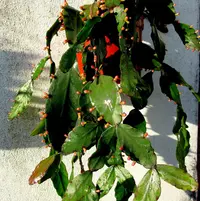
Rhipsalis elliptica
Rhipsalis elliptica
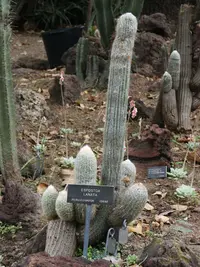
cotton ball cactus
Espostoa lanata
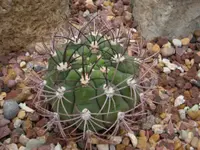
Giant Chin Cactus
Gymnocalycium saglionis
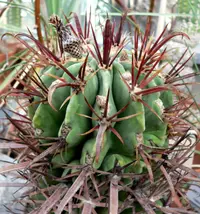
Devil's Tongue Barrel Cactus
Ferocactus latispinus
Monadenium ritchiei
Euphorbia ritchiei
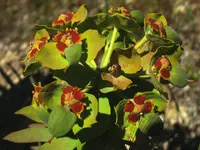
Euphorbia oxyphylla
Euphorbia oxyphylla
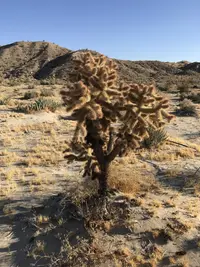
Hoffmann's teddybear cholla
Cylindropuntia fosbergii

tree cholla
Cylindropuntia imbricata