Stenocactus obvallatus Care

Stenocactus obvallatus

About Stenocactus obvallatus

Stenocactus obvallatus is a small, slow-growing desert cactus known for its many tightly packed ribs and compact, rounded body. The plant often stays low and solitary, making it suitable for windowsills and small collections.

It is native to arid regions of Mexico, where it grows in rocky, well-drained soils with intense sun and infrequent rainfall. Spines can be dense and somewhat twisted, giving good protection from sun and grazing animals.

Because of its slow growth and drought tolerance, it is generally considered manageable for patient growers. Understanding how to care for Stenocactus obvallatus focuses on providing bright light, excellent drainage, and careful, infrequent watering.

Main Plant Requirements

Care Difficulty

Moderate Care

Light Preference

Full Sun

Water Requirements

Low Water

Temperature Preference

Tropical / Frost Sensitive

Hardiness Zone

10–11

Soil Texture

Sandy, Loamy, Rocky

Soil pH

Slightly acidic (6.5–7.0), Neutral (7.0)

Soil Drainage

Well-drained

Fertilization

Minimal (feed rarely)

Get Personalized Care Plan

Scan your plant to receive care tips personalized for your specific plant

Available on iOS and Android

How to Care for the Stenocactus obvallatus

This cactus thrives in strong light that mimics high-desert conditions.

  • Provide 6–8 hours of bright light daily; in hot climates use morning sun with light afternoon shade to prevent scorching of ribs and epidermis.
  • Outdoors, place Stenocactus obvallatus where it gets unobstructed sun for most of the day but some protection from intense mid-afternoon summer sun.
  • Indoors, use a south- or west-facing window or strong grow light; pale growth or leaning toward the window signals insufficient light.

Watering should be infrequent and guided by how completely the soil dries out.

  • Allow the top 3–5 cm of soil to dry fully before watering, then soak thoroughly so excess drains away; never leave the pot standing in water.
  • In spring and summer, expect watering roughly every 10–21 days depending on heat, pot size, and airflow; in winter, water only once the plant and soil are completely dry and slightly shrunken.
  • Signs of overwatering include yellowing, soft or translucent tissue, and a musty smell; deep wrinkling and very light weight of the pot indicate the need to water.

Temperature swings similar to warm, dry desert regions suit this cactus well.

  • For active growth, keep temperatures around 70–85°F (21–29°C) with low to moderate humidity and good air movement.
  • The plant tolerates brief drops to about 40°F (4°C) if completely dry, but growth slows below 55°F (13°C) and any frost can scar or kill tissue.
  • In summer, it handles heat up to 95°F (35°C) if shaded from harsh afternoon sun and kept dry; avoid hot, stagnant air around the plant.

This cactus handles typical indoor humidity well and rarely needs special adjustment.

  • Target 30–50% humidity, similar to most heated or air-conditioned homes.
  • Dry air is tolerated, but very hot, drafty spots can cause shriveling ribs and slower growth.
  • If stems wrinkle despite correct watering, slightly raise humidity by grouping plants or placing a shallow pebble tray nearby.

This species needs a very fast-draining, mineral-based mix that dries quickly between waterings.

  • Use a gritty blend of roughly 60–80% inorganic material such as pumice, coarse sand, or fine gravel with 20–40% cactus potting mix.
  • Aim for slightly acidic to neutral pH around 6.0–7.0, avoiding strongly alkaline substrates like pure limestone chips.
  • Ensure a loose, crumbly structure so water runs through in seconds and air can move freely around the roots.
  • Avoid dense, peat-heavy or clayey mixes, which hold water too long and greatly increase rot risk for Stenocactus obvallatus.

This compact cactus is well suited to container growing.

  • Choose a pot only 2–3 cm wider than the plant body so the mix dries evenly and does not stay wet in unused areas.
  • Use a heavier material such as terracotta to reduce moisture and keep the shallow root system stable on shelves or windowsills.
  • Raise the pot slightly on feet or pot stands so drainage holes stay clear and water can exit quickly after each watering.

This desert cactus has low nutrient needs, but light feeding supports steady growth in containers.

  • Use a diluted balanced liquid cactus fertilizer (for example 10-10-10) at 1/4–1/2 strength during the warm growing season.
  • Apply every 4–6 weeks from spring to late summer, always onto already-moist soil to avoid root burn.
  • Skip feeding in autumn and winter when Stenocactus obvallatus rests and growth slows markedly.
  • Avoid compost-heavy or slow-release products that stay wet or release nutrients heavily, which can encourage rot.

Pruning needs for this small cactus are minimal and mostly health focused.

  • Carry out any pruning at the start of the warm growing season so wounds seal quickly.
  • Remove only dead, diseased, or badly damaged tissue using clean, sharp scissors or needle-nose pruners.
  • Cut away dried flower remains or rotten offsets at the base to reduce fungal problems.
  • Avoid shaping cuts; the natural ribbed form of Stenocactus obvallatus cannot be corrected by pruning.

This cactus prefers to stay slightly root-bound and only needs infrequent repotting.

  • Check for roots circling the pot, pushing through drainage holes, or noticeably slowed growth as signs it needs more space.
  • Plan to repot every 3–4 years in late spring, when active growth helps the plant recover.
  • Select a pot only 1–2 in wider, with excellent drainage and a gritty, fast-draining cactus mix.
  • Loosen the root ball gently, remove dead roots, keep the original soil level, then keep the plant dry for 5–7 days to limit transplant shock.

Propagation of this species is usually done from seed and is slow but straightforward with stable conditions.

  • Sow fresh seeds in late spring in a sterile, gritty cactus mix, just pressing them into the surface.
  • Maintain bright, indirect light, 70–80°F warmth, and consistently slightly moist (not wet) substrate until germination.
  • Cover the tray with a clear lid or plastic to hold humidity, then ventilate gradually once seedlings appear.
  • Grow young Stenocactus obvallatus plants in small pots, watering lightly and avoiding strong direct sun until well established.

Cool, dry winter conditions are important for healthy growth and flowering the following season.

  • Keep indoor plants around 45–55°F in winter with plenty of light and almost no water.
  • Move containers indoors before temperatures fall below 40°F, as this cactus is not frost hardy.
  • Ensure the soil dries completely between rare winter sips to prevent root rot in Stenocactus obvallatus.

Care Tips

Rotate For Symmetry

Turn the pot 90° every 2–3 weeks during active growth so the ribs and spine clusters develop evenly rather than leaning toward the light source.

Use Top Dressing

Apply a 0.5–1 cm layer of clean pumice, grit, or small gravel on the soil surface to keep the neck of the plant dry, reduce algae and fungus gnats, and visually signal when the mix has fully dried.

Controlled Winter Rest

From late fall to early spring, keep the plant in a bright, cool spot around 45–55°F with completely dry soil to encourage compact growth and reliable flowering the following season.

Check Rib Firmness

Gently feel the ribs every few weeks; slightly flexible but not soft tissue indicates good hydration, while very hard, deeply shrunken ribs suggest it is time to water once the mix is fully dry.

Inspect Spine Bases

During routine caring for Stenocactus obvallatus, closely inspect the areoles (spine bases) for pale fuzz, webbing, or brown spots so mealybugs and scale can be treated early before they reach the plant’s grooved ribs.

Common Pests and Diseases

Mealybugs

This pest feeds on cactus sap and often hides in rib grooves and around areoles, appearing as small white cottony clumps. Symptoms include slowed growth, yellowing tissue, and sticky honeydew that can encourage sooty mold.

Solution

Remove visible insects with a cotton swab dipped in 70% isopropyl alcohol, then rinse the plant gently and allow it to dry in bright, airy conditions. For larger infestations, use a systemic insecticide labeled for cacti or repeated applications of insecticidal soap, and isolate the plant from others during treatment.

Spider mites

These insects are tiny sap feeders that thrive on thin, stressed cactus skin in hot, dry, stagnant air. Symptoms include dull, roughened patches, fine webbing between ribs or spines, and a general loss of green color toward bronzing.

Solution

Shower the plant with a firm stream of lukewarm water to remove mites and webbing, then increase air movement and avoid excessive heat build‑up. Use a miticide or insecticidal soap specifically labeled for spider mites, repeating as directed to break their life cycle, and avoid placing the plant right next to heat sources or in very still air for long periods when growing Stenocactus obvallatus.

Scale insects

This pest appears as small, hard, brown or gray bumps attached firmly to the ribs or around areoles and may cause localized yellowing and overall decline. These insects suck sap continuously and excrete honeydew, which can lead to black sooty fungal growth on the cactus surface.

Solution

Gently pry off individual scales with a fingernail or soft brush and dab remaining insects with 70% isopropyl alcohol. For persistent cases, apply a systemic insecticide suitable for succulents and maintain the plant in bright light with moderate watering to keep tissue firm and more resistant to attack.

Fusarium stem rot

This disease is caused by soil‑borne fungi that enter through wounds or excessively wet roots and move upward into the stem. Symptoms include sunken, brown to reddish internal tissue, softening around the base, and eventual collapse of ribs while the outer skin may initially remain intact.

Solution

At early stages, cut away affected tissue with a sterile knife until only healthy, firm tissue remains, then allow the plant to callus in a dry, shaded place before replanting in fresh, fast‑draining cactus mix. Prevent recurrence by using clean pots and tools, watering only when the soil is fully dry, and avoiding low, poorly ventilated positions where moisture lingers around the pot.

Corky scab lesions

Symptoms include rough, tan to brown corky patches along the ribs, often on the side exposed to repeated wetting or minor abrasions. This physiological disorder is associated with chronic surface damage from water sitting on the skin, slight sun injury, or mechanical rubbing, and is common on older stems of ribbed cacti.

Solution

Remove any contributing stress by adjusting watering to keep the stem dry between waterings, increasing airflow around the plant, and avoiding overhead watering that leaves droplets on the skin. Since existing corky tissue is permanent, focus on preventing spread by giving stable light, avoiding sudden full‑sun exposure from shade, and handling the plant carefully when repotting or moving.

Interesting Facts

Strong rib armor

This species is notable for its very numerous, sharply undulating ribs that create a shell‑like surface, which helps shade the stem and reduce sun exposure on the green tissue in its native arid habitats.

Distinctive spring flowers

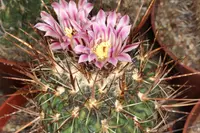
It produces relatively large, funnel‑shaped cream to pale yellow flowers with darker midstripes in spring, often forming a striking contrast against the small, ribbed body of the plant.

Mexican limestone specialist

In the wild, this cactus is restricted to parts of central Mexico where it grows in shallow, rocky soils over limestone, a habitat preference that influences its need for strong drainage in cultivation.

Botan icon

Did you know?

This species has historically been confused with several closely related Stenocactus taxa, and careful study of its rib pattern, flower characteristics, and seed morphology was required to clarify its identity and distinguish it from look‑alike species in cultivation and in the wild.

FAQs about Stenocactus obvallatus

This species typically flowers in spring to early summer, producing funnel-shaped, cream to pale yellow blooms with fine darker stripes. Flowers arise from the crown and open on sunny days, often repeatedly during the warm season.

Grow Healthy Plants with Botan Care

Keep your plants happy and healthy with plant identification, disease detection, and easy care guidance.

Botan plant care app — identify plants on mobile

Explore More Plants