Great Desert Spoon Care (Dasylirion acrotrichum)

Also known as: Green Sotol
Great Desert Spoon

About Great Desert Spoon

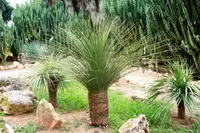
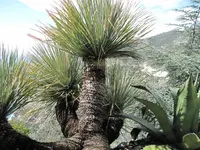
The great desert spoon, Dasylirion acrotrichum, is a rugged desert shrub native to arid regions of Mexico and the southwestern United States. It forms a dense rosette of narrow, stiff, blue-green leaves with fibrous, threadlike tips.

Over time, the rosette can sit on a short trunk, creating a sculptural, fountain-like form suited to dry landscapes and large containers. In maturity, tall flower spikes rise well above the foliage.

This species is highly drought-tolerant and slow-growing, which makes it low maintenance once established but not fast to fill a space. Understanding how to care for Great Desert Spoon focuses mainly on providing strong light, very sharp drainage, and infrequent water.

Main Plant Requirements

Care Difficulty

Easy Care

Light Preference

Full Sun

Water Requirements

Low Water

Temperature Preference

Warm Climate

Hardiness Zone

8–11

Soil Texture

Sandy, Loamy, Rocky

Soil pH

Slightly acidic (6.5–7.0), Slightly alkaline (7.0–7.5)

Soil Drainage

Well-drained

Fertilization

Minimal (feed rarely)

Get Personalized Care Plan

Scan your plant to receive care tips personalized for your specific plant

Available on iOS and Android

How to Care for the Great Desert Spoon

This desert shrub thrives in strong light and open exposure when grown outdoors.

  • Provide 6–10 hours of direct sun daily; full sun is best in most dry, open landscapes.
  • It tolerates light afternoon shade in very hot areas to reduce leaf scorch, but dense shade leads to weak, stretched growth and dull color.
  • New or recently transplanted Great Desert Spoon benefits from temporary filtered light or shade cloth in the first summer to prevent sunburn while roots establish.

This desert-adapted species prefers infrequent, deep watering in sharply drained soil.

  • Allow the top 5–10 cm of soil to dry completely before watering; in arid climates this may mean every 2–4 weeks once established.
  • Use very fast-draining, sandy or gravelly soil so water exits quickly; standing water or heavy clay often leads to root rot and yellowing leaves.
  • In cool or rainy seasons, withhold irrigation unless leaves begin to wrinkle or fold inward, which indicates mild drought stress in Dasylirion acrotrichum.

This species is adapted to hot, dry climates but handles moderate cold once established.

  • Ideal growth occurs around 70–90°F (21–32°C), with low humidity and good air movement to prevent rot in the crown.
  • Mature plants usually tolerate down to about 15–20°F (-9 to -6°C); brief, dry cold is safer than wet freezes that damage tissue.
  • In heat above 100°F (38°C), ensure rocky, well-drained soil; avoid reflected heat pockets that can overheat the crown, especially for young plants.

This desert species is highly tolerant of dry air and usually does not need humidity adjustment.

  • Target 20–40% humidity, similar to arid indoor air, for healthy Great Desert Spoon growth.
  • Excess humidity above 60% combined with poor air movement can encourage rot at the leaf base and crown.
  • Watch for soft, collapsing leaves or a mushy crown as signs of moisture-related stress rather than low humidity.

Dasylirion acrotrichum needs very fast-draining, mineral-rich soil to prevent root and crown rot.

  • Use a gritty, sandy mix such as 60–70% mineral material (coarse sand, small gravel, pumice) with 30–40% cactus potting mix.
  • Aim for slightly alkaline to neutral pH, around 7.0–8.0, avoiding strongly acidic mixes heavy in peat.
  • Increase aeration by incorporating coarse, angular particles rather than fine sand that can compact over time.
  • Avoid dense, water-holding soils, unamended garden clay, or mixes with high compost content that stay wet for more than 1 day.

This species can be grown in large containers if the pot is adapted to its heavy, top-weighted form and arid needs.

  • Choose a wide, heavy container to prevent tipping as the rosette enlarges and becomes top-heavy.
  • Select thick-walled terracotta to allow faster evaporation and keep the root zone from staying damp after infrequent deep watering.
  • Raise the pot on feet or bricks so drainage holes clear fully and excess water leaves the root zone rapidly after rain or irrigation.

This desert-adapted species needs only light, infrequent feeding, especially when grown in the ground.

  • Use a low-dose, balanced slow-release fertilizer (around 10-10-10) or very thin compost layer in spring for Great Desert Spoon in poor soils.
  • Feed once at the start of the warm growing season; skip entirely on rich or amended soils.
  • Apply at half the label strength to avoid salt buildup and root burn in this xeric plant.
  • Stop feeding in late summer so growth hardens before cool weather and winter dormancy.

Pruning for Dasylirion acrotrichum is minimal and mainly cosmetic, focused on old foliage maintenance.

  • Best time is late winter to early spring before strong new growth begins.
  • Remove only dead, brown, or damaged leaves, cutting close to the trunk without injuring living tissue.
  • Trim selectively to maintain a neat spherical rosette while preserving the plant’s natural form.
  • Use clean, sharp pruning shears and thick gloves to handle the stiff, spiny leaves safely.

Container and landscape plants of this species dislike disturbance, so repotting or transplanting should be rare and deliberate.

  • Look for roots circling the pot drainage holes, soil drying extremely fast, or stalled growth as signs to move up one pot size.
  • Carry out transplanting in late spring to early summer, once nights stay consistently warm.
  • Expect to transplant container plants only every 4–6 years, using a very fast-draining, gritty mix.
  • Minimize root stress by keeping the root ball intact, watering lightly after planting, and shading from intense sun for 7–10 days.

Propagation of this species is usually done by seed and is considered slow for home growers.

  • Sow fresh seeds in late spring to early summer in a well-draining, sandy mix.
  • Maintain warm temperatures around 70–80°F and moderate moisture, never waterlogged, to support germination.
  • Provide bright, indirect light and good airflow to limit damping-off, a fungal seedling disease.
  • Keep seedlings in small containers for several years before planting out, allowing strong root development.

This plant is fairly cold hardy when established but benefits from some attention in colder regions during winter.

  • Mature plants often tolerate brief drops to about 15–20°F if soil drains very well.
  • In colder zones, mulch lightly with gravel or coarse bark around the root zone, keeping mulch off the crown.
  • For container plants, move pots to an unheated bright garage or porch where temperatures stay mostly above freezing.

Care Tips

Root crown placement

Set the plant so the root crown sits slightly above surrounding soil or gravel to keep the base dry and reduce risk of rot in heavy rains or overirrigation.

Gravel mulch ring

Create a 30–60 cm ring of coarse gravel around the base instead of organic mulch to improve drainage, reflect excess heat from the crown, and discourage rot and fungus.

Storm and snow prep

In regions with heavy winter snow or strong storms, loosely tie the leaf rosette with soft garden tape or twine to prevent leaf breakage and crown damage.

Managing old leaves

Remove only clearly dead, brown leaves once or twice a year, cutting them close to the trunk but not into living tissue, to maintain airflow and reduce hiding places for pests without stressing the plant.

Safe access planning

When caring for Great Desert Spoon in a landscape, leave enough space and plan access paths so maintenance can be done without brushing against the spiny leaf margins.

Common Pests and Diseases

Agave snout weevil

This pest bores into the base of the rosette, causing internal tissue damage that leads to sudden collapse of leaves and a foul smell from rotting tissue.

Solution

Remove and destroy heavily infested plants, including as much of the root system as possible, to prevent spread. For remaining plants, keep soil very well drained, avoid mechanical damage at the base, and in high‑risk areas use a systemic insecticide labeled for agave/succulent weevils as a preventative soil drench in warm months, following label directions carefully.

Scale insects

These insects attach along leaf margins and at the leaf base, sucking sap and leaving small, hard bumps and sticky honeydew that can attract sooty mold.

Solution

For light infestations, scrub affected areas with a soft brush dipped in water with a small amount of mild soap, then rinse thoroughly and let the plant dry in good airflow. In heavier cases, repeat cleaning and apply a horticultural oil or insecticidal soap to the leaf bases and crown during mild temperatures, ensuring excess water does not sit in the crown afterward.

Mealybugs

This pest forms white, cottony clusters in protected areas of the rosette, weakening the plant over time and sometimes causing leaf yellowing or distortion.

Solution

Physically remove visible clusters with a cotton swab dipped in isopropyl alcohol, then rinse the plant with a firm stream of water, keeping the crown from staying waterlogged. If the problem persists, apply an insecticidal soap or systemic insecticide suitable for succulents and repeat at label intervals until no new insects appear.

Fungal leaf spot

This disease produces small, dark, sunken spots or streaks on the narrow leaves, often starting on older foliage in conditions that stay humid or wet for long periods.

Solution

Prune and discard the most affected leaves to reduce spore load, then improve conditions by increasing sun exposure, spacing plants farther apart, and watering at the soil level rather than over the rosette. In persistent, humid climates, a broad‑spectrum fungicide labeled for ornamental succulents can be applied preventively during wet periods, following label directions.

Crown rot

Symptoms include soft, dark, foul‑smelling tissue at the plant center, with leaves loosening and pulling away easily, usually after prolonged wet or poorly drained conditions.

Solution

At an early stage, cut away all soft tissue back to firm, healthy material and allow the plant to dry in a warm, airy place, then replant in very sharp, fast‑draining soil on a slight mound. Long term, adjust watering to be infrequent and deep, avoid water collecting in the crown, and in rainy climates plant on raised beds or slopes to keep the root zone dry, following standard Dasylirion acrotrichum care instructions for xeric cultivation.

Interesting Facts

Grasslike desert rosette

This species forms a dense, symmetrical rosette of very narrow, rigid leaves up to around 1.5–2 m long, creating a spherical, grasslike dome that can persist for decades in arid habitats of northeastern Mexico.

Fringed leaf tips

Each leaf ends in a cluster of long, fibrous, curling filaments, a diagnostic feature that helps distinguish it from other Dasylirion species whose leaf tips are usually simple or only slightly frayed.

Towering flowering spike

Mature plants periodically send up a tall, unbranched flowering stalk that can exceed 4–5 m, bearing thousands of small cream to whitish flowers that attract a range of desert pollinators.

Botan icon

Did you know?

In parts of northern and central Mexico, the tall, woody trunks and leaf rosettes of this species are traditionally harvested and fermented to produce sotol, a distilled spirit that is regionally protected and specifically linked to wild and cultivated Dasylirion populations, including Dasylirion acrotrichum.

FAQs about Great Desert Spoon

Leaf tips often brown from low humidity, strong reflected heat, or mechanical damage from wind or handling. Older outer leaves naturally dry and die. Remove only fully dry leaves with clean tools to maintain appearance and airflow.

Grow Healthy Plants with Botan Care

Keep your plants happy and healthy with plant identification, disease detection, and easy care guidance.

Botan plant care app — identify plants on mobile

Explore More Plants