


Deep container choice
Use a tall, heavy clay pot with generous drainage holes so the long taproot can develop properly and the top-heavy plant is less likely to tip over in strong wind or when moved.

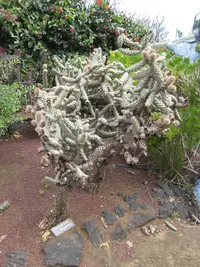
Adam's tree, Fouquieria diguetii, is a desert shrub or small tree known for its thorny, branching stems and bright red tubular flowers. It develops a sculptural, open form that fits well in arid or minimalist landscapes.
This species is native to the Baja California peninsula in northwestern Mexico, where it grows in rocky, extremely dry habitats. It is adapted to intense sun, high heat, and very low rainfall.
Due to its drought tolerance and slow growth, it suits experienced growers who understand how to care for Adam's tree in well-drained, mineral soils with careful, infrequent watering.

Care Difficulty
Moderate Care

Light Preference
Full Sun

Water Requirements
Low Water

Temperature Preference
Tropical / Frost Sensitive

Hardiness Zone
10–11

Soil Texture
Sandy, Rocky, Loamy

Soil pH
Slightly alkaline (7.0–7.5), Alkaline (7.5–8.5)

Soil Drainage
Well-drained

Fertilization
Minimal (feed rarely)
Scan your plant to receive care tips personalized for your specific plant
Available on iOS and Android
This desert shrub needs intense light to stay compact and produce dense foliage.
This species is highly drought-adapted and must dry thoroughly between waterings.
This plant prefers hot, arid conditions but has some tolerance to cooler weather when kept dry.
Humidity is rarely a concern for this desert species in home or outdoor conditions.
This species needs very fast-draining, mineral-rich soil that mimics arid desert substrates.
This species adapts well to container growing when the pot is chosen to control moisture and support its woody, upright form.
This desert shrub has low nutrient needs, so light feeding is enough for healthy growth when caring for Adam's tree.
Pruning is mainly used to maintain structure and remove damaged growth on Fouquieria diguetii.
Container-grown plants and young landscape specimens need infrequent but careful transplanting to avoid root damage.
Fouquieria diguetii is usually propagated from seed, as cuttings are slow and less reliable.
This desert species is only moderately cold tolerant and needs protection in regions with freezing winters.

Plant Health Check
Not sure what's wrong with your plant? Check your plant's health inside the app.
This species is naturally restricted to the Baja California Peninsula and nearby islands, where it forms part of the desert scrub and thorn forest communities on rocky, well-drained slopes.
Its tubular red to orange flowers are adapted for hummingbird pollination, providing nectar during dry seasons when few other nectar sources are available in its habitat.
The plant often remains leafless for long periods and then produces rapid flushes of small leaves in response to rainfall, allowing efficient use of brief moisture pulses in arid desert climates.

In parts of the Baja California Peninsula, this species can form almost tree-like, many-branched thickets on rocky outcrops, creating important microhabitats that shelter small animals and other desert plants from intense sun and drying winds.
This desert shrub is highly attractive to hummingbirds and many native bees, especially when in full red bloom. Tubular flowers provide nectar, so it works well as a wildlife-friendly feature in arid and low-water gardens.
Keep your plants happy and healthy with plant identification, disease detection, and easy care guidance.

San Esteban hedgehog
Echinocereus grandis
Mammillaria perezdelarosae
Mammillaria perezdelarosae
Euphorbia xylophylloides
Euphorbia xylophylloides
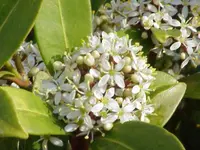
Japanese skimmia
Skimmia japonica
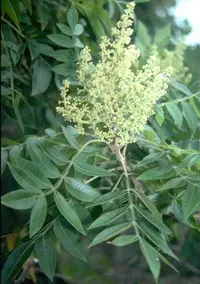
winged sumac
Rhus copallinum
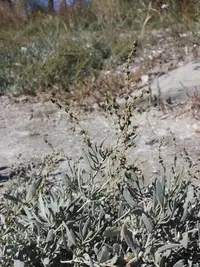
sea purslane
Atriplex portulacoides
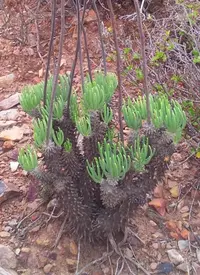
Pegleg Butterbush
Tylecodon wallichii
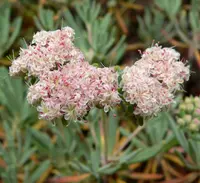
Santa Cruz Island buckwheat
Eriogonum arborescens