Santa Cruz Island buckwheat Care (Eriogonum arborescens)

Also known as: Santa Cruz Island wild buckwheat
Santa Cruz Island buckwheat

About Santa Cruz Island buckwheat

Santa Cruz Island buckwheat (Eriogonum arborescens) is a small evergreen shrub native to the Channel Islands off the coast of California. It is often grown in coastal and dry native plant gardens.

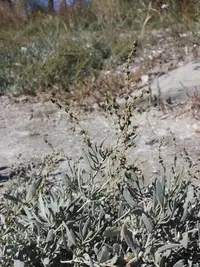
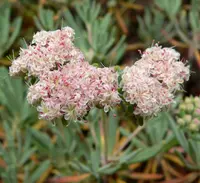
The plant forms a rounded, woody base with narrow gray-green leaves and airy clusters of tiny pink to cream flowers that age to a warm rust color. It typically has a fine, lightweight look despite its woody structure.

This species is adapted to dry, windy, and salt-influenced conditions, which makes it drought tolerant and generally low maintenance once established. Those who want to care for Santa Cruz Island buckwheat should provide full sun, fast-draining soil, and minimal summer irrigation for best performance.

Main Plant Requirements

Care Difficulty

Easy Care

Light Preference

Full Sun

Water Requirements

Low Water

Temperature Preference

Warm Climate

Hardiness Zone

8–10

Soil Texture

Sandy, Loamy, Rocky

Soil pH

Slightly acidic (6.5–7.0), Slightly alkaline (7.0–7.5)

Soil Drainage

Well-drained

Fertilization

Minimal (feed rarely)

Get Personalized Care Plan

Scan your plant to receive care tips personalized for your specific plant

Available on iOS and Android

How to Care for the Santa Cruz Island buckwheat

Eriogonum arborescens is a coastal shrub that thrives in strong, direct sun when grown outdoors.

  • Provide 6–10 hours of direct sun daily; full sun exposure promotes compact growth and abundant flowering in Santa Cruz Island buckwheat.
  • Allow light afternoon shade in very hot inland sites to reduce leaf scorch, especially where summer temperatures and reflected heat are intense.
  • Avoid planting in locations shaded by buildings or trees for most of the day; too little light leads to weak, leggy stems and sparse blooms.

Eriogonum arborescens is a drought-adapted shrub that prefers infrequent, deep watering once established.

  • Before watering, let the top 5–8 cm of soil dry completely; the soil surface should look dry and feel coarse rather than cool and moist.
  • In the first growing season, water deeply when lower leaves begin to soften or wilt slightly, then gradually extend intervals as roots establish.
  • Ensure sharply drained, gritty soil; yellowing leaves, stem dieback, or a sour soil smell indicate overwatering and possible root rot, especially on heavy clay.

This buckwheat is adapted to mild coastal climates with warm, dry summers and cool, frost-light winters.

  • Optimal growth occurs around 60–80°F (16–27°C), matching Mediterranean-type conditions with warm days and cooler nights.
  • Mature plants tolerate brief dips to about 25°F (-4°C), but repeated hard frosts can damage young shoots and kill seedlings.
  • In hot inland areas above 95°F (35°C), provide afternoon shade and avoid reflected heat from walls or pavement to limit stress and leaf scorch.

This shrub prefers dry to moderately dry air and normally does not need humidity adjustment.

  • Target 20–40% relative humidity, matching arid outdoor conditions rather than indoor tropical levels.
  • It tolerates very dry air; problems usually arise only if conditions are both humid and poorly ventilated, which encourage root and stem rot.
  • Signs of excess humidity stress include prolonged leaf wetness, blackened stem bases, and mildew on lower foliage; increase air movement and reduce overhead watering if seen.

Eriogonum arborescens needs very fast-draining, low-fertility soil that mimics coastal bluffs or rocky slopes.

  • Use a sandy or gravelly mix with minimal organic matter, such as 40% coarse sand, 40% small gravel or pumice, and 20% lean loam.
  • Ensure drainage is rapid; water should pass through in seconds, with no puddling or lingering surface moisture.
  • Aim for slightly alkaline to neutral pH, around 6.5–8.0, avoiding strongly acidic mixes based on peat alone.
  • Avoid heavy clay, compacted areas, and rich, water-retentive composts, which increase risk of root rot and overly lush, weak growth.

This species can be grown in containers if the pot and medium are chosen to keep roots dry and stable.

  • Select a wide, heavy container to counter the woody, branching top growth and reduce tipping in wind-exposed sites.
  • Use a mineral-based mix with high pumice or gravel content so water drains within seconds after irrigation.
  • Raise the pot slightly on feet or bricks so drainage holes never sit in a saucer of standing water, especially after rain.

This drought-adapted California native, including Santa Cruz Island buckwheat, needs minimal fertilization in average, well-drained soil.

  • In poor or very sandy soils, apply a light layer of compost in early spring to support moderate growth.
  • Use a low-dose, balanced slow-release fertilizer (around 5-5-5) once in spring only, if growth seems weak.
  • Dilute any liquid feed to 1/2–1/4 strength to avoid excess nitrogen, which can reduce flowering and cause weak stems.
  • Do not fertilize in late fall or winter, when growth is slow or dormant.

Pruning Eriogonum arborescens is mainly done to maintain a compact, flowering shrub and remove dead material.

  • Best time is late winter to early spring, before strong new growth starts.
  • Use clean, sharp hand pruners to remove dead, damaged, or crossing stems at their base.
  • Lightly shorten leggy shoots to shape the plant and keep the canopy dense, avoiding cuts into very old, woody wood.
  • After flowering, shear off spent flower stalks to tidy the plant and encourage a fresh flush of foliage.

This species is usually grown in the ground; transplanting established plants is possible but should be done carefully.

  • Transplant in late fall or very early spring, when temperatures are mild and natural rainfall can help root recovery.
  • Look for signs such as stunted growth or poor performance in heavy or waterlogged soil as cues to move the plant.
  • Lift with a wide root ball, disturbing roots as little as possible, and place in fast-draining, sandy or gravelly soil at the same depth.
  • Water deeply once, then allow soil to dry between light follow-up waterings to reduce transplant shock and prevent rot.

Eriogonum arborescens is most reliably propagated from seed, with some success from semi-hardwood cuttings.

  • Collect ripe seed heads in late summer to fall, then sow in late fall or early spring in a very well-drained, gritty mix.
  • Provide bright light, cool to mild temperatures, and only light moisture to encourage germination without damping-off disease.
  • Take semi-hardwood cuttings in late summer, use a rooting hormone, and place in a sharply draining medium with good air flow.
  • Keep cuttings just barely moist and in bright, indirect light until roots develop, then harden off before planting out.

This coastal California shrub is only moderately frost tolerant and may need attention in colder climates.

  • In mild coastal or USDA zones 9–10, it typically needs no special winter protection in well-drained soil.
  • In colder areas, grow in containers and move to a bright, frost-free spot when temperatures drop near 25°F.
  • Apply a thin, gritty mulch around the root zone to improve drainage rather than to insulate heavily.
  • Avoid winter watering on cold, wet soils, which increases the risk of root rot.

Care Tips

Encourage Bushy Shape

Pinch or lightly tip-prune new growth in late winter or very early spring to encourage dense branching and a compact, wind-resistant form.

Manage Self-Seeding

Allow only the healthiest, best-placed flower heads to set seed and remove the rest after bloom so the plant does not spread aggressively into paths or neighboring plantings.

Support Pollinators

Avoid insecticides during bloom and cluster several plants together so the long-lasting flower heads provide a reliable foraging zone for native bees and butterflies.

Control Woody Thatch

Every 2–3 years, remove a few of the oldest, dead interior stems at the base to improve air movement through the shrub and reduce habitat for mealybugs and scale.

Plan For Dry Slopes

When growing Santa Cruz Island buckwheat on banks or slopes, plant in small staggered groups so the root systems knit the soil together and reduce erosion over time.

Common Pests and Diseases

Aphids

These insects cluster on young stems and flower stalks, sucking sap and causing distorted growth and sticky honeydew on foliage and flower heads.

Solution

Control light infestations by spraying plants with a strong stream of water to dislodge insects, then repeat every few days as needed. For persistent colonies, use insecticidal soap or a light horticultural oil, applied in the early morning to all stem and flower surfaces while protecting nearby beneficial insects as much as possible.

Leafhoppers

These insects feed on leaves and young stems, causing pale speckling, marginal yellowing, and sometimes stunted flower development on this coastal shrub.

Solution

Reduce hiding places by keeping nearby weeds and tall grasses trimmed, then use a strong water spray to knock insects off the plant. If damage continues, apply insecticidal soap or neem oil to the undersides of leaves, repeating at 7–10 day intervals while monitoring for beneficial predators like spiders and lacewings.

Spider mites

This pest appears in hot, dry conditions, leading to fine webbing, stippled or bronzed foliage, and premature leaf drop on stressed plants.

Solution

Increase humidity around the plant base with occasional overhead rinsing and use a firm water spray to wash mites and webs off stems and leaves. In severe cases, apply horticultural oil or insecticidal soap thoroughly to affected areas, focusing treatments during cooler parts of the day to avoid leaf scorch.

Powdery mildew

This disease shows as white, powdery patches on leaves and young stems, which can lead to reduced vigor and early leaf drop in dense plantings or coastal fog belts.

Solution

Improve air circulation by thinning crowded stems and avoiding overhead watering late in the day, then remove and discard heavily infected foliage. If needed, apply a sulfur-based or potassium bicarbonate fungicide labeled for ornamentals, treating new growth early in the season and repeating as directed during prolonged humid periods.

Botrytis blight

This disease produces gray, fuzzy mold on aging flower clusters and sometimes nearby leaves, especially under cool, foggy, or poorly ventilated conditions.

Solution

Promptly trim off and discard spent or moldy flower heads and any affected foliage to reduce inoculum, keeping debris off the soil surface. Improve airflow by spacing plants adequately and avoiding prolonged wetting of foliage; in high-value plantings, a targeted fungicide labeled for Botrytis can be used preventively during long damp spells.

Interesting Facts

Island-endemic shrub

This buckwheat species is naturally restricted to a few of California’s Channel Islands, where it forms dense, woody shrubs on dry, rocky slopes and coastal bluffs.

Year-round insect resource

It produces clusters of small pink to white flowers over a long season, providing nectar and pollen for native bees, butterflies, and flies well beyond typical spring bloom times.

Support for rare butterflies

On the Channel Islands, its flowers and seed heads are an important resource for several native butterfly species, including some that are of conservation interest.

Botan icon

Did you know?

This species is widely used in habitat restoration projects on California’s coast because it stabilizes eroding slopes with its deep, fibrous root system while simultaneously increasing local insect and bird diversity.

FAQs about Santa Cruz Island buckwheat

This shrub is highly attractive to native bees, honeybees, butterflies, and many other pollinating insects. Its long-lasting flower clusters provide nectar and pollen over many months, making it an excellent choice for wildlife-friendly and habitat-style gardens.

Grow Healthy Plants with Botan Care

Keep your plants happy and healthy with plant identification, disease detection, and easy care guidance.

Botan plant care app — identify plants on mobile

Explore More Plants