Galphimia glauca Care

Galphimia glauca

About Galphimia glauca

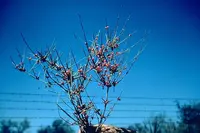
Galphimia glauca, often called shower-of-gold, is a small evergreen shrub known for its clusters of bright yellow, star-shaped flowers. It typically forms a dense, rounded bush with fine-textured foliage and a light, airy look.

This species is native to Mexico and Central America, where it grows in warm, open areas. Its long blooming season and relatively fast growth make it popular in ornamental landscapes.

Galphimia glauca is considered moderately easy to grow if given plenty of sun, warmth, and well-drained soil. Once established, it tolerates short dry periods, which simplifies how to care for Galphimia glauca in low-maintenance gardens.

Main Plant Requirements

Care Difficulty

Easy Care

Light Preference

Full Sun

Water Requirements

Moderate Water

Temperature Preference

Warm Climate

Hardiness Zone

9–11

Soil Texture

Sandy, Loamy, Organic-rich

Soil pH

Acidic (5.5–6.5), Slightly acidic (6.5–7.0)

Soil Drainage

Well-drained

Fertilization

Light (every 4–6 weeks)

Get Personalized Care Plan

Scan your plant to receive care tips personalized for your specific plant

Available on iOS and Android

How to Care for the Galphimia glauca

This sun-loving shrub flowers best with strong light and some protection from extreme heat.

  • Provide 6–8 hours of direct sun daily, ideally with morning sun and light afternoon shade in hotter regions to reduce leaf scorch.
  • Galphimia glauca tolerates light or dappled shade, but flowering and density decline if it receives less than about 4 hours of direct sun.
  • In summer, watch for bleached or crispy leaves as a sign of too much intense afternoon sun; in winter, avoid deep shade from buildings or evergreens.

This shrub prefers evenly moist, well-drained soil and moderate drought tolerance once established.

  • Water when the top 3–5 cm of soil feels dry, applying a slow, deep soak rather than light splashes so moisture reaches the root zone.
  • In the first growing season, check moisture 2–3 times per week; in later years, reduce frequency but increase watering during heatwaves or prolonged dry spells.
  • Yellowing, soft leaves and persistent wet soil indicate overwatering, while dull, wilting foliage and dry, cracking soil signal the need for more water and possibly mulch.

This warm-climate shrub grows best in mild to hot conditions and is sensitive to frost.

  • Optimal growth occurs around 65–85°F (18–29°C), with steady warmth promoting continuous flowering and healthy foliage.
  • The plant is damaged around 28–30°F (-2 to -1°C) and may die back to the base in harder freezes, though roots can resprout if soil does not freeze deeply.
  • It tolerates heat up to 95–100°F (35–38°C) if soil moisture is maintained; in hot, dry periods, mulch and slight afternoon shade help limit stress and leaf drop.

This species tolerates a fairly wide humidity range and rarely needs special humidity management outdoors.

  • Aim for 40–60% humidity; normal outdoor conditions in most mild climates are adequate.
  • Dry indoor air below 30% can cause marginal leaf browning and slower growth over time.
  • Increase humidity slightly by grouping plants or placing nearby water trays, but avoid misting that keeps foliage wet for long periods.

Galphimia glauca prefers light, well-drained soil that does not stay waterlogged after rain or irrigation.

  • Use a sandy or loamy mix with moderate organic matter, such as 2 parts garden loam, 1 part coarse sand, and 1 part compost.
  • Ensure rapid drainage; standing water around the root zone promotes root rot and loss of vigor.
  • Target a slightly acidic to neutral pH around 6.0–7.0, avoiding strongly alkaline or saline soils.
  • Improve aeration and structure by blending in coarse sand or fine gravel rather than heavy clay or dense peat-only mixes.

This shrub is suitable for container growing when the pot is chosen to support its woody roots and bushy top growth.

  • Select a deep, heavy container to anchor the plant and reduce tipping in wind as the shrub becomes taller and denser.
  • Leave a 3–5 cm gap below the rim to contain irrigation water without overflow, which helps ensure even soaking of the root ball.
  • Use a fast-draining mix and elevate the pot slightly on feet so drainage holes stay clear and excess water escapes quickly.

This shrub benefits from light, consistent feeding during active growth for best flowering.

  • Use a balanced granular or slow-release fertilizer (around 10-10-10) or a thin layer of compost in spring.
  • Feed outdoor Galphimia glauca every 6–8 weeks during the warm growing season if soil is poor.
  • For container plants, apply a half-strength balanced liquid feed every 3–4 weeks in spring–summer.
  • Stop feeding in fall and winter to avoid soft, frost-tender growth.

Thoughtful pruning keeps this shrub compact, blooming well, and within bounds.

  • Plan main pruning for late winter or very early spring before strong new growth starts.
  • Remove dead, diseased, or storm-damaged stems first, cutting back to healthy wood.
  • Thin crowded interior branches to improve light and air, shaping Galphimia glauca into a rounded form.
  • Use clean, sharp hand pruners, making angled cuts just above outward-facing buds.

This species is usually grown in the ground but can handle transplanting or occasional repotting when rootbound.

  • Plan transplanting or repotting for late winter to early spring, once hard frosts have passed.
  • Look for roots circling the pot, pushing through drainage holes, or noticeably slowed growth as signs to move it.
  • Transplant garden plants every few years only if overcrowded, lifting with a wide root ball and disturbing roots minimally.
  • Water thoroughly before and after moving, keep soil evenly moist for 2–3 weeks, and provide light shade to limit transplant shock.

This shrub is most commonly propagated from semi-hardwood cuttings, with seeds as an additional option.

  • Take 7–10 cm semi-hardwood cuttings in late spring to summer from non-flowering shoots.
  • Remove lower leaves, dip the cut end in rooting hormone, and place in a moist, free-draining mix under bright, indirect light.
  • Maintain 70–80°F, high humidity, and gentle bottom warmth to encourage root formation over several weeks.
  • Sow fresh seeds in spring in a light seed mix, keeping evenly moist and warm for best germination.

In mild climates this plant needs minimal winter care, but it is sensitive to hard frost.

  • Galphimia glauca handles light brief chills but can be damaged below about 28–30°F, especially when young.
  • Apply 5–8 cm of organic mulch over the root zone in late fall, keeping it slightly away from stems.
  • In colder regions, grow in containers and move indoors or into a frost-free greenhouse before freezing nights.

Care Tips

Encourage Bushy Shape

Pinch back soft shoot tips after flowering to encourage dense, branched growth rather than tall, open stems that flop or break in wind.

Use Discreet Support

In windy or exposed sites, install low, unobtrusive stakes or a short wire trellis early in the season so stems can lean and rest on the support without tying.

Plan For Root Space

When using containers, choose a deep pot with generous surface area and repot every 2–3 years to prevent circling roots and to maintain steady flowering.

Heat And Drought Hardening

In late spring, gradually reduce watering frequency and increase sun exposure over 10–14 days to harden plants so they tolerate summer heat and short dry spells better.

Monitor For Scale

Inspect stems and leaf midribs monthly for scale insects and, if detected early, wipe them off with a cotton pad dipped in diluted insecticidal soap to avoid stronger chemical treatments while caring for Galphimia glauca.

Common Pests and Diseases

Scale insects

This pest feeds on stems and leaves, appearing as small brown or gray bumps that excrete sticky honeydew. Symptoms include sooty mold growth on the honeydew and gradual yellowing or decline of foliage.

Solution

Prune and dispose of heavily infested twigs, then wipe remaining colonies with a cotton pad dipped in 70% isopropyl alcohol or spray with a light horticultural oil, ensuring full coverage of stems and leaf undersides. Repeat treatments every 7–10 days until no new insects appear and improve plant vigor with proper watering and balanced light as part of general Galphimia glauca care.

Aphids

These insects cluster on young shoots, buds, and leaf undersides, sucking sap and causing distorted new growth and sticky honeydew deposits. Ant activity around tender tips often accompanies an infestation.

Solution

Spray tender growth thoroughly with a strong stream of water to dislodge colonies, then treat remaining aphids with insecticidal soap, ensuring good contact with all soft tissue. Repeat applications every 5–7 days until new growth emerges clean and manage nearby ants to reduce reinfestation.

Leaf spot

This disease produces small brown to dark purple spots on leaves, sometimes with yellow halos, which can merge and cause premature leaf drop in humid or rainy conditions. Symptoms include thinning foliage on the lower and inner parts of the shrub.

Solution

Remove and discard affected leaves from the plant and ground, then improve air circulation by thinning dense branches and avoiding overhead watering late in the day. In regions with recurring problems, a copper-based or chlorothalonil fungicide can be applied preventively at the start of warm, wet weather according to label directions.

Powdery mildew

This disease appears as a white to gray powdery coating on leaves and young stems, often starting on shaded or crowded branches. Symptoms include curling or distorted foliage and reduced flowering if the problem persists.

Solution

Increase light and airflow by selective pruning and avoid wetting foliage when irrigating, especially in the evening. If needed, apply a sulfur or potassium bicarbonate fungicide to both upper and lower leaf surfaces at the first sign of infection and repeat at label intervals during conducive weather.

Spider mites

These pests are tiny and often hard to see, but symptoms include fine webbing, especially on the undersides of leaves, along with stippled, dull, or bronzed foliage during hot, dry weather. This pest can cause significant leaf drop if not managed early.

Solution

Rinse the plant thoroughly with water, focusing on the undersides of leaves, and repeat several times per week to reduce populations. In persistent cases, apply a horticultural oil or miticidal soap in the early morning or late afternoon, maintaining higher ambient humidity and reducing dust around the plant to discourage reinfestation.

Interesting Facts

Shrub with two leaf types

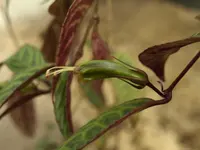
This species often shows heterophylly, meaning it can produce both simple and slightly lobed leaves on the same plant, especially on young or vigorously growing shoots.

Long-lasting yellow blooms

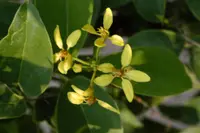
Its bright yellow, star-shaped flowers are borne in loose clusters and can appear over many months in warm climates, providing extended nectar resources for visiting bees and other insects.

Native to dry thickets

Galphimia glauca is naturally distributed from Mexico into parts of Central America, where it typically grows in dry, open scrub and forest edges rather than in dense, humid forests.

FAQs about Galphimia glauca

This species is evergreen in frost‑free climates, keeping its foliage year‑round. In cooler areas it may become semi‑evergreen or partially defoliate after cold spells, then releaf from surviving stems and roots once temperatures warm again.

Grow Healthy Plants with Botan Care

Keep your plants happy and healthy with plant identification, disease detection, and easy care guidance.

Botan plant care app — identify plants on mobile

Explore More Plants