


Rhizome rotation
Lift and divide rhizomes every 1–2 years in late winter, replanting only firm, healthy pieces with at least 1–2 buds to keep the plant compact and flowering well.

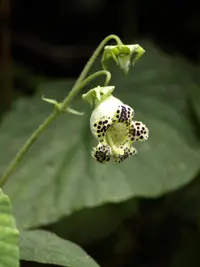
Kohleria tigridia is a small tropical perennial from the Gesneriaceae family, related to African violets. It grows from scaly rhizomes and forms compact, leafy clumps. Leaves are softly hairy, often dark green with a velvety texture, which contrasts with its tubular, brightly patterned flowers. The blooms often show speckled or “tiger” markings, giving the plant a striking look.
This species is native to Central and South America, where it grows in warm, humid forest habitats. It is considered moderately easy indoors if given stable warmth, good light without harsh midday sun, and evenly moist but well-drained soil. Understanding how to care for Kohleria tigridia mainly involves providing consistent conditions and avoiding cold drafts or waterlogged roots.

Care Difficulty
Moderate Care

Light Preference
Bright Indirect Light

Water Requirements
Moderate Water

Temperature Preference
Tropical / Frost Sensitive

Hardiness Zone
11–12

Soil Texture
Loamy, Peaty, Organic-rich

Soil pH
Acidic (5.5–6.5), Slightly acidic (6.5–7.0)

Soil Drainage
Moist but well-drained

Fertilization
Light (every 4–6 weeks)
Scan your plant to receive care tips personalized for your specific plant
Available on iOS and Android
Provide bright, indirect light that mimics a bright forest understory.
Maintain evenly moist but never waterlogged soil during active growth.
Provide warm, stable conditions similar to a humid, frost-free woodland.
This species prefers moderately humid air and reacts quickly to very dry conditions.
Loose, airy, organic-rich soil supports healthy rhizomes and roots for this plant.
This species is well suited to container growing when the pot is chosen to manage moisture and support its rhizomatous growth.
Balanced feeding supports compact growth and flowering in Kohleria tigridia.
Thoughtful pruning keeps Kohleria tigridia compact, branching, and free-flowering.
Container-grown plants benefit from periodic repotting to maintain healthy roots and steady flowering.
This species lends itself well to home propagation from both vegetative parts and underground structures.
This tropical species is frost-sensitive and requires mild, protected conditions in winter.

Plant Health Check
Not sure what's wrong with your plant? Check your plant's health inside the app.
This species produces elongated tubular flowers densely spotted with contrasting darker markings, a floral pattern that helps guide pollinators toward the nectar source.
Its leaves are softly hairy with visible venation and can show subtle patterning and color variation, a trait typical of many Gesneriaceae that reduces water loss and protects against intense light in its native habitats.
The plant forms scaly underground rhizomes that store nutrients and allow it to resprout after periods of stress, an adaptation to seasonally fluctuating conditions in its natural range.
Lack of blooms usually comes from insufficient light, depleted nutrients, or a missed rest period in cooler months. Allow a short, drier dormancy, then resume feeding lightly; this rhythm strongly supports flowering in the next cycle.
Keep your plants happy and healthy with plant identification, disease detection, and easy care guidance.

 POPULAR
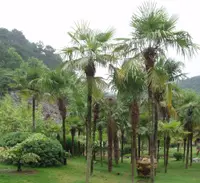
Windmill palm
Trachycarpus fortunei
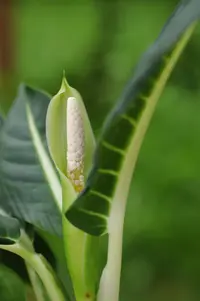
Dieffenbachia oerstedii
Dieffenbachia oerstedii
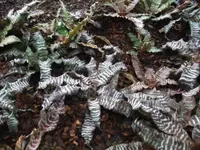
Cryptanthus zonatus
Cryptanthus zonatus
Callisia gentlei
Callisia gentlei
Encyclia cordigera
Encyclia cordigera
Achimenes grandiflora
Achimenes grandiflora
hummingbird sage
Salvia spathacea
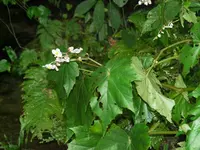
Formosana begonia
Begonia formosana