Brassia arachnoidea Care

Brassia arachnoidea

About Brassia arachnoidea

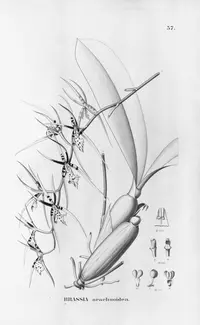
Brassia arachnoidea is an epiphytic orchid, typically found growing on trees rather than in soil. It produces narrow, elongated leaves and striking star-shaped flowers held on arching stems. Native to tropical regions of Central and South America, it is adapted to warm, humid forest habitats with good air movement. This species tends to be moderately demanding under home conditions, mainly because it dislikes stale air, soggy roots, and abrupt changes in temperature or moisture. It suits growers who already have some orchid experience and can provide stable conditions. Understanding how to care for Brassia arachnoidea starts with providing bright filtered light, regular moisture, and a free-draining orchid substrate.

Main Plant Requirements

Care Difficulty

Moderate Care

Light Preference

Bright Indirect Light

Water Requirements

Keep Soil Moist

Temperature Preference

Tropical / Frost Sensitive

Hardiness Zone

Unknown

Soil Texture

Peaty, Organic-rich

Soil pH

Acidic (5.5–6.5)

Soil Drainage

Moist but well-drained

Fertilization

Moderate (every 2–4 weeks)

Get Personalized Care Plan

Scan your plant to receive care tips personalized for your specific plant

Available on iOS and Android

How to Care for the Brassia arachnoidea

This orchid prefers bright, filtered light that mimics light under high tree canopies.

  • Provide 6–8 hours of bright, indirect light daily, such as dappled sun under taller plants or morning sun with afternoon shade.
  • Allow gentle early sun but protect from strong midday and afternoon sun, which can scorch leaves and cause yellow or bleached patches.
  • In winter, when days are shorter, move Brassia arachnoidea to a brighter spot or closer to windows to compensate for reduced light levels.

Watering should keep the roots moist but never saturated for long periods.

  • Check the top 2–3 cm of growing medium; water only when this layer feels just barely dry, then water thoroughly so excess drains away.
  • Reduce watering in cooler months when growth slows, but do not let pseudobulbs shrivel, which indicates underwatering.
  • Ensure very free-draining orchid mix; persistent wetness, blackened roots, or a sour smell indicate overwatering and poor aeration.

This species prefers intermediate to warm temperatures with stable conditions year-round.

  • Aim for daytime temperatures around 70–80°F (21–27°C) and nights around 60–65°F (16–18°C) to support steady growth and flowering.
  • Protect from cold; growth slows below 55°F (13°C), and exposure near 40°F (4°C) can cause tissue damage or plant loss.
  • In hot spells above 85°F (29°C), increase air movement and humidity while shading from harsh sun to prevent heat stress and leaf burn.

This orchid prefers consistently high humidity to support healthy foliage and flowering.

  • Aim for 60–80% humidity, as prolonged levels below 50% often slow growth and cause leaf tip browning.
  • Tolerates short dry spells if watered correctly, but chronic dry indoor air leads to shriveled pseudobulbs and dull, wrinkled leaves.
  • Increase humidity with a room humidifier, grouped plants, or a pebble tray under the pot, avoiding misting that leaves water sitting in leaf axils.

This epiphytic orchid needs a very open, airy mix rather than standard potting soil.

  • Use a coarse orchid mix based on medium bark with additions of perlite and a small amount of sphagnum moss for moisture retention.
  • Ensure rapid drainage so water runs through in seconds; the mix should stay slightly moist but never compacted or waterlogged.
  • A slightly acidic to neutral reaction, around pH 5.5–7.0, suits Brassia arachnoidea and supports nutrient availability.
  • Improve aeration by including chunky components like bark and large perlite, and avoid dense peat-heavy or garden soil blends that suffocate roots.

This species is suitable for container growing when planted in a very free-draining orchid mix.

  • Choose a pot only slightly larger than the root mass so the mix dries evenly and does not stay wet around the pseudobulbs.
  • Use a sturdy, heavier container if the plant becomes tall to prevent tipping when new growths extend outward.
  • Select slotted or net-style orchid pots to increase side ventilation and speed drying of the coarse mix after watering.

This orchid benefits from light, consistent feeding when actively growing, but Brassia arachnoidea is sensitive to excess salts.

  • Use a balanced orchid fertilizer (around 20-20-20) diluted to 1/4–1/2 strength in low-mineral water.
  • Feed every 2–3 weeks during spring and summer, flushing the medium with plain water between feedings.
  • Reduce fertilization to monthly at very weak strength in fall and winter when growth slows.
  • Avoid compost or heavy slow-release pellets; use specialized orchid formulas suited to bark-based media.

Pruning needs are minimal and mainly hygienic for this orchid species.

  • In late winter or after flowering, remove fully spent flower spikes near the base with clean, sharp snips.
  • Trim only dead, yellow, or damaged leaves and pseudobulbs, leaving healthy tissues untouched to maintain energy reserves.
  • Cut crowded or rotting roots during repotting to improve air flow and medium drainage.
  • Disinfect tools with alcohol between cuts to limit spread of fungal or bacterial problems in Brassia arachnoidea.

Container-grown plants appreciate careful repotting to maintain fresh, airy medium around the roots.

  • Repot every 2–3 years in spring when new roots start, or sooner if roots circle the pot, medium breaks down, or growth slows.
  • Choose a snug pot with many drainage holes and a fresh fine-to-medium orchid bark mix, optionally with perlite or charcoal.
  • Gently tease roots free, remove dead or mushy sections, and keep healthy roots intact to limit stress.
  • After repotting, keep shading moderate, watering slightly reduced, and humidity 50–70% until new roots establish.

Propagation is usually done by division of mature clumps rather than from seed at home.

  • Divide in spring when new growth and roots emerge, combining this step with scheduled repotting for less disturbance.
  • Select a healthy clump with at least 3–4 firm pseudobulbs per division to store enough reserves.
  • Plant divisions in fresh orchid bark, keep humidity 60–70%, temperatures around 65–75°F, and provide bright, filtered light.
  • Water lightly until new roots and shoots appear, then resume normal Brassia arachnoidea care instructions.

This orchid is not frost hardy and needs sheltered conditions in winter.

  • Keep indoor temperatures around 60–65°F at night and 65–75°F by day, avoiding drafts and cold windowsills.
  • Maintain slightly drier medium than in summer, but do not allow roots to stay completely dry for long periods.
  • If grown outdoors in warm seasons, move containers indoors before temperatures drop near 50°F.

Care Tips

Rotate Hanging Position

Rotate the pot or mount by 90° every 2–3 weeks so developing pseudobulbs and spikes grow evenly and do not lean toward a single light source, which reduces the risk of top‑heavy plants snapping flower spikes.

Spike Support Planning

As soon as a new flower spike reaches 10–15 cm, add a slim orchid stake and soft ties, then adjust them gradually as the spike elongates to prevent kinking or breakage from its own weight.

Airflow Zoning

Position the plant where a small fan can run on low for several hours daily, providing gentle, indirect airflow that dries leaf surfaces and potting media without causing leaf flutter, which helps prevent fungal spots and bacterial rot.

Targeted Pest Checks

During active growth, inspect new pseudobulbs, leaf bases, and the undersides of leaves weekly with a hand lens, wiping any early mealybug or scale colonies with isopropyl alcohol on a cotton swab before infestations become established.

Seasonal Mount Adjustment

If the plant is mounted, increase misting frequency and consider wrapping a thin layer of long‑fiber sphagnum around the roots in the warmest months, then remove or thin that layer in cooler seasons to balance moisture and air for optimal Brassia arachnoidea care.

Common Pests and Diseases

Spider mites

This pest thrives on Brassia foliage in warm, dry, low-airflow conditions and causes fine stippling, dull leaves, and webbing on undersides. Symptoms include slowed growth and leaf drop if infestations are not controlled.

Solution

Increase humidity, improve air movement, and rinse foliage thoroughly with a gentle shower, focusing on leaf undersides. For persistent issues, apply a horticultural soap or neem oil spray every 7–10 days, isolating the plant from others until the mites are eliminated.

Scale insects

These insects attach along pseudobulbs, leaf bases, and flower stems, appearing as small brown or tan bumps that exude sticky honeydew. This pest can weaken plants, causing yellowing leaves and reduced flowering.

Solution

Physically remove visible scale with a cotton swab dipped in isopropyl alcohol, then wash the plant with lukewarm water. Repeat alcohol swabs and follow with several rounds of horticultural oil or insecticidal soap, and keep the plant isolated and monitored for new crawlers for at least 4–6 weeks.

Bacterial brown spot

This disease produces water-soaked, translucent patches on leaves that turn brown and sunken, often starting along the margin or near mechanical injuries. Symptoms include a foul smell and rapid spread in warm, humid, stagnant air conditions.

Solution

Immediately remove and discard affected leaves with sterilized tools, avoiding splashing water on healthy tissue. Improve air circulation, keep foliage dry, water in the morning at the base, and consider a copper-based bactericide labeled for orchids if cultural corrections are not sufficient.

Black rot (Pythium/Phytophthora)

This disease attacks pseudobulbs and leaf bases, causing rapidly expanding black, mushy lesions that may have a yellow halo. Symptoms include sudden collapse of new growths, especially after episodes of overwatering or cold, wet media.

Solution

Cut away all infected tissue well into healthy, firm tissue using sterilized tools, then dust cuts with cinnamon or a fungicidal powder. Repot into fresh, fast-draining orchid medium, reduce watering, keep temperatures stable, and if needed use a systemic fungicide suitable for orchids to protect remaining growths.

Fungal leaf spot

This disease shows as small, round to irregular dark spots on leaves that may develop yellow halos and coalesce under high humidity. Symptoms include cosmetic damage first, but severe cases can reduce photosynthesis and stress the plant.

Solution

Remove affected leaves or leaf sections and dispose of them, then improve spacing and airflow around the plant. Keep water off the foliage, reduce overhead misting, and apply a broad-spectrum fungicide suitable for orchids if new spots continue to appear despite environmental adjustments, which is an important part of Brassia arachnoidea care instructions.

Interesting Facts

Spiderlike floral form

The flowers have long, narrow segments that radiate outward, giving them a spiderlike appearance that is especially pronounced in this species compared with many other Brassia orchids.

Specialized wasp pollination

In its native habitat, the flowers are pollinated by parasitic wasps that mistake the spiderlike blooms for actual spiders or spider prey and attempt to attack, becoming dusted with pollen in the process.

Epiphytic forest lifestyle

This species typically grows as an epiphyte on trees in humid tropical forests, anchoring to bark with thick roots while absorbing water and nutrients from rain, organic debris, and humid air.

Botan icon

Did you know?

Brassia arachnoidea was among the early species that helped give the entire genus its common name of spider orchid, because its especially exaggerated, spidery flower shape strongly influenced how botanists and growers perceived and described the group.

FAQs about Brassia arachnoidea

Lack of flowering usually comes from insufficient light intensity, too-warm nights, or irregular fertilizing. This orchid needs a slight day–night temperature drop, steady but dilute feeding, and a brief drier rest after new growth matures to set buds.

Grow Healthy Plants with Botan Care

Keep your plants happy and healthy with plant identification, disease detection, and easy care guidance.

Botan plant care app — identify plants on mobile

Explore More Plants