peperomia Care (Peperomia pereskiifolia)

peperomia

About peperomia

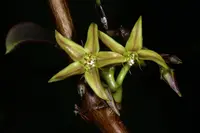
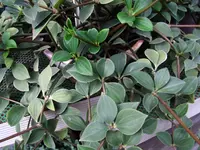
Peperomia pereskiifolia is a compact, evergreen houseplant from tropical Central and South America, where it grows in warm, humid forests as an understory plant. It forms trailing or slightly arching stems with rounded, fleshy leaves that store water and give it a slightly succulent character.

The foliage is usually mid to dark green and can create a dense, cascading mat, making it suitable for hanging baskets or the edge of mixed containers. Its moderate growth rate and small size suit indoor spaces.

This species is generally considered easy to grow, as it tolerates typical indoor conditions if extremes are avoided. It prefers bright, filtered light, a well-draining potting mix, and moderate, consistent moisture, which makes it straightforward to learn how to care for peperomia.

Main Plant Requirements

Care Difficulty

Easy Care

Light Preference

Bright Indirect Light

Water Requirements

Moderate Water

Temperature Preference

Tropical / Frost Sensitive

Hardiness Zone

11–12

Soil Texture

Loamy, Peaty, Organic-rich

Soil pH

Acidic (5.5–6.5), Slightly acidic (6.5–7.0)

Soil Drainage

Well-drained

Fertilization

Light (every 4–6 weeks)

Get Personalized Care Plan

Scan your plant to receive care tips personalized for your specific plant

Available on iOS and Android

How to Care for the peperomia

This species prefers bright, gentle light that mimics dappled forest conditions.

  • Provide 4–6 hours of bright, indirect light each day, such as near an east- or north-facing window or under sheer curtains with filtered sun.
  • Tolerates partial shade, but in very low light stems may stretch and leaf color fades; move slightly closer to the light source if growth becomes leggy.
  • Avoid harsh midday and afternoon sun, especially behind glass, which can scorch leaves; in winter, shift closer to windows to compensate for weaker light.

Watering should keep roots lightly moist but never saturated.

  • Allow the top 2–3 cm of soil to dry before watering; check with a finger rather than following a fixed calendar schedule.
  • Use a free-draining mix and empty saucers after 10–15 minutes so roots of Peperomia pereskiifolia do not sit in standing water, which leads to root rot.
  • In spring and summer, expect to water more often as growth and evaporation increase; in fall and winter, reduce frequency and watch for wilted, curling leaves as a sign of underwatering.

Stable, warm conditions support compact, healthy growth for this species.

  • Aim for 65–80°F (18–27°C) for best growth; short exposures down to 60°F (16°C) are usually tolerated but may slow development.
  • Protect from cold drafts and sudden drops; growth damage often appears when temperatures stay below 55°F (13°C), and frost will kill above-ground tissues.
  • In hot periods above 85°F (29°C), increase air movement and shade from intense sun to limit leaf stress and reduce the risk of heat-related wilting.

This species prefers moderate household humidity and usually adapts well.

  • Aim for 40–60% humidity to support firm, healthy foliage and steady growth.
  • It tolerates short periods of drier air, but very low humidity may cause curled, crispy leaf edges and tip browning.
  • Increase humidity by grouping plants, placing the pot on a water-and-pebble tray, or using a small room humidifier near peperomia.

Soil for this species should be airy, fast-draining, and lightly organic-rich.

  • Use a mix of roughly 50% all-purpose potting mix, 25% perlite or pumice, and 25% fine orchid bark for structure and drainage.
  • Keep the substrate loose and crumbly so roots receive ample oxygen and excess water moves through quickly.
  • Slightly acidic to neutral pH around 6.0–7.0 suits Peperomia pereskiifolia, which dislikes strongly alkaline conditions.
  • Avoid dense clay-based mixes, high proportions of peat that stay wet for days, or any medium that compacts and suffocates roots.

Peperomia pereskiifolia is well suited to container growing indoors or on sheltered patios.

  • Choose a shallow to medium-depth pot that matches the compact root system to prevent large volumes of unused, wet substrate.
  • Select pots with multiple or wide drainage holes so water exits rapidly and does not linger at the base.
  • Use heavier ceramic or terracotta containers where trailing stems might make the plant one-sided, to reduce tipping risk.

Light, consistent feeding supports compact, healthy growth in Peperomia pereskiifolia without overwhelming its fine roots.

  • Use a balanced liquid NPK fertilizer at 1/4–1/2 strength every 4–6 weeks during spring–summer on moist soil, not bone-dry roots.
  • Alternatively, apply a light layer of fine compost or a low-dose slow-release product at the start of the growing season.
  • Skip feeding in winter or any dormant period, when growth slows and nutrient demand is low.
  • If leaf tips brown or growth becomes soft and leggy, reduce fertilizer strength or frequency and flush the pot with plain water.

Thoughtful pruning keeps Peperomia pereskiifolia compact, branching, and tidy indoors.

  • Best timing is late winter to early spring, just before active growth, with minor tidying possible year-round.
  • Remove dead, yellowing, or damaged stems first, then thin crowded shoots to open the canopy and improve light penetration.
  • Pinch or cut just above a node to encourage branching and a fuller shape rather than long, trailing stems only.
  • Use clean, sharp scissors or snips disinfected with alcohol to limit disease spread through fresh cuts.

Repotting every few years maintains root health and stable growth for container-grown Peperomia pereskiifolia.

  • Check for roots circling the pot, pushing through drainage holes, or slowed growth as main signs it needs a larger container.
  • Plan repotting for spring, when recovery is fastest; most plants need it every 2–3 years in typical indoor conditions.
  • Move up only 2–5 cm in pot diameter, using a well-drained mix based on peat or coco coir with added perlite or pumice.
  • Gently loosen circling roots, set at the same depth, water thoroughly, then keep in bright, indirect light while new roots establish.

New Peperomia pereskiifolia plants are most often produced from stem cuttings under warm, stable conditions.

  • Take 5–10 cm stem cuttings with 2–3 nodes in spring–summer, using clean scissors or a knife.
  • Remove lower leaves, then place cut ends in moist, airy mix or water, keeping nodes just below the surface or waterline.
  • Maintain 70–80°F, high humidity, and bright, indirect light to support rooting over several weeks.
  • After firm roots form, pot into small containers, keep evenly slightly moist, and avoid heavy fertilizing until growth resumes strongly.

This tender species requires indoor conditions or warm rooms in winter, as it does not tolerate frost or prolonged cold.

  • Keep temperatures above 60°F, away from drafty windows, exterior doors, or unheated rooms that drop at night.
  • Move container plants indoors before outdoor lows reach 50°F, providing bright, indirect light and good air circulation.
  • Water less often in winter, allowing the top layer of mix to dry, since cool, wet soil promotes root rot.

Care Tips

Encourage Bushy Shape

Pinch back the soft tips of trailing stems just above a node to promote branching and keep the plant compact instead of sparse and leggy.

Selective Stem Propagation

When trimming longer vines, choose the healthiest, pencil-thick sections with 2–3 nodes, remove the lowest leaves, and root several cuttings together in one pot to quickly create a fuller plant.

Support Trailing Stems

Guide mature, flexible stems onto a small trellis or hoop, or gently drape them over the rim of a hanging pot, to prevent kinking or breakage at the base.

Strategic Pot Rotation

Rotate the pot by 90° every 2–3 weeks during active growth so stems develop evenly and do not bend permanently toward a single light source.

Routine Pest Checks

Inspect the undersides of leaves and stem joints every 1–2 weeks, and at the first sign of pests, isolate the plant and treat with a ready-to-use insecticidal soap, which is a safe option when caring for peperomia.

Common Pests and Diseases

Mealybugs

This pest often hides in stem nodes and leaf joints, sucking sap and causing stunted growth and leaf yellowing. Symptoms include white, cotton-like clusters on stems and leaf undersides.

Solution

Remove visible insects with a cotton swab dipped in 70% isopropyl alcohol, then gently wash the foliage with lukewarm soapy water and rinse. Isolate the plant, repeat spot treatments weekly until no new clusters appear, and improve light and air movement to discourage reinfestation.

Spider mites

These insects favor the relatively thin, soft leaves and trailing stems, causing stippled, pale foliage and fine webbing between leaves. This pest thrives in warm, dry indoor air and can weaken the plant over time.

Solution

Shower the plant with a gentle stream of lukewarm water, focusing on leaf undersides, then increase humidity and avoid very dry air. For persistent cases, use repeated applications of insecticidal soap or horticultural oil every 5–7 days, ensuring full coverage of both sides of the leaves.

Fungus gnats

These insects breed in consistently moist peat-based mixes and their larvae feed on fine feeder roots, leading to slowed growth and dull foliage. Symptoms include small black flies hovering around the pot and very wet potting media.

Solution

Allow the top 2–3 cm of the mix to dry between waterings, and improve drainage so the potting medium never stays soggy. Use yellow sticky traps for adults and, if needed, apply a biological control such as Bacillus thuringiensis israelensis (BTI) drench according to label directions to reduce larvae in the soil.

Edema

This physiological disorder occurs when roots absorb water faster than leaves can transpire it, leading to small corky or blistered spots on the foliage. Symptoms include rough, tan or brown patches mainly on older leaves, often after periods of overwatering in cool conditions.

Solution

Reduce watering frequency so the top of the potting mix dries slightly before the next watering, and keep the plant in stable, warm conditions with moderate airflow. Remove only severely damaged leaves and avoid abrupt shifts from low light to very bright light, which can increase water imbalance.

Leaf spot (fungal/bacterial)

This disease produces small water-soaked or dark spots that can enlarge and merge, especially on crowded or poorly ventilated foliage. Symptoms include yellow halos around lesions and premature leaf drop on inner, shaded stems.

Solution

Promptly remove and discard affected leaves, avoid wetting the foliage when watering, and increase spacing and airflow around the plant. If new spots continue to appear, use a copper-based or other labeled houseplant fungicide according to instructions, and maintain cleaner, drier leaf surfaces as part of general peperomia indoor care.

Interesting Facts

Semi-succulent epiphyte origin

In the wild, this species often grows as an epiphyte on tree trunks and branches in tropical forests of northern South America, storing water in its slightly fleshy stems and leaves to cope with short dry spells.

Jointed, rooting stems

Its long, jointed stems can produce roots at the nodes when they touch suitable substrate, allowing the plant to scramble, hang, or form loose mats over bark and leaf litter.

Dimorphic growth habit

This species tends to develop upright, leafy shoots near the base and more trailing, vine-like stems toward the tips, creating a naturally layered structure that helps it capture light under forest canopies.

FAQs about peperomia

Yellowing leaves usually result from excess moisture in the root zone, compacted or poorly drained substrate, or prolonged low light. Remove damaged foliage, improve drainage, and allow the potting mix to dry slightly more between waterings to stabilize the plant.

Grow Healthy Plants with Botan Care

Keep your plants happy and healthy with plant identification, disease detection, and easy care guidance.

Botan plant care app — identify plants on mobile

Explore More Plants