Early trunk protection
Install a breathable physical barrier, such as shade cloth or reed fencing, around young stems in hot inland climates to prevent sunscald and bark cracking while the crown is still small.

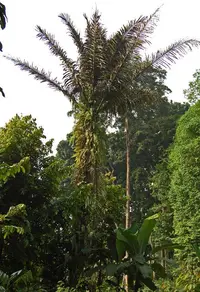
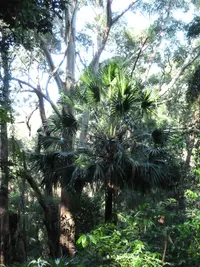
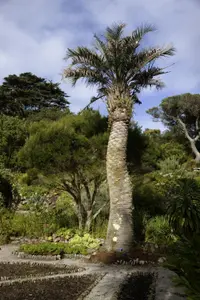
The sugar palm, Arenga pinnata, is a large feather-leaved palm native to tropical Southeast Asia. It typically forms a single stout trunk topped with a dense crown of arching fronds. In nature it grows in warm, humid lowland forests and along village edges, where it is valued for sap, fiber, and starch. Its substantial size and slow to moderate growth rate make it better suited to outdoor planting in frost-free climates than to small indoor spaces. For those who want to learn how to care for sugar palm, it generally prefers bright light, consistent moisture without waterlogging, and well-drained, organic-rich soil.

Care Difficulty
Hard Care

Light Preference
Partial Shade

Water Requirements
Regular Water

Temperature Preference
Tropical / Frost Sensitive

Hardiness Zone
10–11

Soil Texture
Sandy, Loamy, Organic-rich

Soil pH
Acidic (5.5–6.5), Slightly acidic (6.5–7.0)

Soil Drainage
Moist but well-drained

Fertilization
Minimal (feed rarely)
Scan your plant to receive care tips personalized for your specific plant
Available on iOS and Android
Arenga pinnata prefers bright, filtered light that mimics its native forest-edge habitat.
This palm prefers consistently moist but not waterlogged soil throughout the growing season.
This species thrives in warm, frost-free climates with stable temperatures.
Arenga pinnata prefers consistently moist, warm air and reacts poorly to very dry conditions.
Arenga pinnata performs best in deep, moisture-retentive but freely draining soil that mimics a rich forest floor.
This palm can be grown in large containers during its juvenile years, but long-term cultivation is challenging due to its eventual size.
Arenga pinnata benefits from moderate feeding during active growth but does not need heavy fertilization.
Pruning Arenga pinnata is mainly about removing old fronds and keeping the crown safe and tidy.
Transplanting is more relevant than repotting for this large palm, which resents frequent disturbance.
Arenga pinnata is usually propagated from seed and the process is slow and specialized.
This palm is frost sensitive and needs careful winter management in most temperate climates.

Plant Health Check
Not sure what's wrong with your plant? Check your plant's health inside the app.
The inflorescences of this species are tapped for a sweet sap that can be boiled into palm sugar or fermented into vinegar or alcoholic drinks in many parts of Southeast Asia.
The trunk stores a large amount of starch that has traditionally been processed into a sago-like flour used as a staple or famine food in some local communities.
The leaf bases produce strong, black fibrous material known as gomuti, which has been used for making ropes, brushes, brooms, and traditional thatching.

This palm is monocarpic at the individual stem level, meaning each stem flowers only once at the end of its life, producing a massive series of inflorescences over several years before that stem dies while new stems arise from the base.
Growth is slow to moderate. Young plants often add about 30–60 cm of trunk height per year in warm, moist, frost‑free climates. Cooler temperatures, poor soil fertility, or water stress can reduce growth considerably when growing sugar palm.
Keep your plants happy and healthy with plant identification, disease detection, and easy care guidance.