Rocky anchoring
Plant firmly between rocks or in a very heavy, free-draining container mix and top-dress with coarse gravel so the stiff rosettes are mechanically supported against wind and do not wobble at the base.

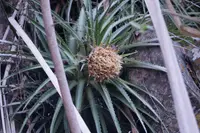
Calilla (Ochagavia litoralis) is a small terrestrial bromeliad with stiff, arching rosettes of spiny, gray‑green leaves and rounded clusters of pink to rose flowers. It forms tight clumps that slowly expand, giving a structured, architectural look.
This species is native to rocky coastal areas of central Chile, where it endures strong sun, wind, and poor, fast‑draining soils. Its toughness, drought tolerance, and slow growth habit explain why it is generally considered low maintenance once established.
In cultivation, it prefers bright light, gritty soil, and careful watering that avoids prolonged wetness around the roots, which helps clarify how to care for calilla in typical home or outdoor settings.

Care Difficulty
Moderate Care

Light Preference
Full Sun

Water Requirements
Low Water

Temperature Preference
Warm Climate

Hardiness Zone
9–11

Soil Texture
Sandy, Loamy, Rocky

Soil pH
Slightly acidic (6.5–7.0), Neutral (7.0)

Soil Drainage
Well-drained

Fertilization
Minimal (feed rarely)
Scan your plant to receive care tips personalized for your specific plant
Available on iOS and Android
This coastal bromeliad prefers bright, open conditions that mimic its native seaside cliffs.
This species is drought-tolerant and prefers infrequent, deep watering rather than constant moisture.
This hardy bromeliad thrives in mild, coastal-type climates with cool to warm temperatures.
This coastal bromeliad manages well in typical indoor humidity if extremes are avoided.
Ochagavia litoralis prefers a very free-draining, gritty mix that mimics rocky coastal slopes.
This species adapts well to container culture when the pot is chosen to support its stiff, spiny rosette.
Ochagavia litoralis is tolerant of lean soils but benefits from light feeding in containers or poor ground.
Pruning needs for Ochagavia litoralis are minimal and mostly cosmetic.
This bromeliad is usually grown as a long-lived clump, so transplanting is infrequent.
New plants of Ochagavia litoralis are most often produced from offsets rather than seed.
This coastal bromeliad is fairly cold tolerant but benefits from simple winter precautions in harsher climates.

Plant Health Check
Not sure what's wrong with your plant? Check your plant's health inside the app.
This bromeliad is native to rocky sea cliffs of central Chile, where it grows in crevices exposed to salt-laden winds and strong sun, making it naturally tolerant of coastal conditions and wind exposure.
Its stiff, gray-green leaves form tight rosettes armed with sharp marginal spines, an adaptation that reduces herbivory and helps funnel scarce rain and fog moisture toward the plant’s center.
Mature plants produce dense clusters of pink to rose flowers held low in the rosette, with each inflorescence persisting for a long time and attracting pollinating insects in its native habitat.

Ochagavia litoralis is considered one of the few bromeliads that naturally forms large, cushion-like colonies directly on exposed maritime rocks, creating distinctive, almost hedgehog-like mounds that can visually dominate sections of the Chilean coastline.
Lack of flowers usually comes from insufficient light, a pot that is too large, or a plant that is still immature. Ensure strong light, avoid overfertilizing with nitrogen, and allow offsets to mature before expecting regular blooms.
Keep your plants happy and healthy with plant identification, disease detection, and easy care guidance.