Aechmea caudata Care

Aechmea caudata

About Aechmea caudata

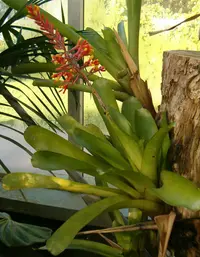
Aechmea caudata is a tropical bromeliad grown mainly for its bold foliage and long-lasting flower spikes. It is usually grown as an indoor ornamental or in warm outdoor climates. Rosettes of stiff, arching leaves form a vase shape that can hold water, and tall stalks carry colorful flower bracts followed by decorative berries. Plants stay relatively compact and suit tabletops or bright windowsills. In nature, Aechmea caudata occurs in the Atlantic forests of Brazil, often growing as an epiphyte on trees. It adapts well to container culture, and its tolerance of indoor conditions makes it moderately easy to manage once you understand how to care for Aechmea caudata.


Main Plant Requirements

Care Difficulty

Moderate Care

Light Preference

Bright Indirect Light

Water Requirements

Moderate Water

Temperature Preference

Tropical / Frost Sensitive

Hardiness Zone

10–11

Soil Texture

Sandy, Loamy, Organic-rich

Soil pH

Acidic (5.5–6.5)

Soil Drainage

Well-drained

Fertilization

Light (every 4–6 weeks)

Get Personalized Care Plan

Scan your plant to receive care tips personalized for your specific plant

Available on iOS and Android

How to Care for the Aechmea caudata

This bromeliad prefers bright, indirect light with some gentle direct sun.

  • Provide 4–6 hours of bright, filtered light daily; soft morning sun is ideal, while harsh midday and afternoon sun should be filtered through sheer curtains or light shade outdoors.
  • Tolerates partial shade, but if leaves lose color or rosette becomes stretched, move Aechmea caudata to a brighter spot without exposing it to scorching rays.
  • In summer, increase shade protection during strong sun; in winter, move closer to bright windows or brighter outdoor positions to compensate for weaker light.

Watering focuses on both the central cup and the root zone without leaving conditions soggy.

  • Keep the central tank filled with fresh water, flushing it every 1–2 weeks to prevent stagnation, and allow excess to drain away from the leaf bases.
  • Let the top 2–4 cm of potting mix dry before watering the roots again; soil should be free-draining, never waterlogged, to avoid root and base rot.
  • In warmer months, expect to refill the cup and moisten the mix more often; in cooler seasons reduce frequency, watching for wrinkling leaves (too dry) or soft, blackened bases (too wet).

This species prefers warm, stable conditions typical of subtropical climates.

  • Aim for 65–80°F (18–27°C) for active growth, as this range supports good leaf color and normal flowering.
  • Protect from cold; growth slows below about 55°F (13°C) and sustained exposure under 40°F (4°C) can cause tissue damage, while frost can quickly kill exposed rosettes.
  • Handles short heat spells up to around 90–95°F (32–35°C) if shaded from intense sun and given good air movement, but avoid hot, enclosed spaces with stagnant air.

This bromeliad prefers moderately humid air but adapts to many typical household conditions.

  • Aim for 40–60% humidity to keep foliage firm and reduce browning at the leaf tips.
  • It tolerates short periods of drier air but prolonged humidity below 30% can cause curling, crispy margins, and dull color.
  • Increase humidity with a nearby humidifier or grouped plants rather than misting directly into the central cup, which can promote rot.

This species grows best in a very airy, fast-draining, organic-rich mix similar to an epiphytic bromeliad substrate.

  • Use a chunky blend of roughly 50% fine orchid bark, 25% perlite or pumice, and 25% peat or coco coir for moisture retention without waterlogging.
  • Ensure water drains through within seconds; the mix should feel springy and loose, not compact or sticky after watering.
  • Keep pH slightly acidic to neutral, around 5.5–7.0, which suits Aechmea caudata and supports nutrient availability.
  • Avoid heavy garden soil, clay-based mixes, or potting media that stay wet for more than 2–3 days, as these reduce aeration and encourage root and base rot.

This bromeliad is very suitable for container growing due to its compact root system and upright rosette form.

  • Choose a low, wide, and relatively heavy pot to counterbalance the tall flower spike and prevent the container from tipping over.
  • Select a pot only 2–4 cm wider than the root base so the loose mix dries at a steady rate and does not stay wet in unused areas.
  • Opt for breathable terracotta if the home is humid or watering is frequent, as it speeds evaporation and keeps the root zone from remaining saturated.

This bromeliad benefits from light feeding but tolerates lean conditions if grown in suitable light and water.

  • During spring–summer, apply a balanced liquid fertilizer (around 10-10-10 or 20-20-20) at 1/4–1/2 strength every 4–6 weeks to the potting mix, not the central cup.
  • Alternatively, use a low-dose slow-release fertilizer in spring, keeping granules off the leaf rosette to avoid burn.
  • Skip feeding in late fall and winter, when growth slows, to reduce salt buildup and prevent weak, elongated leaves.
  • Rainwater or distilled water helps limit mineral accumulation, which is important for long-term Aechmea caudata care.

This species needs only light, maintenance-focused pruning to stay tidy and healthy.

  • Best timing is after flowering finishes and at the start of active growth in spring or early summer.
  • Remove dead or damaged leaves at the base with clean, sharp scissors or pruners to reduce disease risk.
  • Cut spent flower stalks close to the rosette once they fade, which directs energy to offsets forming around the mother plant.
  • Thin out crowded or shading foliage slightly to improve airflow and maintain an open, balanced shape.

This bromeliad grows slowly and prefers slightly snug containers, so repotting is infrequent.

  • Plan to repot every 3–4 years, or when roots circle the pot, mix breaks down, or offsets overcrowd the container.
  • Best time is spring, just before strong growth, so the plant can re-establish and recover from handling stress.
  • Gently remove the plant, shake off old mix, trim dead roots, and place in a slightly larger pot with airy bromeliad or orchid-type substrate.
  • Water lightly after repotting, keep in bright but indirect light, and maintain stable warmth to reduce transplant shock.

New plants are most reliably produced by separating offsets rather than by seed.

  • Allow offsets to reach about 1/3–1/2 the size of the mother Aechmea caudata rosette before removing.
  • Best season is spring to early summer, when warmth and longer days support faster rooting and establishment.
  • Use a clean, sharp knife to separate pups with some roots attached, then pot each in a small container with free-draining mix.
  • Keep newly potted offsets slightly moist, in bright filtered light and high humidity, until firm new growth appears.

This bromeliad is frost-sensitive and needs mild winter conditions, especially in containers.

  • Maintain temperatures above 50°F; exposure near or below freezing can damage leaves and meristems.
  • Move potted plants indoors or into a heated greenhouse before night temperatures drop in fall.
  • Indoors, provide bright indirect light, good air movement, and slightly reduced watering while keeping the central cup only lightly filled.
  • In mild climates, outdoor plants benefit from a light mulch around the root zone to buffer short cool snaps.

Care Tips

Use rainwater flush

Every 2–3 months, take the plant to a sink or shower and rinse the tank and potting mix thoroughly with lukewarm rainwater or distilled water to wash out accumulated salts and old organic residues that can damage roots and leaf bases over time.

Refresh the central cup

Once a month, empty the central water-holding rosette by gently tipping the plant and then refill with fresh water to reduce the risk of bacterial rot and mosquito larvae in the tank.

Offset management

When pups reach about one-third to one-half the height of the mother plant and show several roots, cut them off with a sterile knife and pot them individually to keep the clump open, stable, and productive.

Stabilize top-heavy plants

If the flowering rosette becomes top-heavy, use a slightly heavier, wider pot and lightly mound the potting mix around the base or add decorative stones on top to prevent the plant from tipping.

Monitor post-bloom decline

After flowering, leave the fading mother rosette in place until it clearly shrivels, then remove it carefully without disturbing the pups, which ensures a smoother transition when caring for Aechmea caudata across its natural life cycle.

Common Pests and Diseases

Mealybugs

This pest appears as white, cottony clusters tucked into leaf bases, between stiff leaf blades, and around the central cup. Feeding weakens the plant and can cause leaf yellowing and sticky honeydew on surrounding surfaces.

Solution

Remove visible insects with cotton swabs dipped in 70% isopropyl alcohol and rinse leaf rosettes thoroughly with lukewarm water, making sure to flush the leaf axils and central tank. For persistent infestations, apply a neem oil or insecticidal soap spray labeled for bromeliads, and repeat every 7–10 days while isolating the plant and improving air circulation.

Scale insects

These insects form small, hard, brown or tan bumps on leaves and at the base of the rosette, often along the stiff leaf edges. Symptoms include slow growth, yellow patches, and sticky honeydew that may lead to sooty mold.

Solution

Gently scrape or wipe off visible scale with a soft cloth or cotton swab dipped in 70% isopropyl alcohol, then wash the foliage thoroughly. If needed, use an insecticidal soap or horticultural oil spray, applied according to label directions and repeated several times, while keeping the plant in bright, airy conditions to reduce stress.

Tank bromeliad rot

This disease starts when water trapped in the central cup stays stagnant, leading to soft, brown, foul-smelling tissue at the base of the rosette. Symptoms include collapsing inner leaves and a mushy crown, even if outer leaves still look green.

Solution

Immediately empty the central cup, trim away all soft or rotting tissue with sterile tools, and keep the plant drier at the base while it recovers. Refill the tank only partially with fresh water, flush it regularly, and avoid letting cold or dirty water sit in the rosette to support long-term Aechmea caudata care.

Leaf spot (fungal)

This disease produces small, water-soaked or tan spots on the stiff leaves that may enlarge, darken, and develop yellow halos. Spots often start where water droplets remain on leaves for long periods in low airflow conditions.

Solution

Remove and discard heavily spotted leaves and avoid overhead misting that keeps foliage wet. Increase air movement, water in the morning, and if spotting spreads, apply a low-toxicity fungicide labeled for ornamental foliage plants, ensuring both upper and lower leaf surfaces are treated.

Interesting Facts

Tank-forming epiphyte

This bromeliad often grows as an epiphyte on trees in coastal Atlantic forests of Brazil, forming a water-holding rosette that collects rain, leaf litter, and small organisms in its central tank.

Salt-tolerant habitat

It naturally occurs near coastal areas exposed to salt-laden winds, which makes it more tolerant of slightly saline or maritime conditions than many other bromeliads.

Long-lasting inflorescence

The stiff flower stalk carries bright bracts and small flowers that can remain visually attractive for several months, even after the individual flowers have finished, which is one reason Aechmea caudata plant care is popular among collectors.

Botan icon

Did you know?

In its native Brazilian range, the water-filled rosettes of this species function as tiny reservoirs that support complex micro-ecosystems, including insect larvae, small crustaceans, and even the occasional tree frog tadpole, contributing to local biodiversity high in the forest canopy.

FAQs about Aechmea caudata

Lack of flowering usually comes from insufficient light, overly cool temperatures, or a plant that is still immature. Stable warmth, bright indirect light, and a light feeding schedule over time will support bud formation and flowering.

Grow Healthy Plants with Botan Care

Keep your plants happy and healthy with plant identification, disease detection, and easy care guidance.

Botan plant care app — identify plants on mobile

Explore More Plants