Root-zone mulching
Apply a 3–5 cm layer of coarse, well-aged bark or wood chip mulch around the root zone, keeping it 5–8 cm away from the trunk to stabilize soil moisture and protect the shallow roots from heat stress.

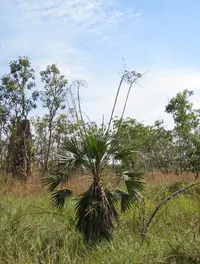
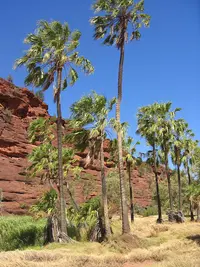
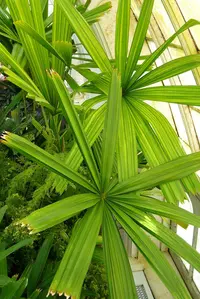
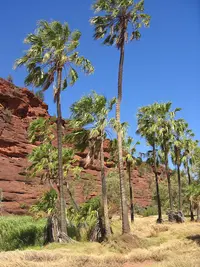
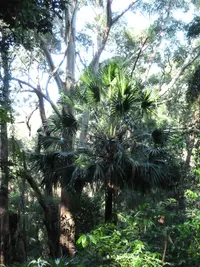
Sand palm (Livistona humilis) is a small fan palm native to northern Australia, where it grows in open woodlands and sandy soils. It usually stays compact, with a slim trunk and a rounded crown of stiff, pleated leaves.
This species is adapted to seasonal dry conditions, which makes it relatively tolerant of heat and short dry spells once established. Its slow to moderate growth and manageable size suit gardens, patios, and some indoor settings with enough light.
It generally prefers bright light, moderate moisture, and well-drained, sandy or gritty soil, similar to its natural habitat. These traits influence how to care for Sand Palm in home landscapes or containers.

Care Difficulty
Moderate Care

Light Preference
Full Sun

Water Requirements
Moderate Water

Temperature Preference
Tropical / Frost Sensitive

Hardiness Zone
10–12

Soil Texture
Sandy, Loamy, Rocky

Soil pH
Acidic (5.5–6.5), Slightly acidic (6.5–7.0)

Soil Drainage
Well-drained

Fertilization
Minimal (feed rarely)
Scan your plant to receive care tips personalized for your specific plant
Available on iOS and Android
Livistona humilis prefers bright, warm light that mimics open woodland or savanna conditions.
Watering for Livistona humilis should balance consistent moisture with very sharp drainage.
This species is adapted to warm climates and handles heat better than cold.
This palm handles a wide humidity range but prefers moderately moist air for best foliage condition.
This species prefers a fast-draining, sandy to loamy substrate that stays aerated while holding some moisture.
This palm is suitable for container growing, especially in warm climates or where outdoor planting is limited.
Livistona humilis benefits from light, consistent feeding during the warm growing months, especially in containers.
Pruning Livistona humilis focuses on removing damaged foliage while preserving its natural form.
Livistona humilis grows slowly and tolerates being slightly root-bound, so repotting is infrequent.
Propagation of Livistona humilis is almost always done from seed and requires patience and warmth.
Livistona humilis is moderately frost sensitive and benefits from basic winter protection in cooler climates.

Plant Health Check
Not sure what's wrong with your plant? Check your plant's health inside the app.
This species naturally survives frequent savanna fires by storing its growth point within a thick stem base protected by fibrous leaf bases and soil. After fire, it can rapidly resprout fresh leaves while many surrounding plants are still recovering.
It occurs mainly on the sandy and rocky soils of northern Australia, often in open eucalypt woodland and sandstone country. Its presence can indicate well-drained, nutrient-poor sites where only specially adapted species can persist.
The tough, fan-shaped leaves shed slowly and decompose over time, contributing organic matter to typically poor tropical soils. Fallen fruits and seeds also provide food for native fauna, linking this palm into local nutrient and food webs.

Aboriginal Australians have traditionally used parts of this palm for various purposes, including using leaves for weaving and shelter materials and harvesting the seeds as a supplementary food, making it an important cultural and practical species in parts of northern Australia.
Growth is generally slow to moderate. In suitable warm climates, this plant may add around 10–25 cm of trunk height per year, often taking many years to form a noticeable, tree-like silhouette.
Keep your plants happy and healthy with plant identification, disease detection, and easy care guidance.