Sturdy container choice
Use a wide, heavy pot rather than a tall, narrow one so the shallow but spreading root system stays stable as fronds get larger and wind load increases, especially outdoors or on balconies.

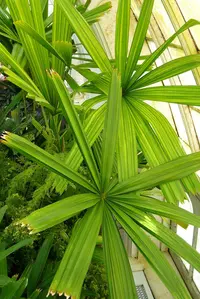
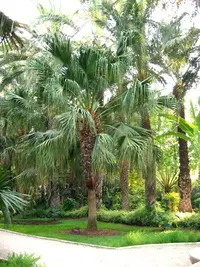
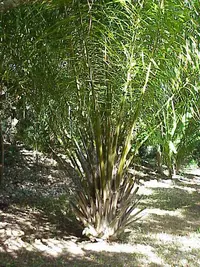
The mangrove fan palm (Licuala spinosa) is a clustering palm that forms dense thickets of slender canes topped with almost circular, pleated fan leaves. It stays relatively compact compared to many palms, which makes it interesting for sheltered gardens and large containers in warm climates.
This species is native to wetlands, river edges, and mangrove margins in Southeast Asia, so it is naturally adapted to high humidity and periodic flooding. Its slow to moderate growth and need for steady moisture make it a bit more demanding than many common houseplants.
Understanding how to care for Mangrove fan palm starts with providing bright filtered light, consistently moist but not stagnant soil, and protection from cold or very dry air.

Care Difficulty
Moderate Care

Light Preference
Partial Shade

Water Requirements
Keep Soil Moist

Temperature Preference
Tropical / Frost Sensitive

Hardiness Zone
10–11

Soil Texture
Loamy, Silty, Organic-rich

Soil pH
Acidic (5.5–6.5), Slightly acidic (6.5–7.0)

Soil Drainage
Waterlogged tolerant

Fertilization
Light (every 4–6 weeks)
Scan your plant to receive care tips personalized for your specific plant
Available on iOS and Android
Licuala spinosa prefers bright, indirect light with some protection from harsh midday sun.
Licuala spinosa naturally grows in moist, often seasonally flooded habitats, so it appreciates consistently damp conditions.
This palm favors warm, humid climates and does poorly in cold or frosty conditions.
This palm grows best in consistently humid air and reacts quickly to dry conditions.
This palm prefers evenly moist, organic-rich, well-drained soil that never stays waterlogged.
This palm is suitable for container growing when given a stable, well-drained pot.
Licuala spinosa benefits from light, consistent feeding during the warm growing season.
Pruning Licuala spinosa is mainly cosmetic and should stay light to avoid stressing the palm.
Mangrove fan palm grows slowly and dislikes frequent disturbance, so repotting or transplanting should be planned carefully.
Licuala spinosa is most often propagated from seed, but this process is slow and requires patience.
Licuala spinosa is tropical and only marginally tolerant of cool conditions, so winter protection is important in most climates.

Plant Health Check
Not sure what's wrong with your plant? Check your plant's health inside the app.
This species forms dense, multi-stemmed clumps that naturally grow in swamps, peat bogs, and seasonally flooded lowlands across Southeast Asia, tolerating waterlogged soils that would kill many other palms.
The leaf stalks carry sharp, backward-pointing spines that likely help protect the plant from browsing animals and create a physical barrier in the dense wetland thickets where it grows.
In the wild it can withstand periodic flooding and slightly brackish conditions along coastal margins, which is unusual for a small understory fan palm and reflects its adaptation to mangrove-edge habitats.

In parts of its native range, local communities historically used the stiff fan-shaped leaves of this palm for roofing, temporary shelters, and simple woven items, taking advantage of their durability and resistance to decay in humid tropical climates.
Growth is moderate. In warm outdoor conditions it typically adds 15–30 cm of height per year, forming dense clumps over time. Young plants establish slowly, then speed up once roots are well developed and conditions stay stable.
Keep your plants happy and healthy with plant identification, disease detection, and easy care guidance.