African oil palm Care (Elaeis guineensis)

African oil palm

About African oil palm

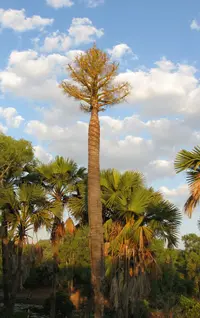
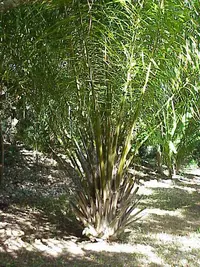
African oil palm, Elaeis guineensis, is a fast-growing, clumping palm tree valued mainly for its high‑oil fruit. It forms a dense crown of long, arching fronds with many sharp leaflets, giving a bold, tropical look. In nature it occurs in humid lowland regions of West and Central Africa and is now widely cultivated in other tropical areas. The plant prefers consistently warm temperatures, bright light, and evenly moist, well‑drained soil. It grows quickly and can become very large, so space and long‑term climate are key factors in how to care for African oil palm.

Main Plant Requirements

Care Difficulty

Hard Care

Light Preference

Full Sun

Water Requirements

Keep Soil Moist

Temperature Preference

Tropical / Frost Sensitive

Hardiness Zone

10–12

Soil Texture

Sandy, Loamy, Organic-rich

Soil pH

Strongly acidic (4.5–5.5), Acidic (5.5–6.5)

Soil Drainage

Moist but well-drained

Fertilization

Moderate (every 2–4 weeks)

Get Personalized Care Plan

Scan your plant to receive care tips personalized for your specific plant

Available on iOS and Android

How to Care for the African oil palm

This palm thrives in strong light and performs best in warm, bright climates.

  • Provide 6–8 hours of direct sun daily, ideally with morning sun and some light afternoon shade in very hot regions.
  • Young African oil palm plants benefit from slight filtered shade, while mature trees tolerate full sun in open plantation settings.
  • Insufficient light leads to slow growth and sparse fronds; intense, dry wind plus full afternoon sun can scorch fronds, so use windbreaks where possible.

This species prefers consistently moist but aerated soil without long periods of drought or saturation.

  • In the ground, aim for soil that stays evenly moist to 15–20 cm depth; allow just the surface 2–3 cm to dry slightly between rainfall or irrigation events.
  • Increase watering during hot, dry seasons and reduce slightly during cooler or rainy periods, adjusting to rainfall rather than following a fixed schedule.
  • Overwatering shows as yellowing fronds and soft, rotting roots, while underwatering causes folded, browning leaflet tips and dry soil that shrinks from the surface.

This tropical palm requires warm, frost‑free conditions for reliable growth and fruiting.

  • Optimal growth occurs around 77–86°F (25–30°C), with steady warmth promoting continuous leaf and root activity.
  • Plants are damaged below about 50°F (10°C) and can be severely injured or killed by frost, especially young Elaeis guineensis palms.
  • Mature palms tolerate short hot spells up to about 100°F (38°C) if soil moisture is adequate, but prolonged extreme heat with dry wind can stress and desiccate fronds.

This species prefers consistently warm, humid air and reacts quickly to extended dryness indoors.

  • Aim for 60–80% humidity, as African oil palm comes from very humid lowland tropics and struggles in dry homes.
  • Low humidity shows as browned leaflet tips and edges, slowed growth, and increased spider mite presence.
  • Increase humidity with a nearby humidifier, grouping plants, and wide pebble trays, while still ensuring strong air movement to prevent fungal issues.

Elaeis guineensis needs deep, evenly moist, well‑aerated soil that never stays waterlogged.

  • Use a loose, loamy mix: 40% compost or leaf mold, 40% coarse sand, 20% pine bark or similar chunky material for structure.
  • Ensure rapid drainage while retaining moisture by avoiding fine peat‑only mixes that compact and exclude air around roots.
  • Target a slightly acidic to neutral pH around 5.5–7.0, avoiding strongly alkaline substrates that can lock up micronutrients.
  • Improve aeration and reduce rot risk by mixing in coarse sand, bark chips, or perlite and raising containers slightly off solid surfaces.

This palm can be grown in containers when given ample root space and careful moisture control.

  • Choose a tall, heavy container that lowers the center of gravity and prevents the fast‑elongating crown from tipping in wind.
  • Select thick‑walled clay or concrete pots outdoors to reduce overheating of roots and moderate moisture swings in hot climates.
  • Elevate the pot on blocks so all drainage holes clear quickly, preventing standing water from saturating the lower root zone.

Elaeis guineensis is a heavy feeder that benefits from consistent, measured nutrition in warm months.

  • Use a balanced granular or slow-release fertilizer (around 10-10-10 or 12-12-17) plus organic matter such as well-rotted compost around the root zone.
  • Feed every 6–8 weeks during the active growing season while temperatures stay above 65°F and growth is strong.
  • Apply at 1/2–3/4 the label rate for container or young plants to limit salt buildup and root burn.
  • In cooler months or reduced light, pause or cut feeding to 1/4 strength, focusing instead on good watering and soil structure.

Pruning for Elaeis guineensis focuses on removing nonfunctional fronds while maintaining a strong canopy.

  • Carry out main pruning at the end of the dry or coolest season, just before active growth resumes.
  • Remove only dead, dying, broken, or heavily diseased fronds, plus spent fruit stalks, to reduce pest and disease pressure.
  • Avoid cutting green, functional fronds, since these support trunk thickening, root vigor, and future flowering.
  • Use sharp, clean loppers or a pruning saw, cutting close to the trunk collar without gouging living tissue.

Transplanting African oil palm is primarily done when young, before the root system becomes extensive and difficult to move.

  • Look for roots circling the container drainage holes, pot-bound growth, or slowed vigor as cues that a larger container or field planting is needed.
  • Aim to transplant during warm, stable weather in late spring or early summer to encourage rapid root recovery.
  • As a guide, shift container plants every 1–2 years into a pot only 5–10 cm wider, using a deep container to accommodate the taproot.
  • Water thoroughly beforehand, slide the root ball out gently, handle roots minimally, then plant at the same soil depth and shade lightly for 1–2 weeks.

Seed is the standard method for propagating Elaeis guineensis, but it demands patience and controlled conditions.

  • Use fresh, ripe seeds; older seed loses viability and germinates unevenly.
  • Sow in warm conditions around 80–86°F with bottom heat if possible, using a sterile, well-drained medium with moderate moisture.
  • Pre-soak or pre-warm seeds for several days to speed germination, which can still take 2–4 months or longer.
  • Keep seedlings in bright, filtered light and avoid root disturbance when potting on to larger containers.

Elaeis guineensis is a tropical palm with low frost tolerance and needs protection in climates outside USDA zones 10–11.

  • Avoid exposure below 40°F; brief light frost can damage fronds and repeated freezes may kill the plant.
  • Mulch the root zone 5–8 cm deep with coarse organic material to moderate soil temperature in marginal climates.
  • For container plants, move indoors or into a heated greenhouse before night temperatures fall below 45°F.
  • Provide bright light, reduced watering, and good air movement indoors to limit stress during the coolest months.

Care Tips

Deep root establishment

During the first 1–2 years, prioritize fewer, heavier irrigations rather than frequent light watering to encourage deep root growth that stabilizes the palm and improves drought resilience.

Systematic leaf pruning

Remove only completely dead or severely damaged fronds, cutting them close to the trunk without injuring live tissue, and leave slightly yellowing leaves to continue feeding the palm until they naturally decline.

Basal weed control

Maintain a clean, weed-free ring at least 60–90 cm around the trunk using hand weeding or mulching so that competing grasses and broadleaf weeds do not rob the palm of nutrients and water.

Bunch load management

On young palms, thin or remove some developing fruit bunches when the crown is overloaded to prevent structural stress and to channel resources into trunk thickening and healthy canopy growth.

Regular pest scouting

Inspect the undersides of fronds and the leaf bases every 2–4 weeks for early signs of scale insects, mites, and borers, so that caring for African oil palm includes timely, targeted treatment before infestations become severe.

Common Pests and Diseases

Bagworm

This pest feeds on oil palm fronds while hidden in cylindrical cases made from leaf fragments, causing defoliation and reduced vigor. Symptoms include ragged leaflets, hanging cases on fronds, and thinning canopies in heavy infestations.

Solution

Hand-pick and destroy visible bags on young palms and small plantings, then prune and remove heavily infested fronds. For larger stands, monitor regularly and, if needed, use targeted biological insecticides based on Bacillus thuringiensis (Bt) or neem products, applied thoroughly to the foliage according to label directions.

Rhinoceros beetle

This pest bores into the crown and unopened spear leaves, creating V-shaped cuts and holes that can stunt growth and reduce yield. Symptoms include shredded or cut spear leaves, frass or boring dust in the crown, and, in severe cases, deformed new fronds.

Solution

Physically remove adult beetles from the crown where accessible and destroy them, and avoid leaving rotting trunks or organic debris nearby that serve as breeding sites. In plantations, use pheromone traps and biological control agents such as Metarhizium anisopliae; in smaller plantings, regular inspection of the crown and prompt removal of damaged tissue help reduce attack.

Basal stem rot

This disease, mainly caused by the fungus Ganoderma boninense, leads to internal stem decay, wilting, and gradual canopy thinning. Symptoms include yellowing and collapse of older fronds, reduced new growth, and sometimes bracket-shaped fungal fruiting bodies on the trunk base.

Solution

Remove and destroy severely affected palms, including as much of the infected stump and roots as possible, to limit spread to nearby plants. Improve drainage, avoid trunk injuries, and in at-risk areas plant on mounds or use tolerant planting material; in early or suspected cases, monitor closely and remove stressed palms that fail to recover.

Fusarium wilt

This disease causes one-sided yellowing and wilting of fronds, often starting on a single side of the canopy before progressing to the whole crown. Symptoms include leaf browning, vascular browning in cut petioles, stunting, and eventual plant death in severe cases.

Solution

Remove and destroy heavily infected palms to reduce inoculum in the soil and avoid replanting highly susceptible material on the same site. Use certified, disease-free seedlings, maintain good nutrition and irrigation to reduce stress, and sanitize cutting tools between palms to prevent mechanical spread of the pathogen as part of broader Elaeis guineensis care instructions.

Anthracnose

This disease, caused by Colletotrichum species, affects young leaves and fruits, leading to small dark spots, blighting of leaflets, and blemished or rotting fruitlets. Symptoms include tiny brown or black lesions that may merge, giving a scorched appearance on nursery or young field palms.

Solution

Prune and destroy heavily spotted or blighted fronds and fallen infected material to reduce fungal spores, and avoid overhead irrigation that keeps foliage wet for long periods. Improve air flow around palms and, where economically justified, apply a labeled copper-based or other registered fungicide preventively on young palms during humid periods.

Interesting Facts

Single-species oil source

This palm is the primary biological source of both palm oil (from the mesocarp) and palm kernel oil (from the seed), two chemically distinct oils produced within a single fruit type.

Animal-dispersed fruits

In its native West and Central African range, the bright orange to reddish fruits are eaten and dispersed by mammals such as rodents and primates, which helps maintain natural populations in forest mosaics.

Fire-adapted seed germination

In some traditional systems, heat treatment or controlled burning of fruit bunches is used to break seed dormancy, reflecting the species’ adaptation to germinating after exposure to high temperatures.

Botan icon

Did you know?

Modern global palm oil production is dominated by plantations of this single species, making it one of the most economically important tropical crops and a central focus of international debates on deforestation, land use, and sustainable agriculture.

FAQs about African oil palm

Yellowing usually results from nutrient deficiency, root stress, or prolonged waterlogging. Check drainage, avoid compacted soil, and provide balanced palm fertilizer with micronutrients. Older fronds yellowing first is often normal age-related leaf turnover, not disease.

Grow Healthy Plants with Botan Care

Keep your plants happy and healthy with plant identification, disease detection, and easy care guidance.

Botan plant care app — identify plants on mobile

Explore More Plants