


Mounting technique
Mount plants on hardwood or cork with a thin pad of sphagnum only around the roots, leaving the base exposed to air so new roots can attach firmly and dry quickly after rain or watering.

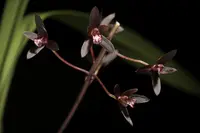
Cymbidium canaliculatum, commonly called the channelled boat-lip orchid, is a tough epiphytic orchid native to dry woodlands of Australia. It often grows on tree trunks and branches rather than in soil. The plant forms clumps of fleshy pseudobulbs with stiff, narrow, deeply channelled leaves and tall arching spikes of waxy, often brown or greenish flowers. This growth habit makes it more drought-tolerant than many orchids but also less forgiving of constant wetness. It suits growers who can provide bright light, good air movement, and a very free-draining orchid mix. Understanding how to care for Channelled boat-lip orchid starts with respecting its dry, tree-dwelling origins.

Care Difficulty
Hard Care

Light Preference
Partial Sun

Water Requirements
Moderate Water

Temperature Preference
Tropical / Frost Sensitive

Hardiness Zone
11–12

Soil Texture
Sandy, Rocky, Organic-rich

Soil pH
Slightly acidic (6.5–7.0)

Soil Drainage
Well-drained

Fertilization
Light (every 4–6 weeks)
Scan your plant to receive care tips personalized for your specific plant
Available on iOS and Android
This species prefers bright, filtered light similar to what it receives in open woodland or high in tree canopies.
This orchid prefers a wet–dry cycle, with roots drying somewhat between thorough waterings.
This species is adapted to warm climates with distinct seasonal shifts and does not tolerate hard frost.
This orchid prefers moderately dry air with some humidity stability.
This epiphytic orchid requires a coarse, fast-draining medium rather than regular potting soil.
This species is well suited to container growing when the pot supports its coarse, airy root system.
This epiphytic orchid benefits from modest, targeted feeding rather than heavy fertilization.
Pruning needs for Cymbidium canaliculatum are minimal and focus on hygiene rather than reshaping the plant.
This species prefers to stay undisturbed and is usually repotted or remounted only when clearly overcrowded.
Division is the standard home method for increasing Cymbidium canaliculatum plants.
Cymbidium canaliculatum prefers warm, frost-free conditions and needs protection in regions with cold winters.

Plant Health Check
Not sure what's wrong with your plant? Check your plant's health inside the app.
This species has stiff, narrow leaves with deep longitudinal channels that help direct rainwater toward its roots and may reduce leaf surface heating in its hot, exposed habitats.
In the wild, this orchid often grows as both an epiphyte on rough-barked trees and as a lithophyte on rocky outcrops in seasonally dry woodlands of northern and inland Australia.
Its many small, waxy flowers are strongly scented and often mottled in olive, brown, cream, and purple tones, which helps attract specific insect pollinators during its late spring to early summer flowering period in its native range.

In its native Australian habitats, this orchid frequently anchors itself high in the canopy of river red gums and other eucalyptus species, sometimes forming large, long-lived clumps that can persist on the same host tree for many decades.
This species usually flowers in late spring to early summer, depending on climate. Long, pendulous spikes can carry many small flowers that often last 3–6 weeks if kept stable, shaded from harsh sun, and not overwatered.
Keep your plants happy and healthy with plant identification, disease detection, and easy care guidance.

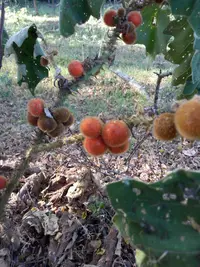
fuzzyfruit nightshade
Solanum candidum
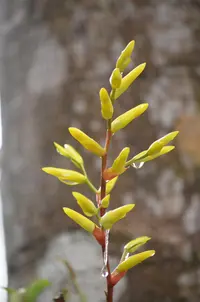
Vriesea rodigasiana
Vriesea rodigasiana
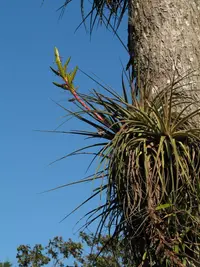
Tillandsia rodrigueziana
Tillandsia rodrigueziana
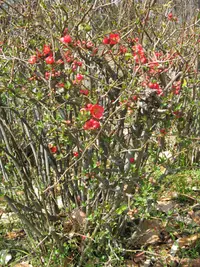
flowering quince
Chaenomeles speciosa
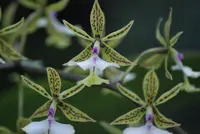
Stamford's Epidendrum
Epidendrum stamfordianum
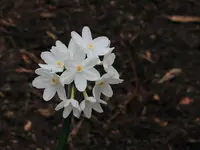
paperwhite narcissus
Narcissus papyraceus
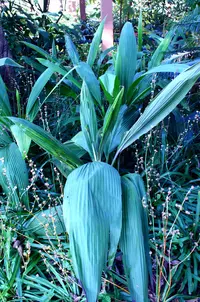
palm-grass
Curculigo capitulata
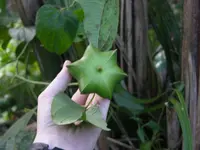
Sacha Inchi
Plukenetia volubilis