Green bonnet orchid Care (Pleurothallis ruscifolia)

Green bonnet orchid

About Green bonnet orchid

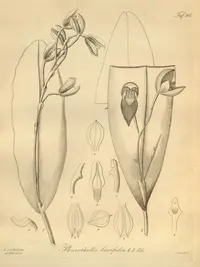
Pleurothallis ruscifolia, often called the green bonnet orchid, is a miniature epiphytic orchid that naturally grows on trees in humid forests of Central and South America. It forms dense mats of small, upright leaves with many tiny, hooded greenish flowers along the stems.

This species stays compact and is better suited to terrariums, orchid cases, or sheltered indoor setups than to open, dry rooms. It prefers cool to mild temperatures, steady moisture, and gentle, filtered light, so learning how to care for Green bonnet orchid revolves around providing stable humidity and good air movement.

Its small size and forgiving nature under consistent conditions make it approachable for growers who already have some basic orchid experience.

Main Plant Requirements

Care Difficulty

Moderate Care

Light Preference

Bright Indirect Light

Water Requirements

Keep Soil Moist

Temperature Preference

Tropical / Frost Sensitive

Hardiness Zone

11–13

Soil Texture

Peaty, Organic-rich

Soil pH

Acidic (5.5–6.5)

Soil Drainage

Moist but well-drained

Fertilization

Light (every 4–6 weeks)

Get Personalized Care Plan

Scan your plant to receive care tips personalized for your specific plant

Available on iOS and Android

How to Care for the Green bonnet orchid

Pleurothallis ruscifolia prefers soft, filtered light that mimics a shaded forest canopy.

  • Provide 8–12 hours of bright, indirect light daily, such as dappled shade under taller plants or a shaded greenhouse bench.
  • Tolerates early morning sun but avoid direct midday and afternoon sun, which can scorch leaves and cause yellow patches or dry leaf tips.
  • In winter, move a Green bonnet orchid slightly closer to the light source or thinner shade cloth, watching that leaves stay medium green, not pale or reddish.

This orchid prefers evenly moist conditions but reacts poorly to stagnant water around its roots.

  • Water when the top 1–2 cm of the mix feels just barely dry, aiming for consistently damp, not soggy, roots.
  • Use a very free-draining orchid mix; excess water should drain within seconds to prevent root rot and sour smells, classic overwatering signs.
  • In warmer months, watering may be needed several times per week, while cooler seasons often require reduced frequency as growth slows and the medium stays moist longer.

This species grows best in cool- to intermediate-temperature conditions typical of many cloud-forest orchids.

  • Aim for 60–75°F (16–24°C) for steady growth, with slightly cooler nights promoting good vigor and flowering.
  • Short drops to 50°F (10°C) are usually tolerated if the plant is kept drier, but frost below 32°F (0°C) can permanently damage foliage and roots.
  • In hot spells above 80–85°F (27–29°C), increase air movement and humidity and shade more deeply to reduce heat stress and leaf scorch risk.

This species needs consistently moist air to thrive and flower reliably.

  • Aim for 60–80% humidity, as prolonged levels below 50% cause slower growth and smaller leaves.
  • It tolerates brief drier spells if watered well, but persistent dry indoor air leads to leaf curl and brown tips.
  • Increase humidity with a room humidifier, fine misting near but not on flowers, or a pebble tray kept filled below pot level.

This orchid prefers a loose, airy, moisture-retentive substrate rather than compact mineral soil.

  • Use a fine to medium orchid mix of bark, sphagnum moss, and perlite to balance moisture retention and aeration.
  • Keep drainage fast so water runs freely from the pot, avoiding any dense garden soil that compacts around roots.
  • A slightly acidic to neutral range around pH 5.5–7 suits Pleurothallis ruscifolia and helps nutrient uptake.
  • Add extra fine bark or chunky perlite if the mix stays wet longer than 3–4 days, to prevent root suffocation and rot.

This species grows very successfully in containers and small orchid pots.

  • Choose a squat, stable pot so the relatively tall leafy growth does not tip the container when the medium is moist.
  • Select a pot material that matches your climate, using plastic to hold moisture longer or clay to dry the mix faster.
  • Ensure numerous side and bottom drainage holes so the fine orchid mix never sits in a stagnant water layer at the base.

This small orchid benefits from light, consistent feeding during active growth but dislikes heavy fertilizer.

  • Use a balanced orchid fertilizer (around 20-20-20) diluted to 1/4–1/2 strength for Green bonnet orchid.
  • Feed every 2–4 weeks in spring and summer when growth is active.
  • Reduce to monthly or stop feeding in fall and winter when growth slows.
  • Flush the pot with plain water monthly to prevent salt buildup around the roots.

Pleurothallis ruscifolia needs only light, hygienic pruning to maintain health and appearance.

  • Prune at any time to remove dead, yellowing, or damaged leaves using clean, sharp scissors.
  • Cut spent flower spikes back to their base once they dry to keep the plant tidy.
  • Avoid cutting healthy pseudostems or growths, as these support future flowering.
  • Disinfect tools before and after use to reduce disease spread in dense foliage.

This orchid prefers stable conditions and only occasional repotting when clearly necessary.

  • Repot every 2–3 years or when roots circle the pot, medium decomposes, or growth noticeably slows.
  • Plan to repot in late winter or early spring, just before new roots and shoots begin.
  • Use a small, well-draining container with fine orchid bark and sphagnum to support moist, airy roots.
  • Gently loosen old medium, keep root disturbance minimal, then water lightly and shade for 1–2 weeks to reduce stress.

This species is most reliably propagated by careful division of established plants.

  • Divide mature clumps in late winter or early spring as new growth starts.
  • Lift the plant and separate it into sections, each with several healthy stems and an active root system.
  • Plant divisions in fresh, fine orchid mix, keeping roots just covered but not buried deeply.
  • Maintain high humidity, bright indirect light, and evenly moist medium until divisions resume firm, active growth.

This orchid is not frost hardy and needs mild, sheltered winter conditions.

  • Maintain indoor or greenhouse temperatures around 55–65°F in winter, avoiding drops below 45°F.
  • Move container plants indoors before the first frost, into bright, indirect light.
  • Reduce watering slightly but do not allow the fine roots to dry out completely.
  • Ensure gentle air movement and avoid cold drafts around the foliage and roots.

Care Tips

Mounting technique

Mount the plant on cork bark or tree fern with a thin pad of sphagnum only around the roots, then secure it gently with soft wire or fishing line so the roots can attach firmly without being strangled.

Airflow management

Place a small oscillating fan on a low setting near the plant to keep air moving across the foliage and roots, which reduces fungal problems and helps thin roots dry evenly after watering.

Fine-root inspection

Inspect roots monthly with a headlamp or strong light, trimming only clearly dead, brown, hollow roots and leaving firm, silver or green roots untouched to maintain an efficient root system.

Compact division timing

If the clump becomes oversized, divide only when it has multiple healthy growths and active root tips, then separate into small but multi-growth fans to reduce shock and maintain quick recovery.

Seasonal watering shift

In cooler, darker months slightly extend the drying time between waterings and reduce misting frequency instead of changing the location, which keeps conditions stable while matching slower growth when caring for Green bonnet orchid.

Common Pests and Diseases

Spider mites

This pest thrives in warm, stagnant air and low humidity, where it feeds on thin orchid leaves and causes stippling and dull, grayish foliage. Symptoms include fine webbing on leaf undersides and slow decline of the plant in tightly packed mounts or terraria.

Solution

Increase humidity to 60–80%, improve air movement, and rinse foliage under a gentle stream of lukewarm water, focusing on leaf undersides. Follow with repeated applications of insecticidal soap or a neem-based spray every 5–7 days until no new damage appears, and avoid letting the plant dry out severely between waterings.

Scale insects

These insects attach to stems and leaf surfaces, forming small, hard bumps that suck sap and weaken the plant. Symptoms include sticky honeydew, sooty mold growth, and slow, general decline, especially on plants grown under dense shade or crowded mounts.

Solution

Isolate the plant and manually remove larger insects with a cotton swab dipped in 70% isopropyl alcohol, paying attention to leaf bases and junctions. Then apply horticultural oil or insecticidal soap to all surfaces, repeating every 7–10 days for several cycles while also improving air circulation and light levels to support recovery.

Bacterial leaf spot

This disease appears as water-soaked, translucent patches on thin leaves that turn brown and may spread rapidly in warm, still, very humid conditions typical of enclosed orchid cases. Symptoms include soft, collapsing tissue and sometimes a foul odor if lesions are not removed.

Solution

Promptly remove and discard affected leaves with a sterile blade, cutting well into healthy tissue and disinfecting tools between cuts. Reduce leaf wetness by watering in the morning, increase airflow around plants, avoid overhead misting directly on foliage, and, where allowed, use a copper-based bactericide as a targeted treatment if new spots continue to appear.

Fungal leaf spot

This disease causes small, dark, often circular spots that slowly enlarge on the delicate leaves, especially when water sits on foliage for long periods under low air movement. Symptoms include yellow halos around spots and premature leaf drop in tightly packed collections.

Solution

Remove affected leaves to reduce spore spread, then adjust care by improving ventilation, spacing plants, and limiting prolonged leaf wetness. Apply a suitable ornamental orchid fungicide according to label directions and maintain a steady moisture level in the mount or substrate without frequent heavy overhead spraying.

Snails and slugs

These pests are attracted to constantly moist mounts and terrarium conditions and feed at night on tender new growths, roots, and young leaves. Symptoms include irregular holes, missing root tips, and shiny slime trails on mounts and foliage.

Solution

Inspect the plant and surrounding mount at night and hand-pick any snails or slugs, then use physical barriers such as copper tape or place the mount on a drier, raised support. In severe cases, set out iron phosphate bait away from pets, and reduce deeply shaded, persistently wet hiding spots to lower future populations while maintaining suitable moisture for Pleurothallis ruscifolia care.

Interesting Facts

Miniature leaf mimic

This species has tiny, narrow leaves on slender stems that closely resemble those of some small-leaved shrubs, helping it visually blend into the understory vegetation where it grows epiphytically or occasionally on rocks.

Sequential tiny blooms

It produces very small, pale yellow to greenish flowers that open one after another along the inflorescence, so a single flowering stem can carry blooms over an extended period rather than all at once.

Wide altitude tolerance

The species occurs from low to mid elevations in tropical America, showing an unusual tolerance for a broad range of temperatures and moisture regimes compared to many narrowly adapted cloud-forest Pleurothallis relatives.

FAQs about Green bonnet orchid

Lack of blooms often comes from insufficient light, overly warm nights, or nutrient buildup from old fertilizer. Provide bright, shaded conditions, cooler nights, and flush the pot or mount regularly to prevent salts slowing Pleurothallis ruscifolia care.

Grow Healthy Plants with Botan Care

Keep your plants happy and healthy with plant identification, disease detection, and easy care guidance.

Botan plant care app — identify plants on mobile

Explore More Plants