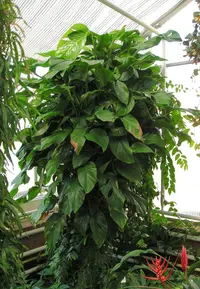
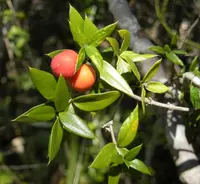
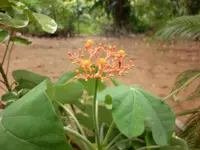
white rosemallow Care (Hibiscus arnottianus)

Also known as: koki‘o ke‘oke‘o, Hawaiian White Hibiscus
white rosemallow

About white rosemallow

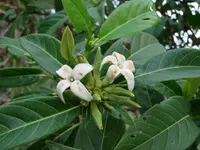
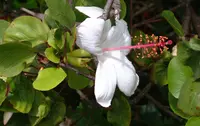
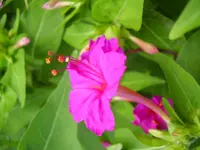
White rosemallow (Hibiscus arnottianus) is an evergreen shrub or small tree known for its white, lightly fragrant flowers with a pink to red central column. It usually has glossy green leaves and a naturally upright, branching habit that suits tropical or mild coastal gardens.

This species is native to Hawaii, where it grows in moist to mesic forest habitats. In cultivation it prefers warm conditions, steady moisture, and well-drained, fertile soil.

Its relatively fast growth, tolerance of pruning, and resilience in suitable climates make it moderately easy to manage, especially once established. Understanding how to care for white rosemallow mainly involves providing consistent moisture, good light, and protection from frost.

Main Plant Requirements

Care Difficulty

Moderate Care

Light Preference

Full Sun

Water Requirements

Regular Water

Temperature Preference

Tropical / Frost Sensitive

Hardiness Zone

10–11

Soil Texture

Sandy, Loamy, Organic-rich

Soil pH

Acidic (5.5–6.5), Slightly acidic (6.5–7.0)

Soil Drainage

Moist but well-drained

Fertilization

Light (every 4–6 weeks)

Get Personalized Care Plan

Scan your plant to receive care tips personalized for your specific plant

Available on iOS and Android

How to Care for the white rosemallow

Hibiscus arnottianus prefers bright, direct sun in mild climates with some protection during the hottest hours.

  • Aim for 6–8 hours of direct sun daily, with morning sun and light afternoon shade in hot inland areas to reduce leaf scorch.
  • In coastal or mild zones, full sun all day promotes compact growth and heavy flowering, while light or dappled shade still allows acceptable blooming.
  • If stems stretch, leaves pale, or flowering drops, light is too low; caring for white rosemallow outdoors usually means choosing the sunniest, wind-sheltered spot.

This species prefers evenly moist, never boggy soil, with adjustments based on weather and soil type.

  • Water when the top 3–5 cm of soil feel dry, applying a deep soak so moisture reaches the root zone rather than frequent light splashes.
  • Increase watering in hot, windy periods when leaves wilt by midday and soil dries quickly; reduce frequency in cool or rainy seasons to avoid saturated ground.
  • Yellowing lower leaves, soft stems, or sour-smelling soil suggest overwatering, while crisp leaf edges, flower bud drop, and dry, pulling soil indicate underwatering in Hibiscus arnottianus.

This tropical shrub prefers warm, stable temperatures without frost exposure.

  • Ideal growth occurs around 70–85°F (21–29°C), where flowering and leaf production are strongest, especially with consistent soil moisture.
  • Hibiscus arnottianus is damaged near 40°F (4°C) and can be killed by frost; in regions with colder winters, provide protection or grow in a site with strong reflected warmth.
  • Short heat waves up to about 95°F (35°C) are tolerated if soil stays moist, but prolonged extreme heat with dry soil leads to leaf scorch and bud drop.

This species prefers moderately high humidity for strongest growth, especially in warm conditions.

  • Aim for 50–70% humidity; it copes briefly with 40% but may drop buds and curl leaves if kept drier.
  • Watch for crisp leaf edges, stalled growth, and rapid bud drop as signs of humidity stress in white rosemallow.
  • Increase humidity outdoors with grouped plantings and mulch, or indoors with a pebble tray or room humidifier rather than frequent misting.

Hibiscus arnottianus prefers moist, well-structured, slightly acidic to neutral soil with strong drainage.

  • Use a loamy mix: roughly 40% compost, 40% garden loam, and 20% coarse sand or perlite to balance moisture retention and aeration.
  • Target pH 6.0–7.0; blend in composted bark or leaf mold to buffer pH and support beneficial soil life.
  • Improve drainage in heavy clay by raising the planting area and mixing in coarse sand and fine gravel to prevent waterlogging.
  • Avoid compacted, soggy, or very alkaline soils, which restrict roots and promote root rot or nutrient deficiencies.

This species adapts well to container growing when given ample root space and steady moisture.

  • Choose a heavy, wide-based pot to keep the tall, leafy canopy stable in wind and to prevent tipping.
  • Select a container at least 30–40 cm deep so the strong taproot and lateral roots can develop without circling tightly.
  • Use a fast-draining mix and elevate the pot slightly on feet or bricks so drainage holes never sit in standing water.

Hibiscus arnottianus responds well to moderate feeding during warm, active growth but does not need heavy fertilization.

  • Use a balanced NPK fertilizer (such as 10-10-10) or well-aged compost for caring for white rosemallow in garden or container settings.
  • Feed every 4–6 weeks during spring and summer, when growth and flowering are strongest.
  • Dilute liquid fertilizer to 1/2–3/4 strength to avoid salt buildup and leaf burn.
  • Reduce or stop feeding in fall and winter, when growth slows and nutrient demand is lower.

Pruning Hibiscus arnottianus keeps the shrub compact, encourages flowering wood, and maintains good air flow.

  • Plan main pruning for late winter or early spring before vigorous new growth begins.
  • Remove dead, diseased, crossing, or inward-growing branches with clean, sharp bypass pruners.
  • Shorten overly long shoots to shape the canopy and encourage bushier branching and more blooms.
  • Make angled cuts just above outward-facing buds to guide new growth away from the plant center.

Transplanting or repotting Hibiscus arnottianus focuses on giving the root system space while minimizing stress.

  • Check for roots circling the container drainage holes, reduced vigor, or quick drying soil as signals it has outgrown its pot.
  • Plan transplanting or repotting for late winter to early spring, before strong new growth, typically every 2–3 years in containers.
  • Move into a container only 1–2 in wider or into a garden hole 2–3 times the rootball width, using well-drained soil.
  • Water thoroughly after planting, keep soil evenly moist, and shade from harsh sun for 3–7 days to limit transplant shock.

Hibiscus arnottianus is most often propagated by semi-hardwood cuttings, with seeds used mainly for breeding or larger projects.

  • Take 10–15 cm semi-hardwood cuttings in late spring to midsummer from healthy, non-flowering shoots.
  • Remove lower leaves, dip the cut base in rooting hormone, and insert into a sterile, well-drained mix such as perlite and peat.
  • Maintain warmth at 70–80°F, high humidity, and bright, indirect light until roots form in 4–8 weeks.
  • Sow seeds in warm conditions with lightly covered, moist seed mix, and provide gentle bottom heat to improve germination.

Hibiscus arnottianus is frost-tender and needs protection in climates with cool or freezing winters.

  • In ground, grow in frost-free zones; in marginal areas, situate in a warm, sheltered microclimate.
  • Before first frost, mulch the root zone with 5–8 cm of organic material to moderate soil temperature.
  • Move container plants indoors or into a greenhouse when temperatures approach 45°F, providing bright, indirect light.
  • Water sparingly in winter, keeping the root ball barely moist to avoid cold, wet root damage.

Care Tips

Wind-smart staking

Install sturdy, soft-tied stakes or a low, three-post support frame on the windward side to keep long, brittle shoots from snapping during storms while still allowing gentle movement.

Salt exposure management

In coastal areas, hose down foliage with fresh water after strong onshore winds or road salt spray to prevent leaf burn and long-term salt accumulation in buds and growing tips.

Flowering wood renewal

Every 1–2 years, remove a few of the oldest, thickest stems at the base to encourage fresh, vigorous canes that carry more flowers along their length.

Bud-drop prevention

If developing buds begin to yellow and fall, reduce sudden fluctuations in soil moisture and avoid shifting the plant’s position frequently, as both stress factors commonly trigger bud drop in this species.

Targeted pest scouting

Inspect new shoot tips and the undersides of flower buds weekly for hibiscus-specific pests like aphids, mealybugs, and spider mites, and treat early with a directed spray of insecticidal soap as part of caring for white rosemallow.

Common Pests and Diseases

Hibiscus erinose mite

This pest feeds on young leaves and flower buds, causing distorted, thickened growth and a felt-like, blistered surface on the undersides of leaves. Symptoms include reduced flowering and tight clusters of deformed new foliage.

Solution

Prune and discard all visibly distorted shoot tips and affected leaves, then bag and remove them from the site. For remaining plants, regularly hose down new growth with a strong water spray, and if pressure is high, apply a sulfur-based miticide or horticultural oil labeled for erinose mites, ensuring full coverage of young shoots while avoiding applications during hot midday sun.

Chinese rose beetle

These insects chew irregular holes in leaves at night, often leaving foliage with a lace-like or tattered appearance while avoiding the main veins. Damage is most intense on exposed plants and can reduce vigor if feeding is heavy.

Solution

Hand-pick beetles in the evening using a flashlight and drop them into soapy water, and where practical use fine mesh or shade cloth to reduce beetle access to the canopy. Keep the plant well watered and fertilized so it can replace damaged foliage, and consider using light, targeted barrier or contact products on outer foliage if non-chemical methods are not enough.

Black twig borer

This insect bores into small twigs, causing sudden wilting or dieback of shoot tips, with tiny round entry holes and darkened internal wood. Infested twigs often snap easily and may show black staining inside.

Solution

Prune out and destroy affected twigs 5–10 cm below the last visible entry hole, sterilizing pruning tools between cuts. Reduce plant stress with consistent watering and balanced fertilization, and avoid wounding stems, as vigorous, healthy plants are less attractive to borers.

Sooty mold

This disease appears as a black, soot-like coating on leaves and stems that grows on honeydew excreted by sap-sucking insects such as aphids, whiteflies, or scales. Symptoms include dulled, sticky leaves and reduced photosynthesis, but the fungus itself does not invade plant tissues.

Solution

First control the honeydew-producing insects by rinsing foliage with water and, if needed, using insecticidal soap or horticultural oil on the pests. After populations are reduced, gently wipe or hose off the black coating, and improve air circulation and light exposure so foliage dries faster and stays cleaner.

Leaf spot (Cercospora)

This disease causes small brown or purplish spots on leaves that may enlarge, develop pale centers, and sometimes cause yellowing or premature leaf drop, especially in humid, shaded conditions. Symptoms include a gradual thinning of the canopy from the lower, inner branches outward.

Solution

Remove and dispose of spotted, fallen leaves and avoid overhead watering to keep foliage as dry as possible. Improve air circulation around the plant, and in persistent cases use a copper-based or chlorothalonil fungicide labeled for ornamental leaf spots, applying according to label directions during periods of warm, humid weather to protect new growth.

Interesting Facts

Endemic Hawaiian shrub

This species is naturally restricted to the Hawaiian Islands, where it grows in moist to wet forests and gulches at mid elevations, often on Oahu and neighboring islands in relatively undisturbed habitats.

Fragrant white blossoms

Unlike many hibiscus species, it produces noticeably fragrant, pure white flowers with a long protruding red-tinted staminal column, making it one of the few Hawaiian hibiscus with a clear floral scent.

Part of a species complex

It belongs to a closely related group with other native Hawaiian white hibiscus, and natural hybridization among these taxa has contributed to significant variation in flower form and leaf shape in the wild.

Botan icon

Did you know?

Native white hibiscus species from Hawaii, including this one, were used as parents in breeding programs to create modern ornamental hybrids that combine large, showy blooms with improved fragrance and a wider range of flower colors.

FAQs about white rosemallow

Lack of blooms usually results from insufficient light, excess nitrogen fertilizer, or stress from pruning at the wrong time. Ensure strong light, use a balanced or low-nitrogen fertilizer, and avoid heavy pruning just before the main flowering season.

Grow Healthy Plants with Botan Care

Keep your plants happy and healthy with plant identification, disease detection, and easy care guidance.

Botan plant care app — identify plants on mobile

Explore More Plants