Encourage Multi-Stem Form
Cut back the central leader on young plants in late winter to 20–30 cm above the ground to promote a sturdy multi-stem shrub form that resprouts from several strong basal shoots.


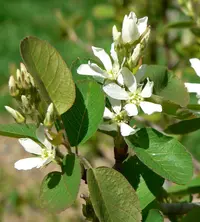
Roundleaf serviceberry, Amelanchier sanguinea, is a small deciduous shrub or multi-stemmed tree from North America. It is valued for its seasonal interest and wildlife support.
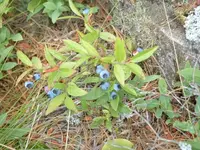
Plants typically have rounded leaves, white spring flowers, and small edible berries that attract birds. In fall, the foliage often turns red or orange.
This species naturally occurs on rocky slopes, open woods, and well-drained banks, showing good tolerance to cold and variable soils. It is generally considered easy to grow if given sun to light shade and consistent moisture.
Gardeners looking for how to care for roundleaf serviceberry mainly need to provide reasonable drainage and avoid very dry or waterlogged sites.

Care Difficulty
Easy Care

Light Preference
Full Sun

Water Requirements
Moderate Water

Temperature Preference
Cold Hardy

Hardiness Zone
2–6

Soil Texture
Sandy, Loamy, Rocky

Soil pH
Acidic (5.5–6.5), Slightly acidic (6.5–7.0)

Soil Drainage
Well-drained

Fertilization
Minimal (feed rarely)
Scan your plant to receive care tips personalized for your specific plant
Available on iOS and Android
This shrub performs best in open sites with consistent, direct light across the growing season.
This species prefers evenly moist, well-drained soil and responds best to deep, occasional watering.
This hardy shrub is adapted to cool and cold climates with pronounced seasonal changes.
Humidity is rarely a limiting factor for Amelanchier sanguinea, which suits average outdoor ranges of 30–70%.
Amelanchier sanguinea prefers cool, moist, well-aerated soil that stays evenly damp but not waterlogged.
This shrub can be grown in large containers outdoors if given enough root space and stability.
This native shrub or small tree needs only light feeding in most garden soils.
Pruning Amelanchier sanguinea is mainly done to maintain structure and health rather than control size.
This species is usually grown in the ground; focus on careful transplanting of young plants rather than routine repotting.
Amelanchier sanguinea is typically propagated by seed or softwood cuttings, mainly by growers and nurseries.
This cold-hardy shrub tolerates typical winters in much of the US with minimal special care once established.

Plant Health Check
Not sure what's wrong with your plant? Check your plant's health inside the app.
This species is one of the few North American serviceberries with distinctly round to broadly oval leaves, especially on young shoots, which helps separate it from more common, elliptic-leaved relatives.
It naturally occurs on dry, rocky slopes, ledges, and open ridges in eastern North America, showing a strong adaptation to thin, well-drained, often nutrient-poor soils where many shrubs cannot persist.
Its early-summer berries are relished by many songbirds and small mammals, and in some sites the fruits are stripped within a few days of ripening, making the shrub a brief but critical seasonal food source.

Roundleaf serviceberry is one of the northernmost shrubs in its genus, with native populations extending into parts of eastern Canada where it helps form the shrub layer in exposed, cold-tolerant plant communities.
Yes. The ripe dark purple to nearly black berries are edible and sweet, often compared to blueberries with almond notes. They can be eaten fresh or used in jams, pies, and preserves. Avoid unripe, green fruit.
Keep your plants happy and healthy with plant identification, disease detection, and easy care guidance.