Crataegus laciniata Care

Crataegus laciniata

About Crataegus laciniata

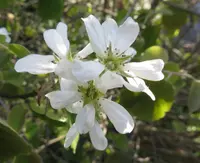
Crataegus laciniata is a deciduous hawthorn shrub or small tree, known for its deeply cut leaves, dense branching, and white spring blossoms followed by red fruits. It forms a thorny, compact crown that provides strong seasonal interest in larger gardens and naturalistic plantings.

This species occurs naturally in parts of the eastern Mediterranean and western Asia, often on rocky slopes and open woodland edges. It adapts relatively well to a range of temperate climates but prefers sunny sites, well-drained soil, and moderate moisture.

For gardeners learning how to care for Crataegus laciniata, its main challenges are the sharp thorns, need for good light, and potential susceptibility to common hawthorn pests and diseases.

Main Plant Requirements

Care Difficulty

Moderate Care

Light Preference

Full Sun

Water Requirements

Moderate Water

Temperature Preference

Cold Hardy

Hardiness Zone

5–8

Soil Texture

Sandy, Loamy, Clay

Soil pH

Acidic (5.5–6.5), Slightly acidic (6.5–7.0)

Soil Drainage

Well-drained

Fertilization

Minimal (feed rarely)

Get Personalized Care Plan

Scan your plant to receive care tips personalized for your specific plant

Available on iOS and Android

How to Care for the Crataegus laciniata

This hardy, sun-loving hawthorn performs best with strong outdoor light exposure.

  • Provide 6–8 hours of direct sun daily; full sun promotes dense branching, abundant flowers, and good fruiting.
  • Tolerates light afternoon shade in hotter regions, but avoid sites shaded for more than 4–5 hours, which cause weak growth and sparse bloom in Crataegus laciniata.
  • In winter, leafless branches handle full exposure easily; prioritize an open, unshaded site when planting to ensure long-term light access.

This species prefers evenly moist but never waterlogged soil, especially during establishment.

  • After planting, water deeply when the top 4–6 cm of soil feels dry; in most climates this means roughly once every few days during the first growing season.
  • Mature trees usually rely on rainfall; irrigate only during extended dry spells when leaves start to dull, curl slightly, or wilt at midday.
  • Ensure well-drained soil; frequent standing water, sour smell, or yellowing leaves with soft roots indicate overwatering, while crisp, browning leaf edges signal drought stress.

This hardy hawthorn suits temperate climates with cold winters and mild to warm summers.

  • Optimal growth occurs around 60–75°F (16–24°C) in spring and early summer, when new shoots and flowers develop.
  • Established trees tolerate winter lows near -20°F (-29°C) and short cold snaps below this if soil is not waterlogged.
  • Handles summer heat up to about 90–95°F (32–35°C) if soil moisture is adequate; prolonged hotter, dry periods can scorch leaves, especially on newly planted specimens.

This species is an outdoor shrub that tolerates a broad humidity range and rarely needs special humidity management.

Crataegus laciniata grows best in moderately fertile, well-structured mineral soil that drains freely yet holds some moisture.

  • Use a loamy or sandy loam soil with 20–30% organic matter such as compost to support steady growth.
  • Ensure drainage is free by avoiding compacted or heavy clay; amend such soils with coarse sand and fine gravel for structure.
  • Aim for slightly acidic to neutral pH, around 6.0–7.5, avoiding strongly acidic or alkaline sites that limit nutrient uptake.
  • Improve aeration by incorporating coarse materials and avoiding overworking wet soil, which destroys pore spaces and encourages waterlogging.

This species can be grown in containers for a limited time, mainly when young or kept small.

  • Choose a deep, heavy container that resists tipping, as the plant forms a woody, somewhat top-heavy crown over time.
  • Select a pot material such as thick-walled terracotta or concrete to buffer temperature swings and keep the root zone more stable outdoors.
  • Use a slightly oversized container to provide lateral root space, but avoid very oversized pots that retain excess water in the lower zone.

This hawthorn generally needs minimal feeding, especially in reasonably fertile ground.

  • For young or weak Crataegus laciniata, apply a light layer of compost or well-rotted manure around the root zone in early spring.
  • On poorer soils, use a balanced slow-release fertilizer (for example 10-10-10) once in spring at the label rate.
  • Avoid high-nitrogen lawn fertilizers near the drip line, which can cause soft, pest-prone growth.
  • Do not feed in late summer or winter to prevent tender late growth that may be damaged by frost.

Pruning helps maintain structure, safety, and flowering quality in Crataegus laciniata.

  • Carry out main pruning in late winter or very early spring, before bud break.
  • Remove dead, diseased, damaged, or crossing branches first using clean, sharp bypass pruners or a pruning saw.
  • Thin congested inner growth to improve air flow and light penetration, which supports healthier foliage and bloom.
  • Shorten or remove poorly placed shoots to maintain a balanced crown and clear pedestrian or vehicle access.

This species is usually grown in the ground; focus on careful transplanting rather than frequent repotting.

  • Plan transplanting for late fall or early spring when the tree is dormant and soil is workable.
  • Move only young trees; older specimens resent disturbance and establish slowly after relocation.
  • Look for circling roots or poor growth in container plants as a sign they need a 1–2 in wider pot or open ground.
  • Reduce stress by watering thoroughly before and after moving, handling the root ball gently, and shading temporarily in windy or very sunny sites.

Propagation of Crataegus laciniata is possible but slow and better suited to patient growers or nursery conditions.

  • Sow fresh seed in fall outdoors or in cold frames to allow natural winter stratification, which breaks dormancy.
  • For controlled stratification, store cleaned seed in moist sand at 35–40°F for 3–6 months before spring sowing.
  • Root semi-ripe cuttings in midsummer in a well-drained, slightly sandy mix with bottom heat and high humidity.
  • Monitor for fungal problems, provide bright but indirect light, and expect variable germination and slow early growth.

Established trees are cold hardy and usually need little specific winter care.

  • Young or newly transplanted hawthorns benefit from 5–8 cm of mulch over the root zone, kept away from the trunk.
  • Container-grown plants in cold regions should be moved to a sheltered, unheated location or insulated with wrapping around the pot.
  • Avoid heavy pruning or high-nitrogen feeding in late summer so new shoots have time to harden before freezing weather.

Care Tips

Trunk training

During the first 3–5 years, select 1 strong central leader and remove competing upright shoots in late winter to develop a stable, wind-resistant framework.

Sucker management

Inspect the base of the tree and root zone 2–3 times per season and cut off any root suckers flush with the point of origin to prevent energy loss and unwanted thickets.

Targeted fruit thinning

In heavy crop years, thin clustered fruits in early summer so clusters are spaced 5–8 cm apart, which reduces branch strain and helps maintain tree vigor.

Preventing rust diseases

If cedar or juniper trees grow within about 300 m, start a preventive fungicide program at bud break and repeat as label-directed to reduce cedar-hawthorn rust on leaves and fruit.

Wildlife-friendly spacing

When growing Crataegus laciniata as a hedge or wildlife screen, plant individuals 1.5–2 m apart to allow airflow while still creating dense, protective cover for birds and beneficial insects.

Common Pests and Diseases

Hawthorn leaf blight

This disease causes brown to black spotting on leaves that can merge into larger dead areas, often leading to premature leaf drop. Symptoms include thinning foliage and a generally sparse canopy, especially in humid, mild conditions.

Solution

Prune out and remove affected leaves and twigs during dry weather, and dispose of them away from the garden. Improve airflow by thinning crowded branches, avoid overhead watering, and if the problem is severe on ornamental trees, consider a labeled copper or chlorothalonil spray at bud break and after flowering, following local guidelines for Crataegus laciniata care instructions.

Fire blight

This disease causes sudden blackening and shriveling of blossoms, shoots, and leaves, which often look scorched and may bend into a characteristic shepherd’s crook. Symptoms include oozing, amber-colored bacterial exudate on stems during humid weather.

Solution

Cut out infected shoots at least 20–30 cm below visible symptoms during dry weather, disinfecting pruning tools between each cut with 70% alcohol or a 10% bleach solution. Avoid high-nitrogen fertilization, reduce overhead irrigation that wets blossoms, and in high-risk areas consider using labeled blossom protectant sprays during bloom if local regulations allow.

Cedar-hawthorn rust

This disease produces yellow to orange spots on leaves that may develop small tubular structures on the undersides, sometimes accompanied by deformed fruit. Symptoms include early leaf drop when infection is heavy, especially where junipers grow nearby.

Solution

Remove and dispose of heavily infected leaves and fruit, and rake fallen debris in autumn. Where practical, increase spacing between hawthorns and nearby junipers, and in areas with a history of rust problems, apply a labeled fungicide at bud break and through bloom according to regional recommendations.

Aphids

These insects cluster on young shoots and leaf undersides, sucking sap and causing curling or distortion of new growth. This pest also excretes sticky honeydew that can lead to black sooty mold on leaves and stems.

Solution

Spray colonies off with a strong stream of water from a hose, focusing on shoot tips and leaf undersides. For persistent infestations, apply insecticidal soap or horticultural oil thoroughly in the cool part of the day, repeating as needed, and encourage natural predators such as lady beetles by avoiding broad-spectrum insecticides.

Hawthorn leafminer

This pest is the larval stage of a small fly that tunnels inside leaves, creating pale, winding or blotchy mines that can cause browning and early leaf drop. Symptoms include many discolored leaves that appear scorched from within while the surface remains mostly intact.

Solution

Collect and destroy heavily mined leaves in spring and early summer to reduce the next generation. For high-value specimens with chronic problems, monitor new leaf flush closely and, if needed, use a labeled systemic or contact insecticide timed to adult fly emergence, following local recommendations and protecting beneficial insects where possible.

Interesting Facts

Deeply cut foliage

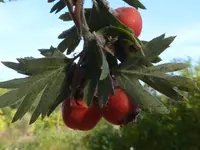
This species is notable for its deeply lobed, almost fern-like leaves, which are much more finely divided than those of most other hawthorns and help distinguish it in the field.

Bright orange-red fruit

It produces showy orange-red pomes that often hang on the branches into autumn, providing food for birds and small mammals and adding strong color to dry, rocky landscapes.

Adapted to poor soils

In its native range in arid, rocky regions of the Middle East and surrounding areas, this hawthorn often grows on limestone slopes and dry hillsides, showing strong tolerance to shallow, nutrient-poor soils.

Botan icon

Did you know?

Historical botanical records show that this species was described from material collected in the eastern Mediterranean region, and its unusually dissected leaves made it an important reference taxon in early studies trying to untangle the complex taxonomy of West Asian hawthorns.

FAQs about Crataegus laciniata

This hawthorn grows at a slow to moderate rate, usually adding 15–30 cm of height per year. Expect a clearly noticeable small tree or large shrub form in about 5–8 years under good conditions.

Grow Healthy Plants with Botan Care

Keep your plants happy and healthy with plant identification, disease detection, and easy care guidance.

Botan plant care app — identify plants on mobile

Explore More Plants