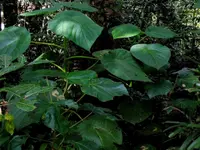
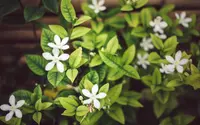
Large-flowered Uvaria Care (Uvaria grandiflora)

Large-flowered Uvaria

About Large-flowered Uvaria

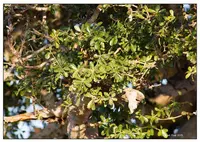
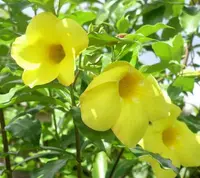
Large-flowered Uvaria (Uvaria grandiflora) is a tropical woody climber valued for its large, showy flowers and lush evergreen foliage. It typically grows as a vigorous vine that can cover supports, pergolas, or fences in warm climates.

This species is native to parts of Southeast Asia, where it thrives in humid, forested areas. Its growth habit and size make it better suited to spacious gardens, conservatories, or trained structures rather than small indoor spaces.

Because it prefers warmth, consistent moisture, and well-drained, fertile soil, it is moderately demanding outside its native range. Gardeners who understand how to care for Large-flowered Uvaria usually find it rewarding but not beginner-easy in cooler or very dry regions.

Main Plant Requirements

Care Difficulty

Moderate Care

Light Preference

Partial Shade

Water Requirements

Moderate Water

Temperature Preference

Tropical / Frost Sensitive

Hardiness Zone

11–12

Soil Texture

Loamy, Sandy, Organic-rich

Soil pH

Acidic (5.5–6.5), Slightly acidic (6.5–7.0)

Soil Drainage

Moist but well-drained

Fertilization

Light (every 4–6 weeks)

Get Personalized Care Plan

Scan your plant to receive care tips personalized for your specific plant

Available on iOS and Android

How to Care for the Large-flowered Uvaria

This tropical liana prefers bright, gentle light similar to a forest edge.

  • Provide 4–6 hours of bright, filtered light daily; morning sun with dappled shade from midday to late afternoon suits Large-flowered Uvaria well.
  • Allow light partial shade; plants can grow under high, open tree canopies but will flower less in deep shade or under very dense cover.
  • Avoid harsh, unfiltered afternoon sun in hot summers, which can scorch leaves; in cooler months, slightly more direct sun is beneficial for flowering.

This species prefers evenly moist but not waterlogged soil.

  • Water when the top 3–5 cm of soil feels dry, using enough water to moisten the full root zone without leaving standing water.
  • Ensure free-draining, organic-rich soil so Uvaria grandiflora roots receive air; soggy soil leads to yellowing leaves, collapse, and root rot.
  • In warm growing seasons, expect faster drying and more frequent watering; in cooler months, slow down, watching for slight leaf droop as an underwatering sign.

This tropical climber thrives in warm, frost-free conditions year-round.

  • Aim for 68–86°F (20–30°C) during active growth, which supports strong vines and flowering.
  • Protect the plant from temperatures below 50°F (10°C); brief drops toward 41°F (5°C) may be survived but can cause leaf damage and stress.
  • In hot regions, plants tolerate short periods up to about 95°F (35°C) if soil moisture is stable and roots are shaded from intense heat.

This evergreen liana prefers consistently humid air and reacts quickly to very dry indoor conditions.

  • Aim for 60–80% humidity; it tolerates brief drops to 40–50% but growth may slow.
  • Crisping leaf edges, stalled new shoots, and increased spider mites indicate humidity stress in Large-flowered Uvaria.
  • Increase humidity with a nearby humidifier, grouping plants, or a pebble tray, rather than misting foliage directly.

This species prefers deep, loose, organically rich soil that drains freely yet holds steady moisture.

  • Use a mix of 40% peat or coco coir, 30% compost, 20% pine bark, and 10% perlite for Uvaria grandiflora.
  • Target slightly acidic to neutral pH around 6.0–7.0 to support nutrient uptake and root health.
  • In heavy native clay, build a raised mound or bed and blend in coarse sand and bark to improve drainage and aeration.
  • Avoid compacted, waterlogged, or purely sandy soil, which can cause either root rot or chronic drought stress.

This vigorous climber can be grown in large containers if given enough depth and stability.

  • Choose a tall, heavy pot to counterbalance the vining, top-heavy canopy and reduce tipping in wind.
  • Provide a strong trellis or frame anchored in the pot so stems can be trained upward without wrenching the root ball.
  • Use a free-draining mix and elevate the container slightly so drainage holes never sit in collected runoff water.

This climbing species responds well to moderate feeding during active growth while still thriving in reasonably fertile soil.

  • Apply a balanced liquid fertilizer (such as 10-10-10) at half strength every 4–6 weeks in spring and summer for Large-flowered Uvaria.
  • Use a slow-release granular product at the start of the growing season if container-grown, following label rates.
  • Incorporate a thin layer of mature compost over the root zone annually to support soil structure and microbial life.
  • Reduce or stop feeding in fall and winter when growth slows, especially in cooler conditions.

Pruning supports manageable size and flowering performance in Uvaria grandiflora.

  • Schedule light structural pruning in late winter or very early spring before vigorous new growth starts.
  • Remove dead, diseased, or crossing stems with clean, sharp bypass pruners to limit infection risk.
  • Thin congested, tangled growth to improve air flow and light penetration along the vine framework.
  • Shorten overlong shoots after flowering to maintain shape while preserving next season’s flowering wood.

This woody climber is often grown in the ground, but young or container plants may need occasional transplanting.

  • Transplant or upsize containers in spring when roots circle the pot, drainage slows, or growth weakens despite good care.
  • For containers, shift to a pot 1–2 in wider, using a free-draining, rich mix to limit waterlogging.
  • Handle the root ball gently, loosening only the outer circling roots and trimming damaged sections with clean tools.
  • Water thoroughly after planting, then keep soil evenly moist and shaded for 7–10 days to reduce transplant stress.

Propagation of Uvaria grandiflora is usually done by semi-hardwood cuttings or seeds under warm, stable conditions.

  • Take semi-hardwood cuttings in late spring–summer, 10–15 cm long, with 2–3 nodes and the lower leaves removed.
  • Dip the cut end in rooting hormone, then place in a sterile, well-drained medium such as perlite and peat or coco coir.
  • Maintain bottom warmth around 75–80°F, high humidity, and bright, indirect light until roots form.
  • Sow fresh seed in warm conditions and keep the medium slightly moist; germination can be slow and uneven.

This tropical vine is frost-sensitive and needs protection in regions with cool or freezing winters.

  • In ground, only attempt in frost-free or very mild climates; apply a 5–8 cm mulch layer around the root zone, keeping mulch off stems.
  • Move container plants indoors or into a heated greenhouse before temperatures fall below 50°F.
  • Provide bright, indirect light indoors and water sparingly, allowing the top layer of mix to dry slightly between waterings.

Care Tips

Provide climbing structure

Install a sturdy trellis, pergola, or tensioned wire system early on and loosely tie new vines with soft garden ties so the plant can climb strongly without stems kinking or snapping under its own weight.

Encourage flowering wood

After the main flush of blooms, lightly thin out only the oldest, most congested stems to open the canopy, which improves light penetration and air flow that promote the formation of new flowering shoots.

Root-zone mulching

Maintain a 5–8 cm layer of composted bark or leaf mold around the root zone, keeping it a few cm away from the main stem, to stabilize soil moisture and temperature while reducing weed competition.

Cold-season protection

In marginal climates, wrap the lower stems with breathable frost cloth and add an extra mulch layer over the root area before the first frost to reduce cold damage and help the plant reshoot strongly in spring.

Regular pest scouting

Inspect young shoots, flower buds, and the undersides of leaves every 1–2 weeks for scale, mealybugs, or mites, and treat early with insecticidal soap or horticultural oil as part of caring for Large-flowered Uvaria.

Common Pests and Diseases

Scale insects

This pest feeds on stems and leaf veins, causing yellowing, reduced vigor, and sticky honeydew that can attract sooty mold. Infestations are more common on older, woody parts of the vine and in warm, sheltered spots.

Solution

Wipe stems and leaves with a cloth or cotton pad dipped in a dilute insecticidal soap solution, and prune heavily infested twigs. For persistent colonies, use a horticultural oil spray targeting crawler stages, and improve air movement around the plant to reduce reinfestation risk.

Mealybugs

These insects hide in leaf axils, under bracts, and along young shoots, sucking sap and causing distorted new growth and leaf drop. White, cottony clusters are often visible near flower stalks and tender vine tips.

Solution

Remove visible clusters with a cotton swab dipped in isopropyl alcohol and rinse foliage with a gentle water spray. Repeat treatments with insecticidal soap or neem oil on leaf undersides and sheltered crevices, and avoid excess nitrogen fertilization that encourages soft, mealybug-prone growth.

Leaf spot

This disease causes tan to dark brown irregular spots on leaves, sometimes with a yellow halo and premature leaf drop on dense vines. Symptoms include more severe spotting during warm, wet weather or when foliage stays wet for long periods.

Solution

Prune and discard affected leaves, thin dense growth to improve airflow, and water at the base rather than overhead to keep foliage dry. In climates with frequent rain, a copper-based fungicide or other labeled ornamental fungicide can be applied preventively to young foliage according to label directions.

Anthracnose

This disease produces dark, sunken lesions along leaf margins and on young stems, which can lead to dieback of tender shoots and reduced flowering. Symptoms include rapid spread in humid, shaded conditions where foliage remains moist.

Solution

Cut back and destroy infected shoot tips, disinfect pruning tools between cuts, and reduce shade and overcrowding around the plant. During prolonged humid periods, apply a suitable fungicide labeled for anthracnose on ornamental vines and maintain good sanitation by removing fallen leaves and debris.

Spider mites

These insects are tiny sap-feeders that thrive on Uvaria foliage in hot, dry conditions, causing fine stippling, dulling of leaf color, and fine webbing on the undersides of leaves. Symptoms include slowed growth and general decline if populations build up unchecked.

Solution

Spray the plant thoroughly with a strong but gentle stream of water to dislodge mites, focusing on leaf undersides, and increase ambient humidity around the vine. Follow with repeated applications of insecticidal soap or horticultural oil at 5–7 day intervals, and monitor regularly for returning webbing or stippling as part of ongoing Uvaria grandiflora care.

Interesting Facts

Climbing forest liana

This species is a vigorous woody climber that naturally scrambles over trees in lowland tropical forests, using its long, flexible stems to reach brighter light in the canopy.

Showy fleshy flowers

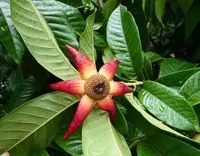
It produces unusually large, thick-textured red to reddish-purple flowers whose fleshy petals are adapted to attract strong, often beetle-like pollinators in its humid forest habitat.

Clustered edible fruits

After flowering, it forms clusters of elongated, fleshy fruits with a soft, sweetish pulp that are eaten locally and can be dispersed by animals that consume the ripe fruit.

Botan icon

Did you know?

The species is part of the early-diverging magnoliid lineage, so its large, fleshy flowers and aromatic tissues reflect ancient floral traits that arose before the evolution of more specialized flowering plant groups such as orchids and daisies.

FAQs about Large-flowered Uvaria

This species is a woody climber that twines around supports rather than spreading along the ground. It uses flexible stems to scramble up trees, trellises, or wires and can become quite extensive if not pruned occasionally.

Grow Healthy Plants with Botan Care

Keep your plants happy and healthy with plant identification, disease detection, and easy care guidance.

Botan plant care app — identify plants on mobile

Explore More Plants