Streambank stabilization
Plant in staggered rows along sloped or eroding banks, spacing shrubs 60–120 cm apart, to create a living root mat that locks in soil and reduces runoff over several seasons.

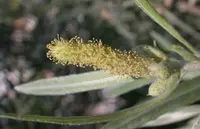
Narrowleaf willow, Salix exigua, is a deciduous shrub or small tree known for its slender, silver-green leaves and dense thickets. It often forms colonies along rivers, streams, and wetlands.
This species is native to much of North America, especially in riparian and floodplain habitats where soils stay moist and periodically disturbed. It is fast-growing and resilient, which makes it useful for erosion control and habitat planting.
Its need for consistent moisture and full sun means it suits wetter sites better than typical garden beds. Understanding how to care for narrowleaf willow starts with providing damp soil, plenty of light, and space for its spreading roots and stems.

Care Difficulty
Easy Care

Light Preference
Full Sun

Water Requirements
Keep Soil Moist

Temperature Preference
Cold Hardy

Hardiness Zone
3–8

Soil Texture
Sandy, Loamy, Silty

Soil pH
Acidic (5.5–6.5), Slightly acidic (6.5–7.0)

Soil Drainage
Waterlogged tolerant

Fertilization
Minimal (feed rarely)
Scan your plant to receive care tips personalized for your specific plant
Available on iOS and Android
Salix exigua thrives in strong natural light typical of open stream banks and wetlands.
This willow is adapted to moist sites and prefers consistently damp conditions rather than fluctuating extremes.
This species tolerates a wide temperature range but grows best with moderate warmth during the active season.
This riparian shrub prefers moderately humid air but usually copes with typical outdoor levels.
This species thrives in moist, loose mineral soils that stay damp yet oxygenated around the roots.
This shrub can be grown in containers for short to medium terms, though large in-ground planting suits long-term growth better.
This native shrub adapts to poor soils and usually needs only light feeding, even when caring for narrowleaf willow in gardens or restoration plantings.
Pruning Salix exigua helps maintain size, encourage dense shoots, and remove unsafe or declining wood.
Salix exigua is usually grown in the ground, so focus on timely transplanting rather than frequent repotting.
Salix exigua is commonly propagated from cuttings, which root fast in moist conditions.
This willow is cold hardy and usually needs minimal winter care once established in the ground.

Plant Health Check
Not sure what's wrong with your plant? Check your plant's health inside the app.
Narrowleaf willow is one of the first woody plants to colonize freshly deposited river sandbars and gravel bars, helping stabilize loose soils along streams in much of western North America.
This species spreads vigorously through creeping rhizomes and stem fragments that root easily, allowing one genetic individual to form extensive thickets along waterways.
Narrowleaf willow foliage supports larvae of several willow-dependent butterflies and moths, including certain swallowtails and sphinx moths, forming a key food source in riparian food webs.

In many western US watersheds, narrowleaf willow is deliberately used in streambank restoration projects, with live stakes (cut stems pushed into moist soil) capable of rooting quickly and withstanding periodic flooding, which makes the species an important bioengineering tool for erosion control.
This species spreads by both stolons and seed, especially in moist, open ground. It can quickly form dense thickets along streams or wet spots, so give it space and be prepared for regular thinning in small gardens.
Keep your plants happy and healthy with plant identification, disease detection, and easy care guidance.