bidibid Care (Acaena microphylla)

Also known as: piripiri, New Zealand-bur
bidibid

About bidibid

Bidibid, Acaena microphylla, is a low, spreading perennial often used as a dense groundcover. It forms a mat of small, fern-like leaves that stay close to the soil surface.

This species is native to New Zealand, where it naturally grows in open, often rocky habitats. It is valued for its ability to cover gaps between stones or pavers and to suppress some weeds.

The plant is generally tough and can handle light foot traffic, but its burr-like seed heads can cling to clothing or animal fur. Those seed heads are the main challenge when people learn how to care for bidibid. It prefers well-drained soil with moderate moisture and light from full sun to light shade.


Main Plant Requirements

Care Difficulty

Moderate Care

Light Preference

Full Sun

Water Requirements

Moderate Water

Temperature Preference

Cold Hardy

Hardiness Zone

6–9

Soil Texture

Sandy, Loamy, Rocky

Soil pH

Acidic (5.5–6.5), Slightly acidic (6.5–7.0)

Soil Drainage

Well-drained

Fertilization

Minimal (feed rarely)

Get Personalized Care Plan

Scan your plant to receive care tips personalized for your specific plant

Available on iOS and Android

How to Care for the bidibid

This low, mat-forming groundcover prefers cool, bright conditions with protection from intense afternoon sun.

  • Provide 4–6 hours of direct morning sun or light midday sun, with partial shade after 2–3 pm in hotter regions to prevent leaf scorch.
  • Tolerates light or dappled shade, but dense shade reduces color and tight growth; foliage becomes sparse and less compact.
  • In very hot summers, give bidibid filtered light or high open shade, especially on reflective sites, and monitor for crisped, brown leaf tips as a sign of excess sun.

This species prefers evenly moist, fast-draining soil that never stays saturated for long periods.

  • Water when the top 2–3 cm of soil feel dry, allowing moisture to reach the shallow root zone without creating puddles.
  • During hot, dry periods, check ground-level soil every 2–3 days; in cool or rainy seasons, reduce watering and rely more on natural rainfall if drainage is good.
  • Signs of overwatering include yellowing, soft foliage and a sour soil smell; underwatered Acaena microphylla mats look limp, with leaves curling or browning at the edges.

This hardy groundcover prefers cool to mild climates and tolerates significant cold once established.

  • Optimal growth occurs around 55–70°F (13–21°C), especially in spring and fall, when foliage is dense and color is strongest.
  • Plants tolerate down to about 5–10°F (-15 to -12°C) with good drainage; foliage may burn or thin in severe frost but crowns usually resprout.
  • In summer, growth slows above 80–85°F (27–29°C); provide some afternoon shade and extra monitoring during heatwaves to prevent stress and dieback.

This groundcover tolerates a wide humidity range and usually does not need special adjustment outdoors.

This plant prefers lean, well-drained soil that does not stay wet for long after rain or watering.

  • Use sandy or gravelly loam with modest organic matter to support spreading roots without becoming compacted.
  • Aim for slightly acidic to neutral pH, roughly 6.0–7.0, as Acaena microphylla naturally occurs in similar conditions.
  • Blend sharp sand or fine gravel into garden soil to increase drainage and prevent winter wet around the root zone.
  • Avoid heavy clay, peat-heavy mixes, or sites where water pools, which increase risk of rot and poor groundcover performance.

This species can be grown in containers when given a shallow, broad pot that matches its mat-forming habit.

  • Choose a wide, low container so the spreading foliage can drape over the rim without crowding the root zone.
  • Use a gritty mix with at least 30–50% mineral material such as sand or fine gravel to keep moisture from lingering.
  • Place the pot where rainfall can drain freely off the foliage edge to reduce mossy buildup and stem dieback near the rim.

Acaena microphylla is light-feeding and usually needs only modest nutrition in average garden soil.

  • Apply a thin layer of compost around plants in early spring to support steady growth.
  • Use a balanced slow-release fertilizer (around 10-10-10) once in spring at low label rate for bidibid.
  • Avoid high-nitrogen products, which encourage overly lush, weak foliage and reduce groundcover density.
  • Do not feed in late fall or winter, when growth is minimal and nutrients are not effectively used.

Acaena microphylla benefits from light, periodic pruning to keep the mat dense and tidy.

  • In late winter or early spring, trim back dead, winter-burned, or damaged foliage with clean hand shears.
  • Remove sparse or overly tall patches to encourage low, compact regrowth and maintain even groundcover.
  • Thin congested or matted areas slightly to improve air flow and reduce risk of fungal issues.
  • After flowering, lightly shear spent flower stems if a neater appearance is desired.

This groundcover is more often transplanted in the garden than grown long-term in containers.

  • Transplant in early spring or early fall, when temperatures are mild and soil is workable.
  • Shift container plants only when roots circle the pot, soil dries very fast, or growth becomes stunted.
  • Lift clumps with a wide trowel, keeping a solid soil root ball to limit disturbance and stress.
  • Replant at the same depth in well-drained soil, water thoroughly, then shade lightly for 2–3 days if conditions are hot.

This species is commonly propagated to expand groundcover or share plants.

  • Divide established clumps in early spring or early fall, replanting rooted sections promptly in moist, drained soil.
  • Root runners or stem pieces with attached roots by lifting and replanting them at the desired spacing.
  • For seed, sow fresh seed in trays outdoors in fall to benefit from natural cold stratification.
  • Keep propagation areas evenly moist, not waterlogged, and provide bright, indirect light until plants establish.

Acaena microphylla is generally cold hardy in temperate climates and needs minimal winter care in the ground.

  • In colder regions, apply a 3–5 cm mulch layer around, but not over, the crowns to buffer freeze–thaw cycles.
  • Reduce watering for in-ground plants, giving only enough to prevent complete soil dryness in mild spells.
  • Move containers to a sheltered, unheated area where temperatures stay mostly above 20°F and soil drains freely.
  • In late winter, remove soggy debris or excessive mulch to reduce rot risk as growth resumes.

Care Tips

Control Spreading Edges

Use a sharp hand tool to slice along the mat edge once or twice a year and lift any runners that are invading paving, lawns, or neighboring plants, as this keeps the groundcover dense where wanted and prevents it becoming weedy.

Encourage Dense Cover

Lightly top-dress around the plants with a thin layer (0.5–1 in) of fine gravel or grit after planting to stabilize the soil surface and support tighter, more even carpeting growth between stepping stones.

Protect From Foot Traffic

Place flat stones or pavers in the main walking line and allow the plant to knit around them, so the foliage is brushed rather than crushed when the area is used as an informal path.

Winter Drainage Check

Before prolonged winter rain, confirm that low spots do not stay waterlogged by watching how quickly water drains after a thorough soak, and if needed, add grit or raise the planting slightly to avoid crown rot.

Targeted Pest Monitoring

Inspect the foliage and burrs every few weeks during warm weather for aphids or flea beetle damage and treat early with a directed jet of water or an appropriate low-toxicity control, as prompt action keeps growing bidibid healthy and presentable.

Common Pests and Diseases

Mealybugs

This pest sometimes settles in the dense foliage and at stem bases, sucking sap and weakening plants in dry, sheltered sites. Symptoms include white, cottony clusters and sticky honeydew on leaves and stems.

Solution

Cut back and discard heavily infested patches, then wash remaining foliage with a strong jet of water to dislodge insects. For persistent problems, dab visible mealybugs with cotton swabs dipped in 70% isopropyl alcohol or apply a ready-to-use insecticidal soap, repeating weekly until no new clusters appear.

Aphids

These insects can colonize young runners and fresh foliage, causing distorted growth and leaving sticky honeydew that may attract sooty mold. Infestations are more likely on plants grown in sheltered, nutrient-rich beds or containers.

Solution

Spray plants with a firm stream of water to knock aphids off, focusing on new growth and undersides of leaves. If needed, use insecticidal soap or a horticultural oil labeled for ornamental groundcovers, applied in cool hours and repeated every 7–10 days until populations decline.

Leaf spot

This disease causes small brown or purplish spots that may merge, giving the foliage a scorched or patchy look, especially in humid or poorly ventilated sites. Symptoms include premature browning and thinning of the carpet-like mat.

Solution

Remove and discard affected foliage or thin crowded patches to increase airflow, then avoid overhead watering where possible. In severe or recurring cases, apply a fungicide labeled for ornamental leaf spots according to label directions and maintain a drier leaf surface by watering early in the day.

Crown rot

This disease can occur in heavy, waterlogged soils, leading to a thinning mat, blackened crowns, and sections of the groundcover dying back. Symptoms include plants pulling up easily with dark, mushy tissue at the base.

Solution

Improve drainage by amending soil with grit or compost and avoid planting in depressions that collect water. Remove and dispose of affected clumps, then replant healthy divisions in raised or better-drained areas and water only as needed to keep soil lightly moist, not saturated.

Interesting Facts

Hooked seed burrs

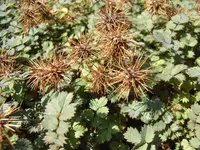
This species produces spherical seed heads covered in tiny hook-tipped spines that readily catch on animal fur, feathers, or clothing, allowing the plant to disperse its seeds over long distances.

Native New Zealand groundcover

It is a low, mat-forming herb native to New Zealand grasslands and open scrub, where it helps stabilize thin, often rocky soils and can form dense carpets only a few centimeters high.

High-country adaptability

Wild populations occur from lowland sites up into subalpine zones, showing tolerance for exposed, windy conditions, periodic frost, and relatively poor, free-draining soils.

Botan icon

Did you know?

In New Zealand sheep-farming regions, its clinging spiny burs have been considered a minor pasture nuisance for over a century, because they catch in sheep wool and can reduce its quality while also aiding the plant’s rapid spread across grazed land.

FAQs about bidibid

This ground cover spreads by creeping stems and burr-like seed heads that cling to fur and clothing. It can colonize open soil quickly, so it is best confined with edging and kept out of natural areas.

Grow Healthy Plants with Botan Care

Keep your plants happy and healthy with plant identification, disease detection, and easy care guidance.

Botan plant care app — identify plants on mobile

Explore More Plants